
PP Sheet Extrusion Line

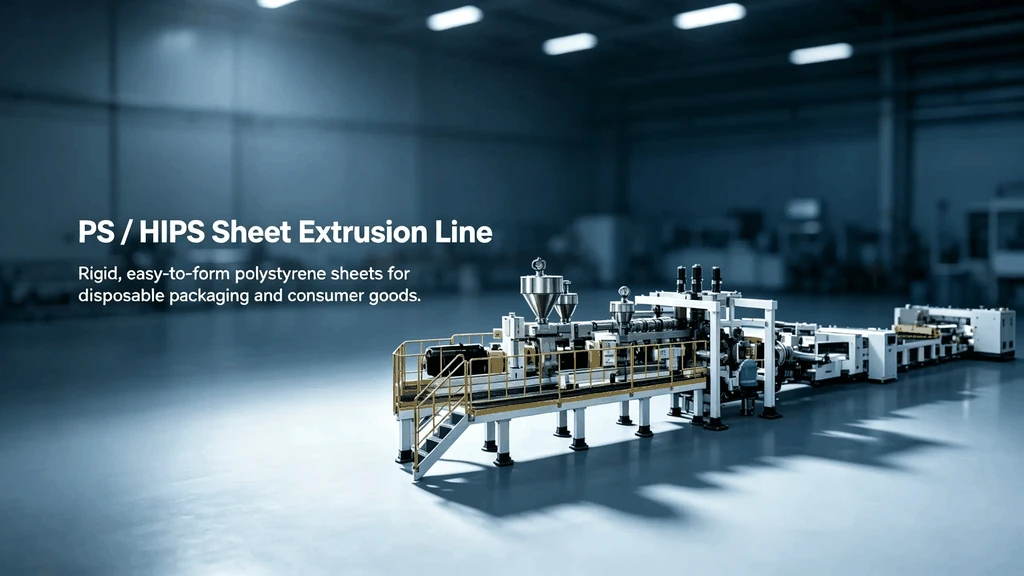
Single-screw vented extruder | 300-800 kg/h | 0.3-2.0 mm | PP · HIPS · GPPS — One Line, Three Materials

| 1 | One Line, Three Materials: PP, HIPS, GPPS processed on a single platform — 40-60% Capex saving vs. separate lines | 合并页面核心定位 |

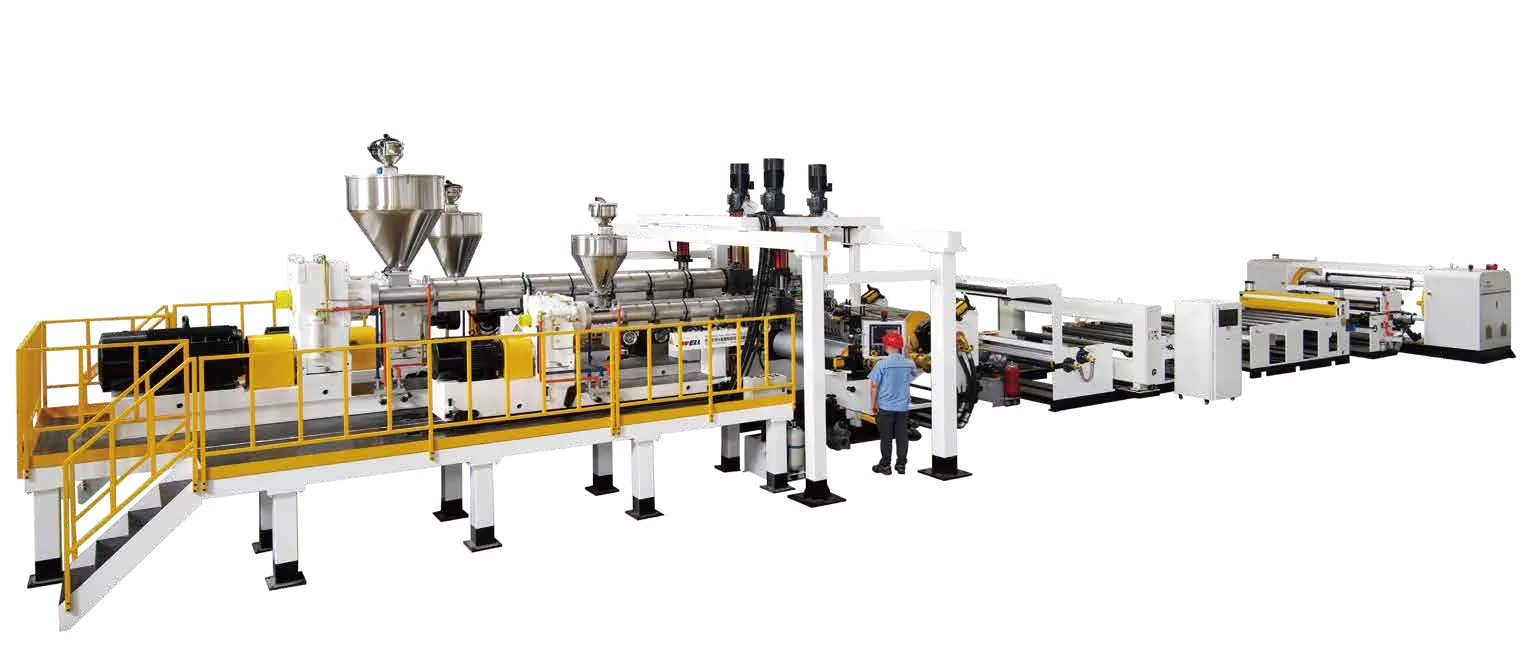
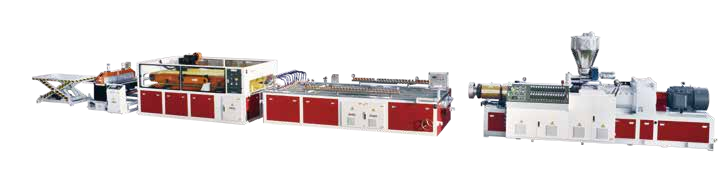
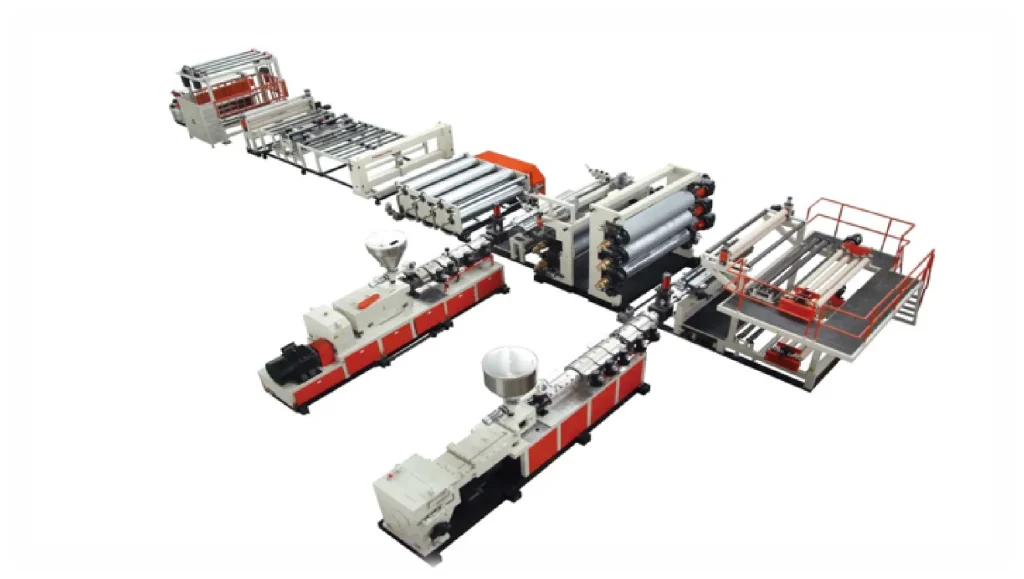
| 2 | Full Component Chain: Drier → Extruder → Melt Pump → Screen Changer → T-Die → Roll Stack → Thickness Gauge → Edge Cutters → Haul Off → Accumulator → Winder | 技术配置 |

| 3 | Self-Developed Screw & Roller & Die: 38CrMoAlA screw (HV>=940), 42GrMo roller (Ra≤0.016μm), chrome-plated T-die (Ra 0.05μm) — all in-house manufactured | 技术规格 |

PP Sheet Extrusion Line: Related JWELL Extrusion Lines

The PP Sheet Extrusion Line is part of JWELL’s complete extrusion portfolio. Customers evaluating this PP Sheet Extrusion Line also frequently request our PS HIPS GPPS Sheet Extrusion Line | Jwell Machinery and %title% %sep% Jwell Machinery, which share the same proven screw, die and control platforms. For layout drawings, pricing and lead times, contact JWELL Machinery directly.

# Item Key Point
1 🌀 Three Materials, One Platform PP, HIPS, GPPS Sheet on the Same Extrusion Line — 内容:
2 The defining competitive advantage of Jwell’s PP sheet extrusion line is its multi-material capability p
3 ⚡ Self-Developed Screw 38CrMoAlA Nitrided Steel, HV≥940, Large-Diameter Low-Speed Design — 内容:
4 The heart of the PP sheet extrusion line is Jwell’s self-developed screw, manufactured from 38CrMoAlA allo
5 🎯 Melt Pump Technology Jwell/Maag/Nordson Options, Output Pulsation <1% — 内容:
6 Between the extruder and the T-die, Jwell integrates a positive-displacement melt pump that serves as the
7 🔄 Precision Roll Stack 42GrMo Forged Steel, ≤0.005mm Coaxiality, Ra≤0.016μm, HRC 58-62 — 内容:
8 The three-roll vertical calendar represents the highest-precision mechanical assembly on the extrusion lin

Three Materials, One Platform — PP, HIPS, GPPS Sheet on the Same Extrusion Line

内容:

The defining competitive advantage of Jwell’s PP sheet extrusion line is its multi-material capability — processing polypropylene (PP), high-impact polystyrene (HIPS), and general-purpose polystyrene (GPPS) on a single platform without mechanical modification. This versatility is not a marketing claim but an engineered feature: the 33:1 L/D vented single-screw extruder, combined with a melt pump (Jwell/Maag/Nordson options) that stabilizes output across the viscosity differences between these materials, and a recipe-based Siemens PLC that stores calibrated process parameters for each material grade, enables material changeover through parameter selection rather than hardware changes.

The economic implications are significant. A converter serving food packaging (PP sheet), refrigerator liner (HIPS sheet), and display packaging (GPPS sheet) markets can operate a single Jwell line instead of three dedicated lines — reducing capital expenditure by approximately 40-60%, floor space by 60-70%, and maintenance complexity by two-thirds. The recipe storage system stores barrel temperature profiles (180-230°C for PP, 190-220°C for HIPS, 200-230°C for GPPS), screw RPM ranges, roll gap settings (0.3-2.0 mm), roll temperature targets (15-25°C for rapid-quench PP, 40-70°C for HIPS, 60-85°C for GPPS), and cooling rates — all recallable through the HMI touchscreen for one-touch changeover.

Material changeover typically takes 30-60 minutes including purging of the previous material from the extruder and die, with the melt pump’s positive-displacement pumping action accelerating barrel cleanout by maintaining forward flow even at lower screw RPM during the purge sequence. For converters running extended campaigns on a single material (weeks between changeovers), the multi-material capability functions as production flexibility insurance — the ability to pivot to a different sheet market if demand shifts, without additional capital investment.

Self-Developed Screw — 38CrMoAlA Nitrided Steel, HV≥940, Large-Diameter Low-Speed Design

内容:

The heart of the PP sheet extrusion line is Jwell’s self-developed screw, manufactured from 38CrMoAlA alloy steel with a nitrided layer depth of 0.5-0.7 mm and surface hardness of HV≥740 (base requirement) reaching HV≥940 for PP-specific configurations. This material specification — 38CrMoAlA is a premium nitriding steel with aluminum content that forms exceptionally hard and stable aluminum nitride precipitates during the nitriding process — provides wear resistance that extends screw service life to 5-7 years processing standard PP and HIPS grades, versus 2-3 years for standard nitrided 41CrAlMo7 screws from commodity suppliers.

The screw geometry employs a large-diameter, low-speed design philosophy with diameters of 120 mm, 130 mm, or 150 mm depending on target output — the larger diameter provides higher plasticizing capacity per revolution while operating at lower RPM (typically 60-90 RPM for PP, 50-80 RPM for GPPS), which reduces shear heating and the risk of polymer degradation. For PP specifically, the screw’s compression ratio is calibrated to PP’s semi-crystalline melting behavior — the material transitions from solid pellets to melt over a defined melting point range (160-170°C) rather than softening gradually like amorphous GPPS. The screw’s barrier flight design in the compression zone separates the solid bed from the melt pool, ensuring complete melting without unmelted pellets reaching the metering zone — a common source of thickness variation and visible defects in PP sheet.

The vented barrel (33:1 L/D) incorporates an atmospheric vent in the decompression zone that removes residual moisture and volatile byproducts, critical for PP which, while less hygroscopic than PET or ABS, can carry surface moisture from storage that causes splay defects at the sheet surface. The barrel liner is bimetallic with 58-62 HRC hardness, providing the wear couple with the nitrided screw that maintains consistent clearance over the screw’s service life.

Melt Pump Technology — Jwell/Maag/Nordson Options, Output Pulsation <1%

内容:

Between the extruder and the T-die, Jwell integrates a positive-displacement melt pump that serves as the critical interface between the extruder’s inherently pulsating output and the T-die’s requirement for absolutely steady melt flow. Single-screw extruders, even with optimized screw geometry, generate output pulsation of 3-8% at the screw tip due to the discrete nature of the screw flight (one flight of melt discharged per revolution). This pulsation directly translates into thickness variation in the finished sheet — at 800 kg/h throughput, a 5% pulsation represents 40 kg/h output fluctuation cycling with screw rotation.

The melt pump reduces this pulsation to below 1% by operating as a volumetric metering device — two intermeshing gears rotate at precisely controlled speed, trapping and conveying melt from the inlet (extruder side) to the outlet (die side) in discrete, identical pocket volumes. The pump is driven by an independent AC motor with ABB ACS880 inverter, enabling speed adjustment independent of the extruder screw RPM. This decoupling of extrusion rate from pumping rate provides two operational advantages: first, the extruder can operate at the screw RPM that provides optimal melting quality without concern for output stability; second, the sheet gauge can be fine-tuned through melt pump RPM adjustment without changing extruder conditions.

Jwell offers three melt pump brands — Jwell’s in-house manufactured pump, Maag (Swiss), and Nordson (USA) — giving customers cost/performance selection flexibility. The in-house Jwell pump offers the best value for standard sheet applications; the Maag option provides the highest precision with gear tooth profiles that minimize shear on the melt for thermally sensitive GPPS; the Nordson option offers the widest operating pressure range for high-viscosity PP grades. All three integrate with the Siemens PLC for closed-loop RPM control based on either pressure feedback (maintaining constant die inlet pressure) or throughput target.

Precision Roll Stack — 42GrMo Forged Steel, ≤0.005mm Coaxiality, Ra≤0.016μm, HRC 58-62

内容:

The three-roll vertical calendar represents the highest-precision mechanical assembly on the extrusion line — it determines the sheet’s surface quality, thickness uniformity, and optical properties. Jwell’s rollers are manufactured from 42GrMo forged alloy steel, a chromium-molybdenum grade selected for its combination of hardenability (achieving HRC 58-62 through heat treatment), dimensional stability during thermal cycling, and polishability to sub-micron surface finishes.

The roller specifications place this roll stack in the premium tier of sheet extrusion equipment:

– Coaxiality: ≤0.005 mm (5 μm) across the full roller face — this is essential because any eccentricity in the roll produces a periodic thickness variation in the sheet at a frequency matching the roll rotation, visible as transverse thickness bands in thermoformed parts

– Surface Roughness: Ra ≤0.016 μm (16 nm) — optical mirror grade, producing sheet surfaces suitable for food contact, display packaging, and applications where surface quality is the primary quality criterion

– Hardness: HRC 58-62 — sufficient to resist scratching from occasional sheet-wrap incidents and maintenance handling while not being so hard as to risk brittle fracture under thermal shock conditions

– Hard Chrome Plating: 0.08 mm thickness — provides corrosion resistance to the condensation that forms when chilling PP sheet at 15-25°C in humid production environments, and a non-stick surface that reduces PP’s natural tendency to adhere to cooled metal surfaces

Each roller has independent closed-loop temperature control using pressurized hot water with ±1°C uniformity across the roll face. This precision is essential for multi-material operation — PP requires rapid quenching (15-25°C) to suppress spherulite crystal growth that causes haze in semi-crystalline PP sheet; HIPS uses moderate roll temperatures (40-70°C) for balanced surface gloss and dimensional stability; GPPS requires the highest roll temperatures (60-85°C) to maintain optical clarity by preventing the rapid surface cooling that induces molecular orientation and stress birefringence.

The servo-adjusted roll gap with 0.01 mm precision — integrated with the online thickness gauge for closed-loop control — maintains sheet gauge within tolerance across the full web width.

Technical Specifications

Model Options

Parameter Specification
Screw Diameter Options 120 mm / 130 mm / 150 mm
Output Range 300 – 800 kg/h (material and configuration dependent)
Materials PP, HIPS, GPPS (recipe-based changeover)

Extruder

Parameter Specification
Extruder Type Single-screw, vented
L/D Ratio 33:1
Screw Material 38CrMoAlA alloy steel
Screw Surface Treatment Gas nitrided, 0.5-0.7 mm depth
Screw Surface Hardness HV ≥740 (base) / HV ≥940 (PP configuration)
Barrel Material Bimetallic liner, 58-62 HRC
Barrel Heating Zones Multi-zone, independent PID control
Heating Type Ceramic band heaters
Drive Motor WEG high-efficiency AC
Inverter ABB ACS880 series

Melt Pump

Parameter Specification
Brand Options Jwell (in-house) / Maag (Swiss) / Nordson (USA)
Output Pulsation <1%
Drive Independent AC motor, ABB inverter
Control Mode Pressure feedback or throughput target, closed-loop

Screen Changer

Parameter Specification
Type Hydraulic, continuous operation
Operation Slide-plate mechanism, screen change without line stoppage

T-Die

Parameter Specification
Type Flexible-lip coat-hanger manifold
Material High-grade mold steel
Chrome Plating Thickness 0.03 – 0.05 mm
Cavity Surface Roughness Ra 0.1 μm
Die Lip Surface Roughness Ra 0.05 μm
Automatic Control (optional) Individual thermal bolts with online gauge feedback

Roll Stack

Parameter Specification
Configuration 3-roll vertical calendar
Roll Material 42GrMo forged alloy steel
Roll Hardness HRC 58-62
Chrome Plating Thickness 0.08 mm
Coaxiality ≤0.005 mm
Surface Roughness Ra ≤0.016 μm (mirror finish)
Temperature Range 15 – 85°C (material dependent)
Temperature Uniformity ±1°C across roll face
Roll Gap Adjustment Servo-driven, 0.01 mm precision

Sheet Specifications

Parameter Specification
Sheet Thickness Range 0.3 – 2.0 mm
Sheet Width 600 – 1,000 mm
Thickness Tolerance ±1.5% (with melt pump and online gauge)
Materials PP (MFI 0.5-3.0), HIPS, GPPS

Downstream Equipment

Parameter Specification
Thickness Gauge Online beta or X-ray, continuous profile measurement
Edge Cutters Precision slitting, adjustable width
Accumulator Festoon-type, 8-15 meter sheet storage
Winder Torque-controlled surface/center winder
Line Speed (max) 30 m/min

Line Performance

Parameter Specification
Total Installed Power 180 – 350 kW (configuration dependent)
Control System Siemens S7-1200/S7-1500 PLC + 12″/15″ HMI
Process Parameters Logged 50+ at 10-second intervals
Recipe Storage Per-material calibrated parameters (PP/HIPS/GPPS)
Material Changeover Time 30-60 minutes (including purging)

Certifications & After-Sales

Parameter Specification
Certifications CE, ISO 9001
Installation & Commissioning Global engineer certification system
Spare Parts Shanghai bonded warehouse, 48-hour international dispatch
Remote Support 2-hour response during GMT+8 business hours
Warranty Manufacturer warranty, global coverage

Dairy Food Container Lids

描述:

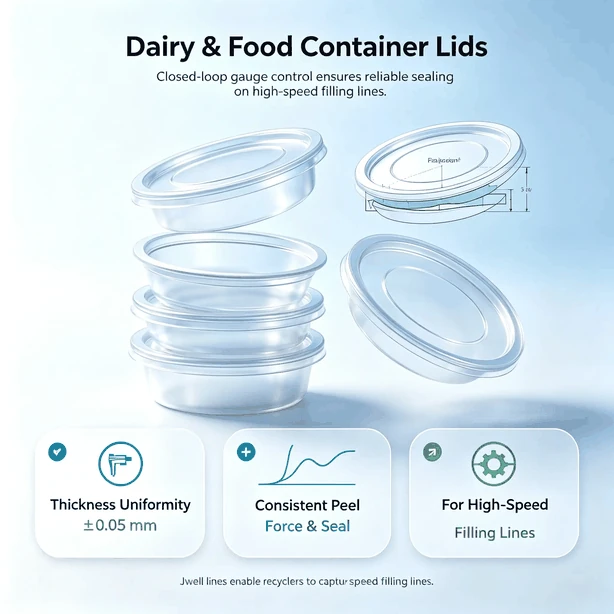
PP sheet at 0.3-0.8 mm thickness forms the lidding membranes and snap-on lids for yogurt cups, dairy dessert containers, cream cheese tubs, and single-serve dairy portions. PP’s combination of moisture barrier properties (water vapor transmission rate below 1.0 g/m²/day at 0.5 mm), low-temperature impact resistance (ductile to -20°C for PP copolymer grades), and food-contact compliance (FDA 21 CFR 177.1520, EU Regulation 10/2011) makes it the material of choice for dairy packaging where condensation from refrigerated storage and the mechanical stress of lid removal cycles demand consistent performance.

The Jwell line’s melt pump stabilization is particularly valuable for thin-gauge lid sheet (0.3-0.5 mm), where even small thickness variations cause visible distortion in the formed lid rim — a cosmetic defect that can lead to consumer perception of poor seal integrity and product rejection at retail.

PP Sheet Extrusion Line

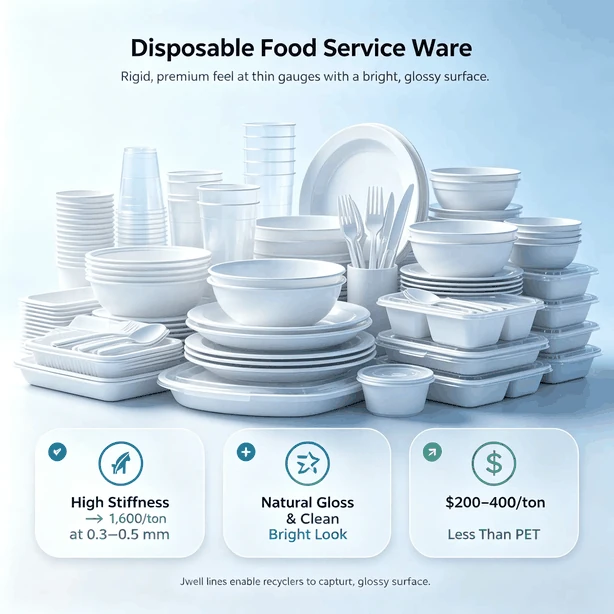
Disposable Food Service Ware

描述:

PP and HIPS sheet at 0.3-1.2 mm thickness is thermoformed into disposable plates, compartment trays, takeaway containers, hot-drink cup lids, and food service prep containers for restaurants, catering, institutional food service, and airline meal service. PP sheet provides heat resistance to 100-120°C (microwave-safe for reheating) and grease resistance without coating, making it preferred for hot-food and oily-food applications. HIPS sheet provides the stiffness and surface gloss for cold-food plates and trays at approximately 20-30% lower material cost.

Jwell’s multi-material capability enables food service converters to run PP for hot-food applications and HIPS for cold-food applications on the same line, matching production to order mix without separate dedicated equipment. The accumulator system enables uninterrupted production feeding high-speed multi-cavity thermoforming tools that produce 2,000-5,000 parts per hour.

Frequently Asked Questions

Can the Jwell PP sheet extrusion line process PP, HIPS, and GPPS on the same machine? -

Yes. Jwell’s PP sheet extrusion line is engineered for multi-material production on a single platform. The 33:1 L/D vented single-screw extruder (120/130/150 mm diameter options) with recipe-based PLC control enables material changeover between PP, HIPS, and GPPS through stored process parameters — barrel temperature profiles, screw RPM, roll gap, and cooling rates — for each material grade. The melt pump (Jwell/Maag/Nordson options) stabilizes output across the viscosity range differences between PP (MFI 0.5-3.0) and GPPS. This multi-material capability eliminates the need for separate dedicated lines, reducing capital expenditure by 40-60% for converters serving multiple sheet markets.

What is the output capacity and thickness range of the PP sheet extrusion line? +

The line delivers 300-800 kg/h output depending on material and configuration, producing sheet from 0.3 to 2.0 mm thickness with widths up to 1,000 mm. The extruder uses a large-diameter (120/130/150 mm), low-speed screw design with 38CrMoAlA nitrided steel (0.5-0.7 mm nitrided layer, HV>=940 surface hardness) that provides high plasticizing capacity while maintaining low shear rates — critical for preserving PP’s molecular weight and impact properties. The melt pump stabilizes output pulsation to below 1%, enabling consistent sheet gauge even at the upper end of the throughput range.

How does Jwell's roller stack ensure high-quality sheet surface finish? +

Jwell’s three-roll calendar uses 42GrMo forged steel rollers with ≤0.005 mm coaxiality, Ra≤0.016 μm surface roughness, HRC 58-62 hardness, and 0.08 mm hard chrome plating — specifications that produce optically smooth sheet surface for food packaging and display applications. The independently controlled roll temperature (closed-loop pressurized water, ±1°C uniformity) enables precise cooling rate profiles for each material: PP requires rapid quenching (15-25°C roll temperature) to minimize crystallinity for transparent sheet, while GPPS needs controlled cooling (60-85°C) to prevent stress-induced optical distortion. The servo-adjusted roll gap with 0.01 mm precision ensures consistent sheet gauge across the full web width.

Does Jwell's T-die support both PP semi-crystalline and GPPS amorphous melt flow? +

Yes. The T-die is manufactured from high-grade mold steel, chrome-plated 0.03-0.05 mm on all flow surfaces, with internal cavity surface roughness Ra 0.1 μm and die lip surface Ra 0.05 μm. The flexible-lip coat-hanger manifold geometry is analytically optimized for both PP (high viscosity, narrow processing window) and GPPS (lower viscosity, thermally sensitive). The chrome plating reduces polymer adhesion for both semi-crystalline and amorphous materials, preventing the material buildup responsible for die lines and gel formation during extended production runs. For automated thickness control, individual thermal bolts respond to online gauge feedback for real-time die lip adjustment at each measurement position across the web.

What applications does this multi-material line serve across PP, HIPS, and GPPS? +

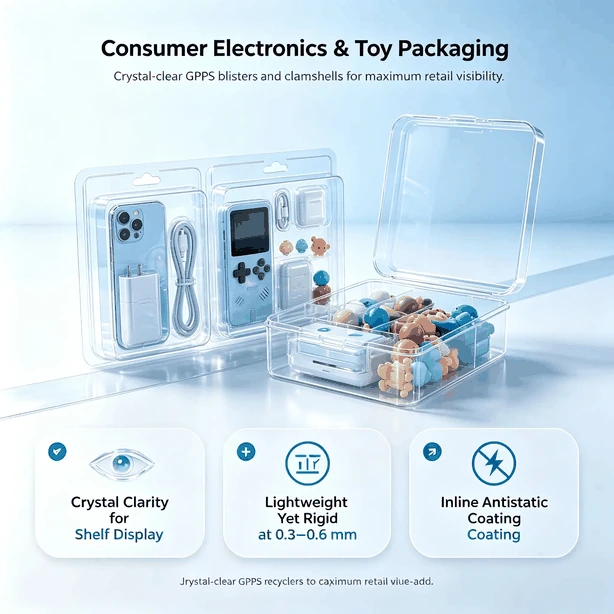
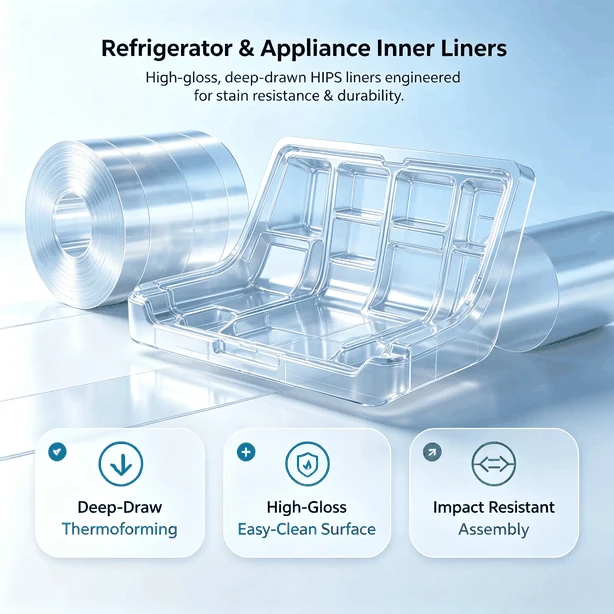
The line covers three material categories: PP sheet (dairy food container lids, disposable food service ware, form-fill-seal tray lidding), HIPS sheet (refrigerator appliance inner liners, consumer electronics and toy packaging), and GPPS sheet (display and presentation packaging, lighting diffuser panels, stationery and office supply sheets). This breadth covers food packaging, white goods, electronics, retail display, and lighting — enabling converters to serve multiple downstream markets from a single capital investment.

Related Sheet Extrusion Lines

WPC Flooring Production Line

WPC Flooring Production Line

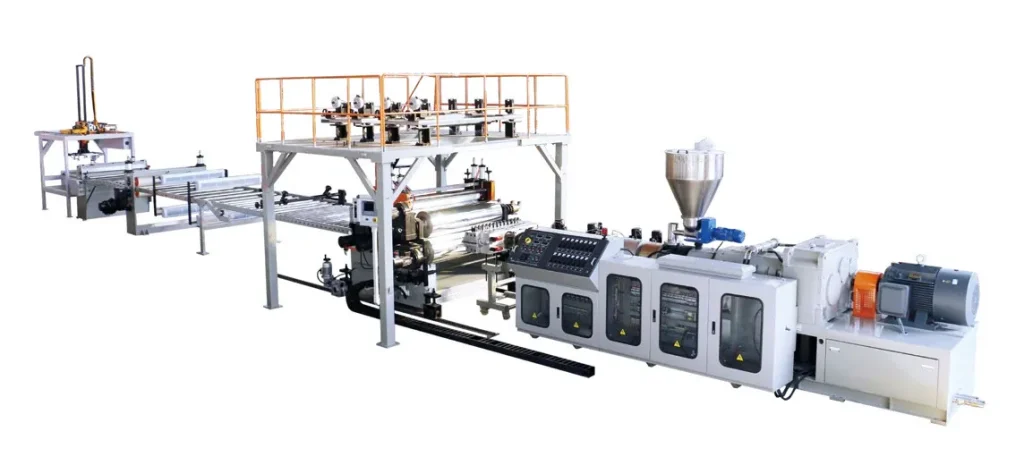
Extruder Type: Conical twin-screw, vented; Screw Material: 38CrMoAlA, nitrided, bimetallic optional; Screw Structure: Conical twin, designed for PVC + wood flour + CaCO₃ + foaming agent; L/D Ratio: Optimized for controlled foaming zone
Learn More ➔
SPC Flooring Production Line

SPC Flooring Production Line

Screw Diameter: Φ 80 mm / Φ 92 mm / Φ 110 mm / Φ 180 mm; Output (24h, SPC): 6-8 T / 12-18 T / 25-32 T / 70-100 T; Line Speed at 4 mm: 0.4-0.6 m/min / 0.8-1.3 m/min / 1.8-2.4 m/min / 5-9 m/min; Screw Material: 38CrMoAlA, nitrided, bimetallic optional / ← Same / ← Same / ← Same

Learn More ➔

Why Choose Jwell for Your PET Sheet Line

🏭

Factory/Experience

Jwell has manufactured PET sheet extrusion equipment since 2005, accumulating field data from over 400 installed PET lines worldwide. Each new machine generation incorporates refinements validated across hundreds of real production environments — not just lab prototypes.

🔬

Test/Validate

Our Changzhou facility operates a full production-scale PET line for customer trials. Bring your raw materials and target specifications — we run your recipe before you commit. The line delivered to your factory is a proven configuration, eliminating startup risk.

🌍

Service/Support

Factory-trained Jwell engineers based in Brazil, Spain, Mexico, and Shanghai travel to customer sites for installation and operator training. Remote diagnostic support via WeChat/WhatsApp responds within 2 hours. Critical spares ship from Shanghai within 48 hours.

Request a Quote or Technical Consultation

Your information will never be shared with third parties.