
PP Hollow Sheet Line

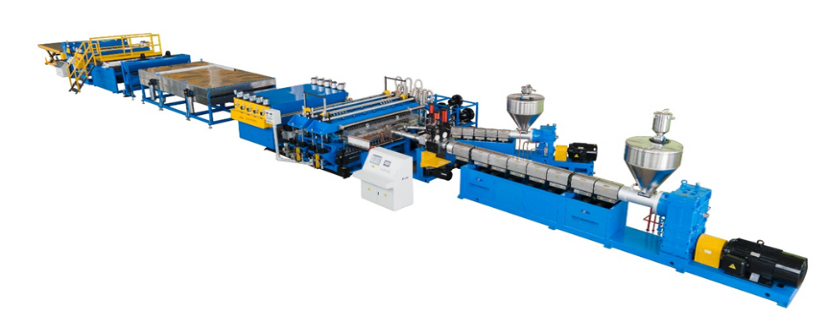
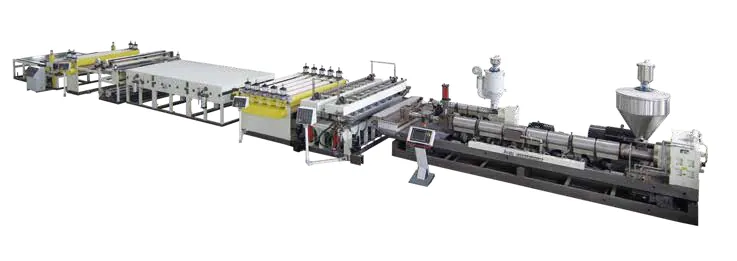
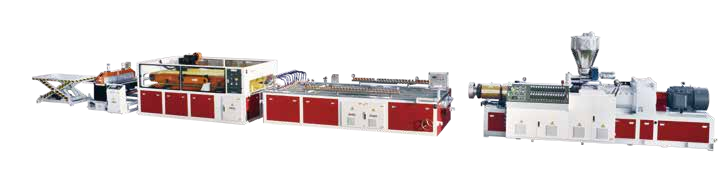
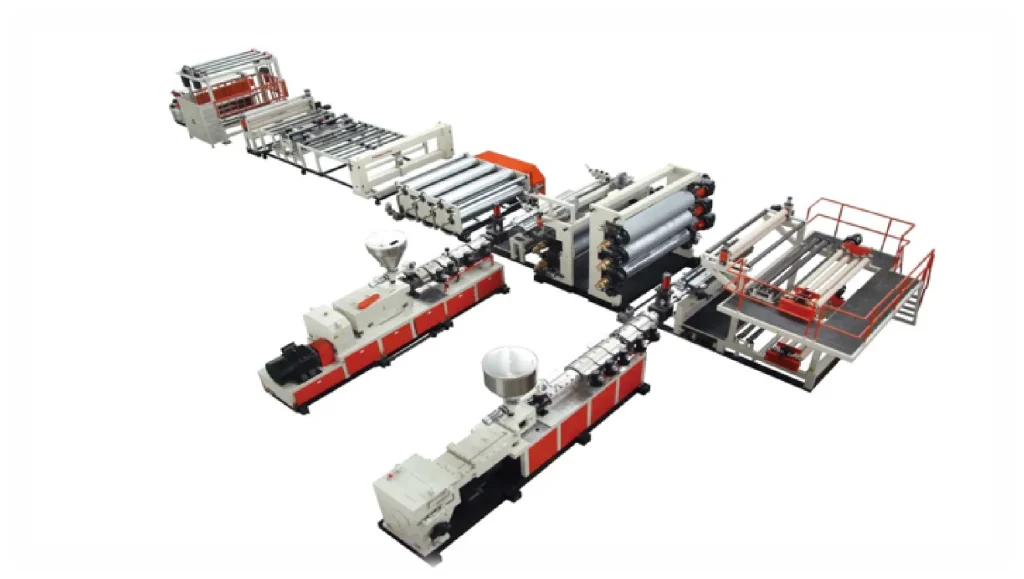
The Jwell PP hollow plate extrusion line is a high-output production system engineered for continuous manufacturing of polypropylene twin-wall and triple-wall hollow sheets. These lightweight, rigid panels feature a vertically-ribbed hollow core structure that delivers an optimal balance of stiffness, impact resistance, and material efficiency — typically achieving 30-50% weight savings compared to solid sheets of equivalent thickness. The line integrates extruder, T-die, vacuum calibration, cooling, haul-off, and automatic cutting into a single, synchronized production flow.

PP hollow plates are among the most versatile thermoplastic sheet products on the market, serving applications from reusable packaging containers and protective dividers to outdoor signage, display boards, and light-duty construction panels. The material’s inherent chemical resistance, moisture immunity, and recyclability make it a preferred choice for industries shifting away from corrugated cardboard, plywood, and PVC foam boards. With the global push toward circular economy packaging and reusable logistics systems, the demand for in-house PP hollow sheet production capacity continues to grow across Asia, the Middle East, and Latin America.

Jwell’s differentiation in PP hollow plate extrusion lies in its precision vacuum calibration system and high-efficiency screw design, which together ensure uniform wall thickness distribution (±0.05 mm) and consistent rib-to-sheet bonding across the full production width. The line supports optional inline corona treatment for printability enhancement, UV-stabilized coextrusion skins for outdoor durability, and recycled-content core layers for cost-optimized production — enabling converters to tailor their output to specific market segments without compromising board quality.

PP Hollow Sheet Extrusion Line: Related JWELL Extrusion Lines

The PP Hollow Sheet Extrusion Line is part of JWELL’s complete extrusion portfolio. Customers evaluating this PP Hollow Sheet Extrusion Line also frequently request our PP Hollow Grid Sheet Line | Jwell Machinery and PC Hollow Sheet Line | Jwell Machinery, which share the same proven screw, die and control platforms. For layout drawings, pricing and lead times, contact JWELL Machinery directly.

# Item Key Point
1 🌀 High-Efficiency PP Barrier Screw with 32:1 L/D Jwell’s purpose-engineered PP screw with barrier flight section delivers exceptional melt homogeneity at throu
2 ⚡ Precision T-Die with Adjustable Lip & Deckle System The coat-hanger manifold T-die is equipped with a flexible lip adjustment system and width-deckle control, ena
3 🎯 Multi-Pass Vacuum Calibration with Closed-Loop Temperature Control The vacuum calibrator bank applies precisely metered negative pressure across multiple stations with independe
4 🔄 Coextrusion-Ready Architecture for Multi-Layer Hollow Sheets The line engineering accommodates up to three extruders feeding a single coextrusion feedblock and die, enabli

High-Efficiency PP Barrier Screw with 32:1 L/D

Jwell’s purpose-engineered PP screw with barrier flight section delivers exceptional melt homogeneity at throughputs up to 500 kg/h while minimizing shear-induced degradation. The deep-channel feed section ensures stable intake of low-bulk-density regrind flake, enabling cost-effective use of in-house recycled trim without sacrificing sheet quality or color consistency.

Precision T-Die with Adjustable Lip & Deckle System

The coat-hanger manifold T-die is equipped with a flexible lip adjustment system and width-deckle control, enabling rapid gauge profiling and width changes without die disassembly. This design ensures transverse thickness variation below ±1.5% of nominal — critical for downstream processes like die-cutting, scoring, and ultrasonic welding where thickness uniformity directly impacts yield.

Multi-Pass Vacuum Calibration with Closed-Loop Temperature Control

The vacuum calibrator bank applies precisely metered negative pressure across multiple stations with independently temperature-controlled water circuits. This staged cooling approach prevents warpage and internal stress buildup, producing flat, dimensionally stable sheets with less than 0.5 mm/m flatness deviation — essential for printing, lamination, and automated assembly applications.

Coextrusion-Ready Architecture for Multi-Layer Hollow Sheets

The line engineering accommodates up to three extruders feeding a single coextrusion feedblock and die, enabling production of A/B/A or A/B/C structured hollow sheets. Typical configurations include: virgin PP skin layers over recycled PP core, UV-stabilized top layer for outdoor signage, antistatic surface layer for electronics packaging, and colored skin/natural core combinations for branding applications. This modularity protects the capital investment by future-proofing the line for higher-value products.

Technical Specifications

PP Hollow Plate Extrusion Parameters
Parameter Specification
Applicable Material PP homopolymer, PP copolymer, PP + CaCO₃ filler, PP + glass fiber (up to 15%)
Plate Structure Twin-wall / triple-wall hollow profile with vertical ribs
Plate Width 1,200 mm / 1,600 mm / 2,000 mm / 2,400 mm
Plate Thickness 1.8 – 12 mm
Grammage / Areal Weight 250 – 3,500 g/m²
Production Capacity 120 – 500 kg/h
Screw Diameter Φ90 mm / Φ120 mm / Φ150 mm
L/D Ratio 32:1 with PP barrier screw design
Main Motor Power 75 – 200 kW
Die Type Flat sheet T-die with adjustable lip, coat-hanger manifold
Calendering Unit Vertical 3-roll calender stack, Φ400 mm
Cooling & Sizing Multi-pass vacuum calibrator + cooling roll stack
Haul-Off Speed 0.5 – 15 m/min
Cutter Type Rotary blade / guillotine, manual or auto stacking
Control System Siemens S7-1200/1500 PLC + HMI touchscreen
Optional Add-ons Online corona, embossing roller, anti-UV coextrusion, edge trim recycling
Certification CE, ISO 9001

Signage & Advertising Boards

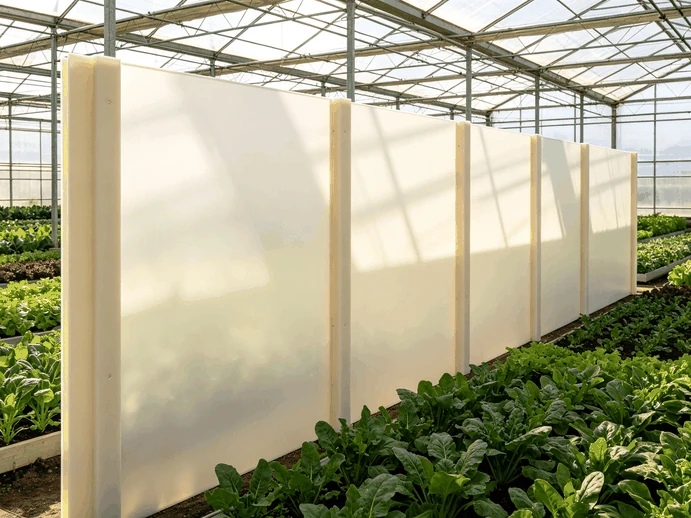
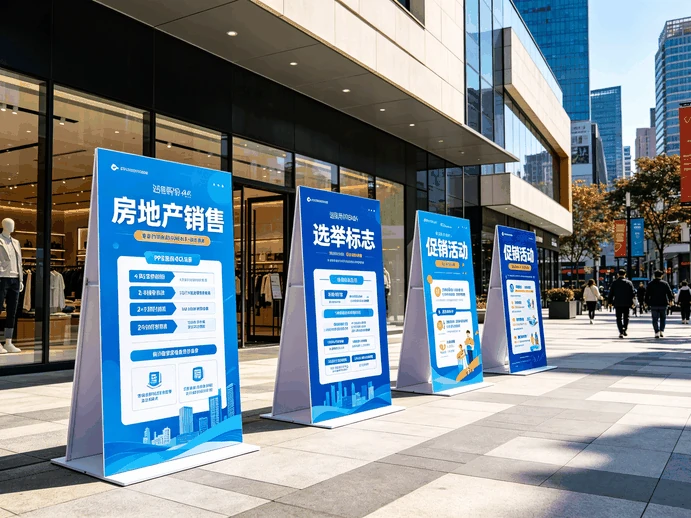
PP hollow sheets are the substrate of choice for screen-printed and digitally printed signage in retail environments, real estate, elections, and outdoor advertising. The moisture-proof construction eliminates warping in humid conditions that would degrade corrugated cardboard signs, while the lightweight nature reduces shipping costs and installation labor. UV-stabilized grades maintain color and mechanical integrity through 2-5 years of outdoor exposure, depending on local UV index.

Reusable Packaging & Logistics Containers

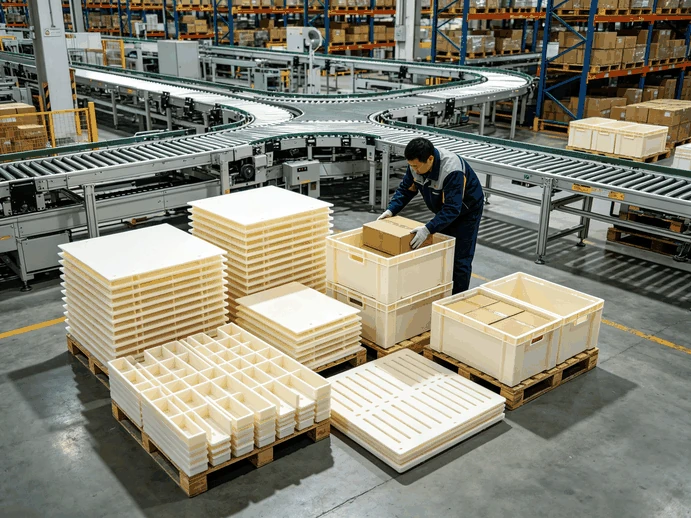
E-commerce and automotive supply chains increasingly adopt PP hollow sheet boxes, dividers, and dunnage as reusable alternatives to expendable corrugated packaging. The material withstands hundreds of handling cycles, resists oil and chemical contact common in manufacturing environments, and can be hot-air welded or die-cut into custom configurations. With upcoming Extended Producer Responsibility (EPR) regulations, the shift toward durable reusable packaging creates growing demand for high-quality PP hollow sheet production.

Frequently Asked Questions

What is the difference between twin-wall and triple-wall PP hollow plate, and which should I choose? -

Twin-wall sheets have two flat face layers connected by vertical ribs, offering the minimum weight for a given thickness with good flat-panel stiffness. Triple-wall sheets add a third middle layer with an additional rib set, roughly doubling the bending stiffness and compression resistance while adding approximately 40% weight. Twin-wall dominates signage and light packaging where weight savings matter most. Triple-wall serves applications requiring unsupported spans — protective panels, temporary partitions, and reusable container walls — where deflection under load is the primary design constraint. Jwell’s line can produce both structures on the same equipment with a die insert change, providing flexibility to serve both market segments from one capital investment.

What ROI timeline can a converter expect when switching from purchased PP hollow sheets to in-house extrusion? +

Converters consuming above 600 tonnes per year of PP hollow sheet typically see a 15-24 month payback period. The calculation centers on the margin between raw PP resin/granulate cost and the delivered sheet price from external suppliers — typically a 35-50% material cost spread that in-house production captures directly. Additional ROI drivers include reduced working capital tied up in sheet inventory, elimination of minimum order quantity constraints, and the ability to produce custom colors, thicknesses, and surface finishes that command premium pricing in niche markets. Jwell can provide a detailed ROI model based on your specific annual consumption, local resin pricing, and target product mix.

Can the PP hollow plate extrusion line run recycled or off-spec material to reduce raw material cost? +

Yes. The line is designed to process up to 100% in-house trim and post-industrial recycled PP when running monolayer construction. For higher-value applications requiring surface aesthetics or print quality, a coextrusion configuration with virgin PP skin layers (typically 10-15% of total thickness per side) over a recycled PP core layer achieves an optimal balance of surface quality and material cost. Jwell’s barrier screw design and vacuum-vented barrel configuration effectively handle the moisture and volatile content typically present in washed recycled PP flake, maintaining stable output rates. Post-consumer recycled (PCR) PP can also be used in the core layer, though we recommend trials to establish grade-dependent processing parameters.

Related Sheet Extrusion Lines

WPC Flooring Production Line

WPC Flooring Production Line

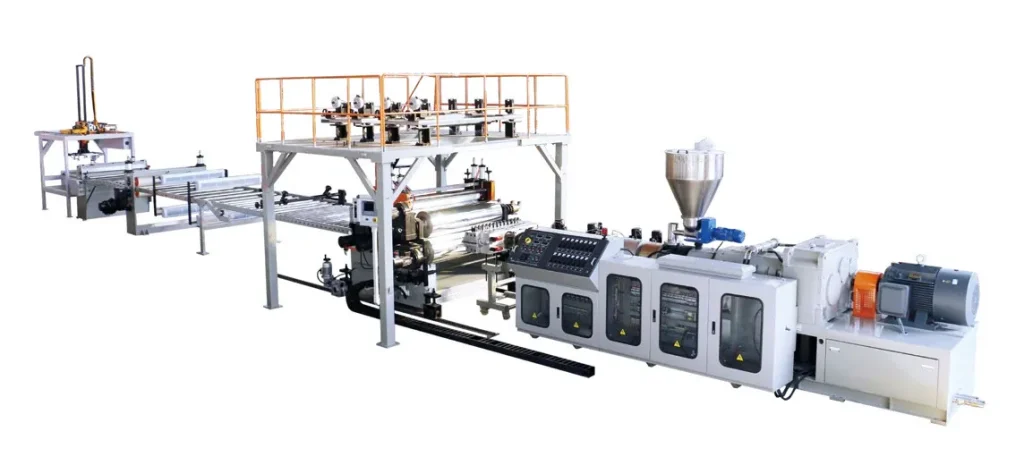
Extruder Type: Conical twin-screw, vented; Screw Material: 38CrMoAlA, nitrided, bimetallic optional; Screw Structure: Conical twin, designed for PVC + wood flour + CaCO₃ + foaming agent; L/D Ratio: Optimized for controlled foaming zone
Learn More ➔
SPC Flooring Production Line

SPC Flooring Production Line

Screw Diameter: Φ 80 mm / Φ 92 mm / Φ 110 mm / Φ 180 mm; Output (24h, SPC): 6-8 T / 12-18 T / 25-32 T / 70-100 T; Line Speed at 4 mm: 0.4-0.6 m/min / 0.8-1.3 m/min / 1.8-2.4 m/min / 5-9 m/min; Screw Material: 38CrMoAlA, nitrided, bimetallic optional / ← Same / ← Same / ← Same

Learn More ➔

Why Choose Jwell for Your PET Sheet Line

🏭

Factory/Experience

Jwell has manufactured PET sheet extrusion equipment since 2005, accumulating field data from over 400 installed PET lines worldwide. Each new machine generation incorporates refinements validated across hundreds of real production environments — not just lab prototypes.

🔬

Test/Validate

Our Changzhou facility operates a full production-scale PET line for customer trials. Bring your raw materials and target specifications — we run your recipe before you commit. The line delivered to your factory is a proven configuration, eliminating startup risk.

🌍

Service/Support

Factory-trained Jwell engineers based in Brazil, Spain, Mexico, and Shanghai travel to customer sites for installation and operator training. Remote diagnostic support via WeChat/WhatsApp responds within 2 hours. Critical spares ship from Shanghai within 48 hours.

Request a Quote or Technical Consultation

Your information will never be shared with third parties.