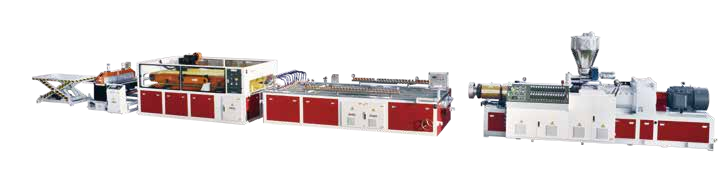
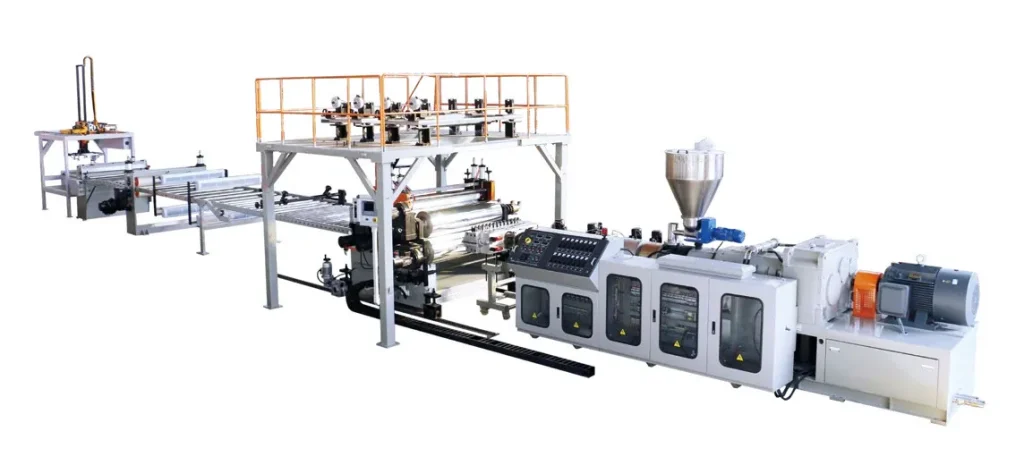
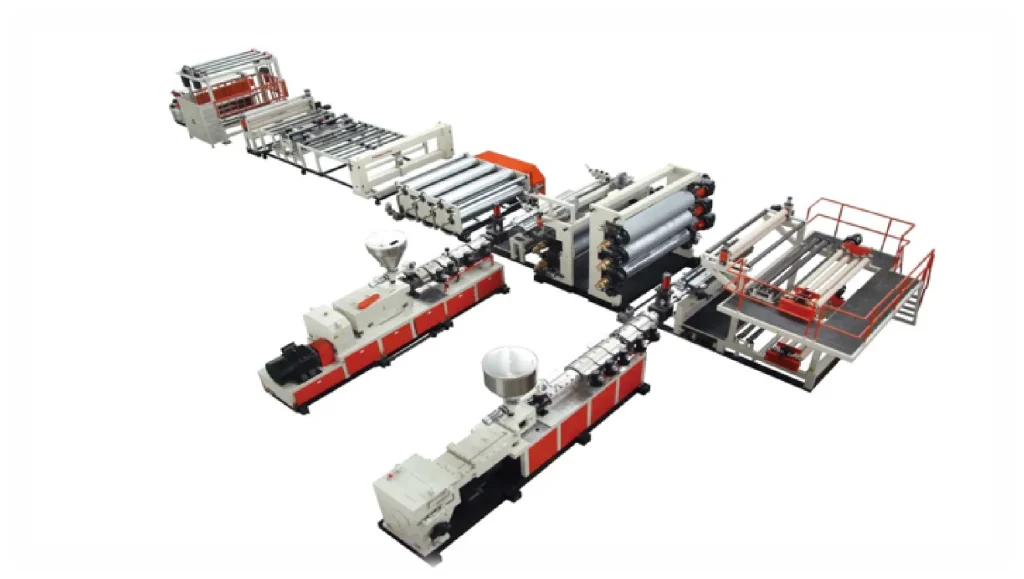
EVA POE Solar Film Extrusion Line

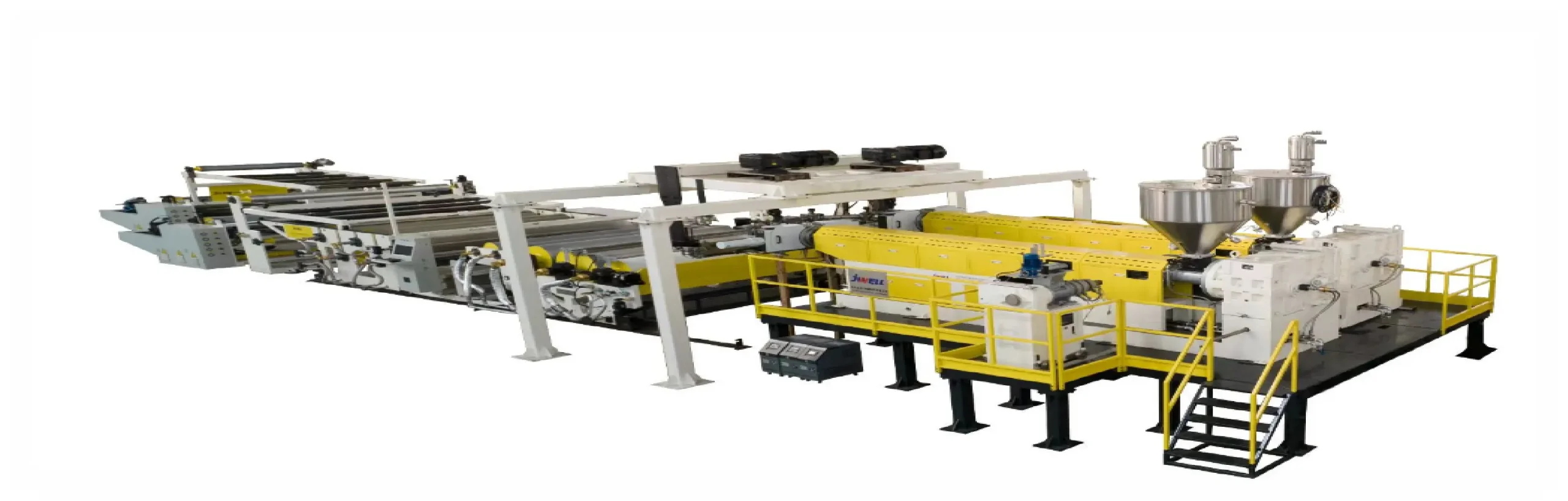
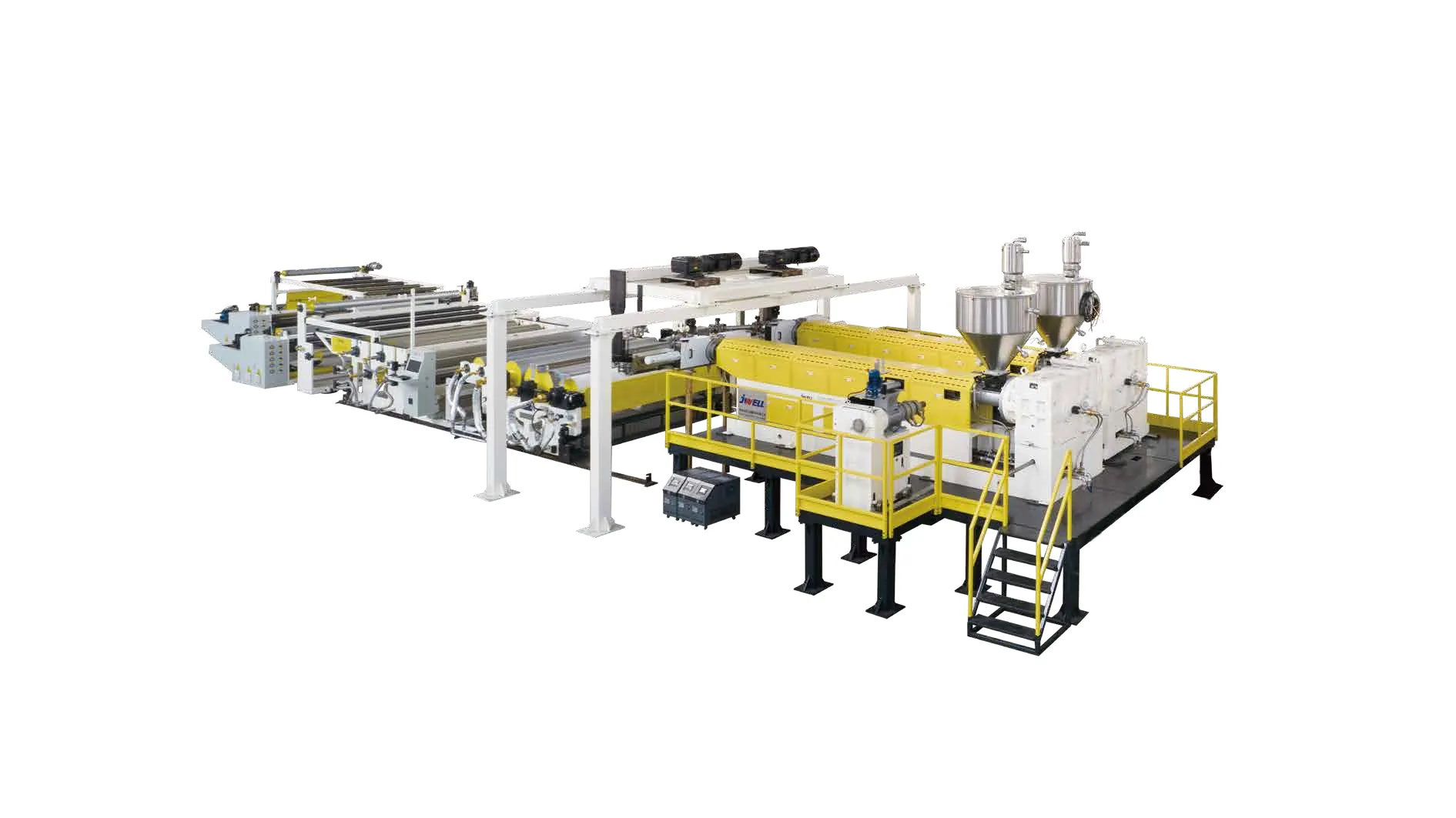
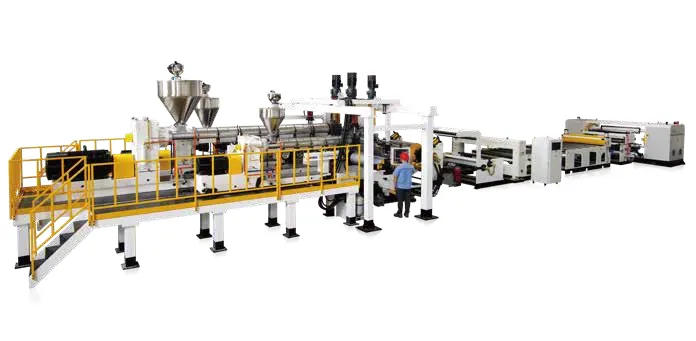
Cast film extrusion line for EVA (ethylene-vinyl acetate) and POE (polyolefin elastomer) solar module encapsulation film. 150-400 kg/h, 0.3-0.8 mm thickness, up to 2200 mm width. Ultra-clean processing with

EVA POE Film Extrusion Line: Related JWELL Extrusion Lines

The EVA POE Film Extrusion Line is part of JWELL’s complete extrusion portfolio. Customers evaluating this EVA POE Film Extrusion Line also frequently request our EVA Geomembrane Extrusion Line | Flexible Waterproof Liner | Jwell and TPO Waterproof Membrane Line | Jwell Machinery, which share the same proven screw, die and control platforms. For layout drawings, pricing and lead times, contact JWELL Machinery directly.

# Item Key Point
1 🌀 Ultra-Clean Extrusion <10 Gels/m² Above 100μm, Zero Above 200μm — SEO: solar film gel control, EVA film fish eye, ultra clean extrusion, solar encapsulation quality
2 A solar mod
3 ⚡ Peroxide-Safe Extrusion Chilled Barrel at 80-100°C for Premature Crosslinking Prevention — SEO: peroxide safe extrusion, low temperature EVA processing, premature crosslinking prevention, solar film pe
4 🎯 Precision Cast Film Die ±3% Thickness Uniformity Across 2200mm Width — SEO: cast film die, precision film extrusion, EVA film thickness control, solar film uniformity
5 Solar module m
6 🔄 Chilled Embossing Roll Prismatic or Matte Pattern for Anti-Reflection & Light Trapping — SEO: solar film embossing pattern, anti reflection EVA film, prismatic encapsulation surface, light trapping s

Ultra-Clean Extrusion — <10 Gels/m² Above 100μm, Zero Above 200μm

SEO: solar film gel control, EVA film fish eye, ultra clean extrusion, solar encapsulation quality

A solar module’s performance over its 25-year warranty period begins with the quality of its encapsulation film. Gel particles — microscopic crosslinked polymer domains formed when the peroxide crosslinking agent in the EVA/POE compound prematurely reacts during extrusion — are the primary quality defect in solar film. A 100-200 μm gel particle creates a localized optical defect that reduces light transmission by 5-20% at that point. Over 25 years of thermal cycling and UV exposure, that defect can initiate delamination (separation of the encapsulation film from the glass or cell), creating an air gap that further reduces module output and can lead to hotspot formation — a fire safety risk.

Jwell’s solar film line achieves gel control through three integrated systems:

1. Low-Shear Screw Design: The 90-120 mm single-screw extruder uses a purpose-designed screw with compression ratio of 2.0:1 (lower than standard 2.5-3.0:1) and an extended 10 L/D melting zone. This geometry keeps peak shear rate below 100 s⁻¹, versus 200-400 s⁻¹ for standard designs. Since peroxide decomposition rate increases exponentially with temperature above 120°C (approximately 2× per 10°C), and shear heating is proportional to shear rate squared, reducing peak shear by 50-75% reduces the probability of gel formation by over 90%.

2. Precision Temperature Control: 6 barrel heating/cooling zones maintain ±1°C uniformity using PID-controlled ceramic band heaters with active chilled-water cooling loops. Unlike standard extruders that only add heat, Jwell’s solar line actively removes heat — critical because EVA’s viscous shear heating generates 5-15°C of temperature rise in the melt, and the cooling system counteracts this to prevent the melt temperature from entering the peroxide decomposition range.

3. Melt Filtration: A continuous screen changer with 20-40 μm mesh (standard for solar film) captures any gel particles that form despite process control. The dual-cavity hydraulic design enables screen changes without interrupting production — screen packs are changed every 4-8 hours depending on compound cleanliness.

Peroxide-Safe Extrusion — Chilled Barrel at 80-100°C for Premature Crosslinking Prevention

SEO: peroxide safe extrusion, low temperature EVA processing, premature crosslinking prevention, solar film peroxide control

The crosslinking chemistry that makes EVA/POE an effective solar encapsulant — the peroxide-initiated crosslinking that provides mechanical stability, adhesion to glass and cells, and long-term durability — is also the primary process risk during extrusion. The organic peroxide crosslinking agent (typically tert-butyl peroxy-2-ethylhexyl carbonate or similar, with 1-minute half-life temperature of 140-160°C) is pre-compounded into the resin by the raw material supplier (e.g., Hanwha, STR, Mitsui, Bridgestone). The Jwell extruder’s job is to melt and form this compound into film without triggering the crosslinking reaction — and the key is maintaining all melt-contact temperatures below 120°C.

The solar film extruder operates at 80-100°C barrel temperature — approximately 60-100°C cooler than a standard PE or PP extruder. This requires a fundamentally different thermal design:

– Active barrel cooling: Each heating zone has both ceramic band heaters and chilled-water cooling coils, with the cooling circuit capable of removing up to 5 kW of heat per zone — actively fighting the shear heating generated by the screw.

– Deep-flight screw geometry: The screw channels are 15-20% deeper than standard designs, reducing the energy input per revolution and minimizing viscous heating.

– Screw temperature control: The screw core is bored for chilled-water circulation, removing heat from the melt’s center (the hottest region in standard screws) and maintaining uniform radial temperature.

– Chilled feed throat: The hopper and feed zone are actively water-cooled to 10-20°C, preventing heat conduction from the barrel that could soften and stick EVA pellets in the feed zone.

The die is maintained at 100-120°C, and the cast film is immediately quenched on a chilled polishing roll at 15-25°C. The crosslinking reaction is preserved for the customer’s module lamination process (145-155°C for 15-20 minutes under vacuum) — the Jwell line’s entire processing chain keeps the peroxide intact.

Precision Cast Film Die — ±3% Thickness Uniformity Across 2200mm Width

SEO: cast film die, precision film extrusion, EVA film thickness control, solar film uniformity

Solar module manufacturers specify encapsulation film thickness with tight tolerances: 0.45 ±0.02 mm for standard EVA and 0.50 ±0.02 mm for POE. A thickness deviation of 0.03 mm may seem minor, but in a 2200 × 1100 mm module, it represents a 6.5% variation in encapsulation volume — regions of the module with thinner film risk incomplete cell coverage (exposing cells to moisture ingress), while thicker regions waste expensive compound (EVA at $2.5-4.0/kg for compounded resin).

Jwell’s cast film die achieves this tolerance through:

– Coat-hanger manifold geometry optimized via computational flow simulation for the low-viscosity, low-temperature EVA/POE melt (MFI typically 20-40 g/10min at 190°C — much higher than standard PE film grades)

– Flexible adjustable lip with differential adjustment bolts spaced at 25 mm intervals across the die width, enabling localized thickness correction

– Chrome-plated flow surfaces polished to Ra 0.05 μm — preventing EVA degradation buildup at the die lip (EVA is more prone to edge-bead oxidation than PE or PP)

– Automatic die bolt adjustment driven by online thickness gauge feedback (beta-ray or X-ray gauge scanning across the web) — closed-loop thickness control maintaining ±3% of target

The die width options (1600 mm, 2000 mm, 2200 mm) match standard solar module formats: 60-cell (1600-1700 mm), 72-cell (1950-2100 mm), and large-format (2100-2200 mm) modules.

Chilled Embossing Roll — Prismatic or Matte Pattern for Anti-Reflection & Light Trapping

SEO: solar film embossing pattern, anti reflection EVA film, prismatic encapsulation surface, light trapping solar film

The surface of the encapsulation film that contacts the solar cell is embossed with a microscopic pattern during the cast film process. This pattern serves two functions in the final module:

– Anti-reflection: A prismatic pattern (pyramid or V-groove structure, 50-150 μm pitch, 30-60 μm depth) reduces surface reflectance from approximately 4% (smooth surface) to approximately 1-2% at the EVA/glass interface, increasing the light reaching the solar cell by 2-3% — a significant gain in module efficiency.

– Air evacuation: The embossed pattern creates channels that allow air to escape during the vacuum lamination process, preventing air bubbles that would cause delamination or optical defects in the finished module.

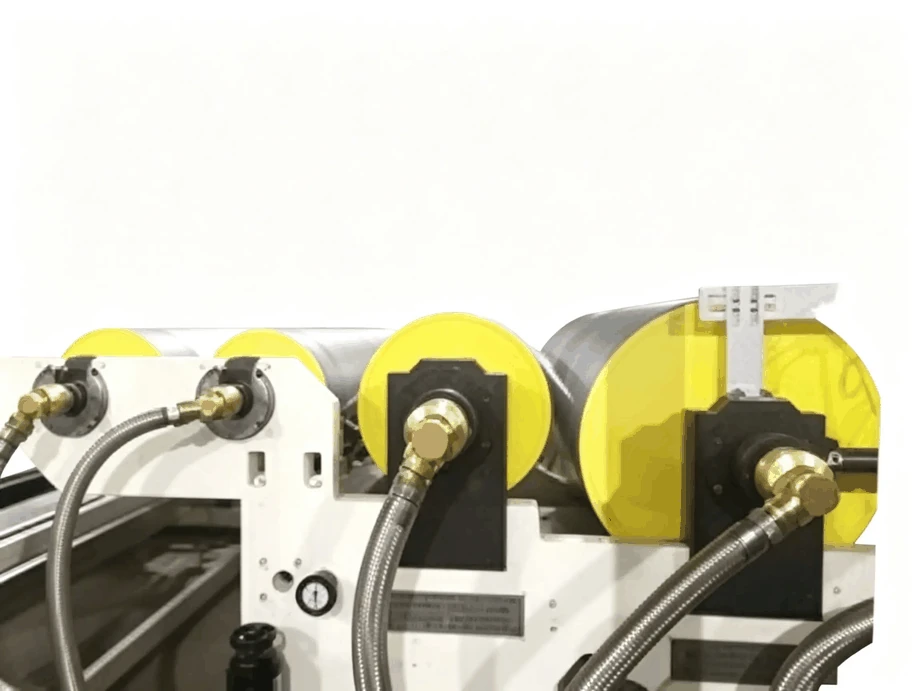
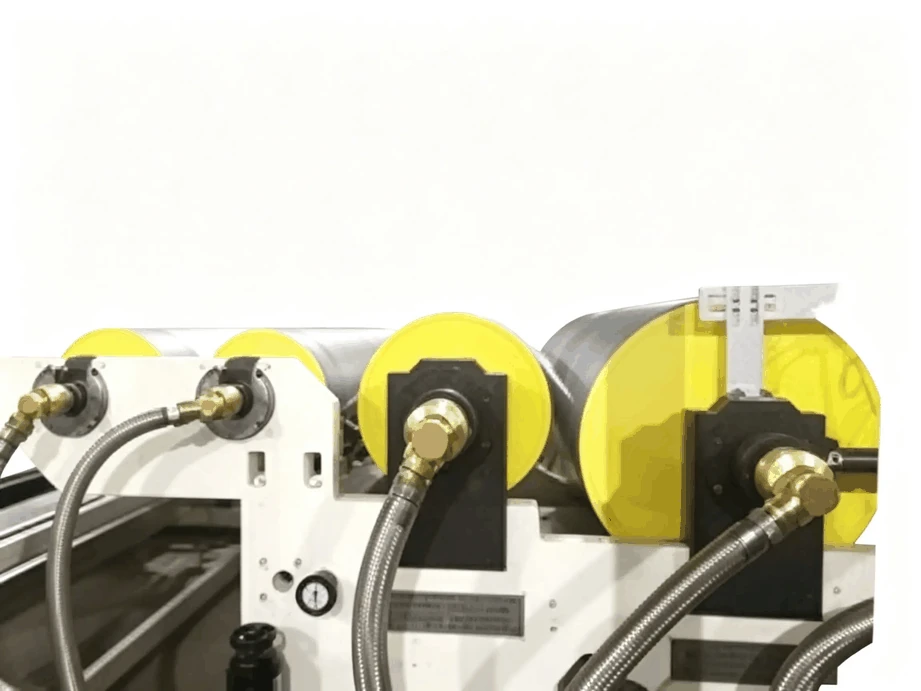
Jwell’s embossing roller is a precision-engraved, hard-chrome-plated chilled roll (400-500 mm diameter). The engraving pattern is laser-etched into the chrome surface to the customer’s specification — common patterns include prismatic (V-groove), matte (random micro-texture), and custom patterns for specific module manufacturer requirements. The embossing roll is maintained at 15-25°C by a closed-loop chilled water circuit, simultaneously cooling the film and setting the embossed pattern.

For POE film, which has lower adhesion than EVA, the embossing pattern is typically deeper (40-80 μm) and sharper to ensure complete air evacuation during lamination. The Jwell line can produce both pattern types, with pattern changeover accomplished by roller replacement (2-3 hours for a roller change).

Technical Specifications

Parameter JW-SOL90 / JW-SOL105 / JW-SOL120
Extruder / /
Extruder Type Single-screw, chilled barrel / Single-screw, chilled barrel / Single-screw, chilled barrel
Screw Diameter 90 mm / 105 mm / 120 mm
L/D Ratio 30:1 / 30:1 / 30:1
Screw Material 38CrMoAlA, nitrided HV≥740 / 38CrMoAlA, nitrided HV≥740 / 38CrMoAlA, nitrided HV≥740
Compression Ratio 2.0:1 (low-shear) / 2.0:1 (low-shear) / 2.0:1 (low-shear)
Barrel Cooling Active chilled water, 6 zones / Active chilled water, 6 zones / Active chilled water, 6 zones
Barrel Temperature 80-100°C (process) / 80-100°C (process) / 80-100°C (process)
Temperature Accuracy ±1°C / ±1°C / ±1°C
Main Motor Power 55 kW / 75 kW / 110 kW
Output Capacity 150-250 kg/h / 250-350 kg/h / 300-400 kg/h
Die & Filtration / /
Die Type Coat-hanger T-die, chrome-plated Ra 0.05 μm / /
Die Width 1600 mm / 2000 mm / 2200 mm / /
Melt Filtration Continuous screen changer, 20-40 μm mesh / /
Film Specifications / /
Film Thickness 0.3-0.8 mm / 0.3-0.8 mm / 0.3-0.8 mm
Film Width up to 2200 mm / up to 2200 mm / up to 2200 mm
Thickness Tolerance ±3% / ±3% / ±3%
Gel Specification <10/m² (>100μm), 0 (>200μm) / <10/m² (>100μm), 0 (>200μm) / <10/m² (>100μm), 0 (>200μm)
Light Transmission ≥91% at 550 nm / ≥91% at 550 nm / ≥91% at 550 nm
Chilled Roll & Embossing / /
Chilled Roll Diameter 600 mm / 700 mm / 800 mm
Roll Surface Hard chrome, Ra 0.025 μm mirror / /
Roll Temperature 15-25°C ±0.5°C / 15-25°C ±0.5°C / 15-25°C ±0.5°C
Embossing Pattern Prismatic / Matte / Custom / /
Winder / /
Winder Type Center/surface, dual-turret, auto cut-and-transfer / /
Tension Control ±2% / ±2% / ±2%
Max Roll Diameter 600 mm / 600 mm / 800 mm
Control & Utilities / /
PLC Siemens S7-1200 / Siemens S7-1200 / Siemens S7-1200
HMI 15″ touchscreen / 15″ touchscreen / 15″ touchscreen
Chiller 50-100 kW closed-loop glycol-water / /
Total Installed Power ~180 kW / ~250 kW / ~320 kW
Certifications CE, ISO 9001 / CE, ISO 9001 / CE, ISO 9001

Crystalline Silicon Solar Modules — EVA Encapsulation Film for Standard PV Panels

EVA encapsulation film is the industry-standard encapsulant for crystalline silicon (c-Si) photovoltaic modules, used in over 80% of the approximately 300 GW of solar modules produced annually worldwide. The EVA film is placed between the glass superstrate and the solar cell array (front-side encapsulation) and between the cell array and the backsheet (rear-side encapsulation), and the entire stack is laminated under vacuum at 145-155°C for 15-20 minutes. During lamination, the peroxide crosslinking agent decomposes, creating chemical crosslinks that transform the EVA from a thermoplastic film into a thermoset elastomer — providing the mechanical stability, optical clarity, and adhesion that protect the solar cells for 25+ years of outdoor service.

Jwell’s EVA film line serves the volume-driven crystalline silicon module market, where production economics favor high throughput (250-400 kg/h), consistent quality (gel control, thickness uniformity), and reliable supply (the solar industry runs 24/7, and film supply interruptions are production-stopping for module manufacturers). The line’s 2200 mm width produces film for the 72-cell module format that dominates utility-scale solar farms.

High-Efficiency Modules — POE Encapsulation Film for Bifacial, N-Type & PERC Cells

POE (polyolefin elastomer) encapsulation film is the premium encapsulant for high-efficiency solar modules — bifacial modules (which generate power from both sides, increasingly dominant in utility-scale solar), N-type cell modules (higher efficiency than standard P-type), PERC (passivated emitter and rear contact) modules, and modules destined for hot-humid climates where PID (potential-induced degradation) is a reliability risk.

POE’s advantages over EVA:

– Water vapor transmission rate: 2-5 g/m²/day (POE) vs 20-40 g/m²/day (EVA) — 10× lower, reducing moisture-induced corrosion of cell metallization

– PID resistance: POE’s volume resistivity of 10¹⁶-10¹⁷ Ω·cm vs EVA’s 10¹⁴-10¹⁵ Ω·cm prevents sodium ion migration from the glass that causes PID power loss

– UV stability: POE shows Delta YI <2 after 3000 hours UV-B exposure vs EVA's Delta YI 5-10 — critical for bifacial modules where the rear side is exposed to ground-reflected UV

– Processing: POE lamination requires 5-10°C higher temperature than EVA, which the Jwell line accommodates through its temperature control system

The Jwell line’s dual-material capability (EVA and POE on the same platform) enables film producers to serve both the volume EVA market and the high-growth, higher-margin POE market from a single capital investment.

Frequently Asked Questions

What is the difference between EVA and POE solar encapsulation film? -

EVA (ethylene-vinyl acetate, typically 28-33% VA content) is the traditional solar encapsulation film, used in over 80% of crystalline silicon PV modules globally. It offers good transparency (>90% light transmission), reasonable cost ($2-4/kg for compounded resin), and a 25+ year track record. POE (polyolefin elastomer) is a newer, higher-performance encapsulation film specified for high-efficiency modules: it has 10× lower water vapor transmission rate (reducing PID — potential-induced degradation), better UV stability (less yellowing over 25 years), and higher volume resistivity (reducing leakage current). POE is increasingly specified for bifacial modules, N-type cells, and modules destined for hot-humid climates. The Jwell line processes both materials on the same platform.

Why is gel control critical in solar encapsulation film production? +

Gel particles (also called ‘fish eyes’) are microscopic crosslinked polymer particles that form when the peroxide crosslinking agent in the EVA/POE compound prematurely reacts during extrusion. In a solar module, a gel particle larger than 100 μm creates a localized optical defect that reduces light transmission by 5-20% in that spot, and over the module’s 25-year life, it can initiate delamination or hotspots. Jwell’s line controls gels through: low-shear screw design (peak shear <100 s⁻¹), precision temperature control (±1°C across all zones to prevent hot spots that trigger premature crosslinking), and a melt filtration system with 20-40 μm mesh that captures any gels formed despite process control. The gel specification for premium solar film is <10 gels/m² above 100 μm and zero gels above 200 μm.

What is the output capacity and film width of the Jwell solar film line? +

The Jwell EVA/POE solar film line delivers 150-400 kg/h output depending on extruder size (90 mm, 105 mm, or 120 mm screw diameter). Film thickness range is 0.3-0.8 mm with width up to 2200 mm (standard for 72-cell modules, the most common format). At 300 kg/h producing 0.5 mm film at 2200 mm width, the line runs at approximately 8-12 m/min — a relatively slow line speed that ensures the precision thickness control and surface quality solar film requires.

How does the Jwell line handle the peroxide crosslinking agent in EVA/POE compounds? +

The peroxide crosslinking agent (typically organic peroxide with 1-minute half-life temperature of 140-160°C) is pre-compounded into the EVA/POE resin by the raw material supplier. The Jwell extruder must process this compound without triggering premature crosslinking. The key is processing temperature: the extruder barrel is maintained at 80-100°C — well below the peroxide decomposition temperature — with the screw designed for gentle, low-shear melting. A chilled-water cooling system on the barrel provides active heat removal (normal extruders use heaters only). The die temperature is 100-120°C. After the film is cast onto the chilled roll (15-25°C) and wound, the crosslinking reaction is activated later during the module lamination process (typically 145-155°C for 15-20 minutes in a vacuum laminator) — not during extrusion.

Does Jwell provide application trials for solar film production? +

Yes. Jwell offers application-center trials at Changzhou using the customer’s EVA or POE compound. The trial produces 100-300 kg of film to the customer’s specification (thickness, width, embossing pattern), followed by module lamination trials to verify encapsulation performance. Trial data includes: gel count per m², thickness profile (full-width scan), light transmission spectrum, and lamination peel strength. This data package supports the customer’s qualification with solar module manufacturers.

Related Sheet Extrusion Lines

WPC Flooring Production Line

WPC Flooring Production Line

Extruder Type: Conical twin-screw, vented; Screw Material: 38CrMoAlA, nitrided, bimetallic optional; Screw Structure: Conical twin, designed for PVC + wood flour + CaCO₃ + foaming agent; L/D Ratio: Optimized for controlled foaming zone

Learn More ➔
SPC Flooring Production Line

SPC Flooring Production Line

Screw Diameter: Φ 80 mm / Φ 92 mm / Φ 110 mm / Φ 180 mm; Output (24h, SPC): 6-8 T / 12-18 T / 25-32 T / 70-100 T; Line Speed at 4 mm: 0.4-0.6 m/min / 0.8-1.3 m/min / 1.8-2.4 m/min / 5-9 m/min; Screw Material: 38CrMoAlA, nitrided, bimetallic optional / ← Same / ← Same / ← Same

Learn More ➔

Why Choose Jwell for Your PET Sheet Line

🏭

Factory/Experience

Jwell has manufactured PET sheet extrusion equipment since 2005, accumulating field data from over 400 installed PET lines worldwide. Each new machine generation incorporates refinements validated across hundreds of real production environments — not just lab prototypes.

🔬

Test/Validate

Our Changzhou facility operates a full production-scale PET line for customer trials. Bring your raw materials and target specifications — we run your recipe before you commit. The line delivered to your factory is a proven configuration, eliminating startup risk.

🌍

Service/Support

Factory-trained Jwell engineers based in Brazil, Spain, Mexico, and Shanghai travel to customer sites for installation and operator training. Remote diagnostic support via WeChat/WhatsApp responds within 2 hours. Critical spares ship from Shanghai within 48 hours.

Request a Quote or Technical Consultation

Your information will never be shared with third parties.