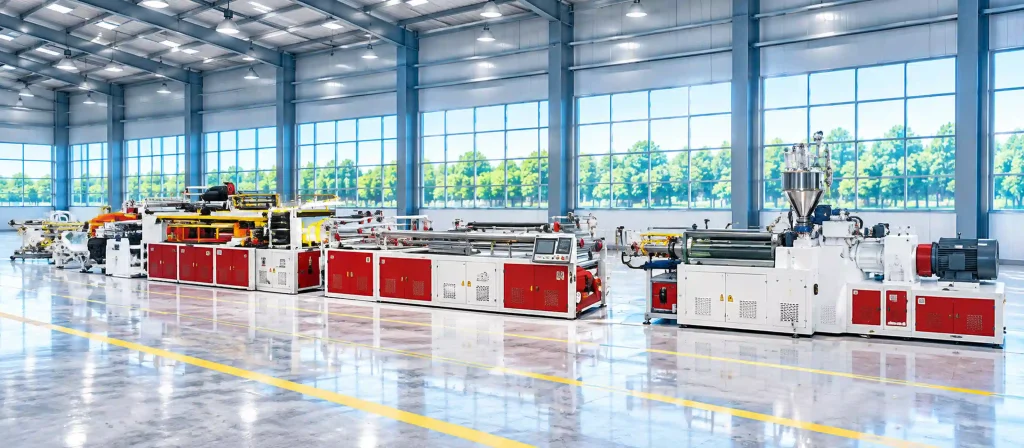
WPC Flooring Production Line
Jwell WPC Flooring Production Line produces lightweight, durable wood-plastic composite flooring with a foamed core, precision calendering, embossing, UV coating and automated profiling.

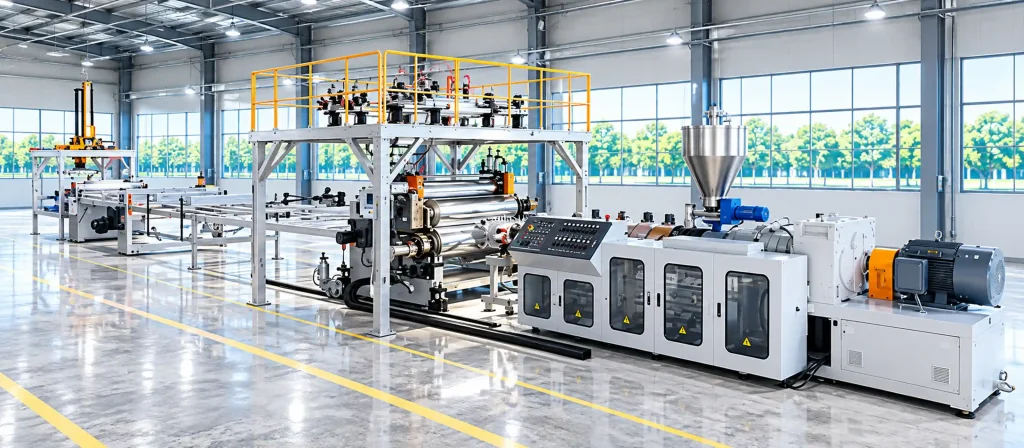
Jwell Geocell Extrusion Line is an integrated production system for manufacturing three-dimensional polymer geocell panels from HDPE or PP. The line combines polymer extrusion, sheet forming, optional online perforation, strip processing, ultrasonic welding and downstream handling to produce geocells for geotechnical engineering applications.
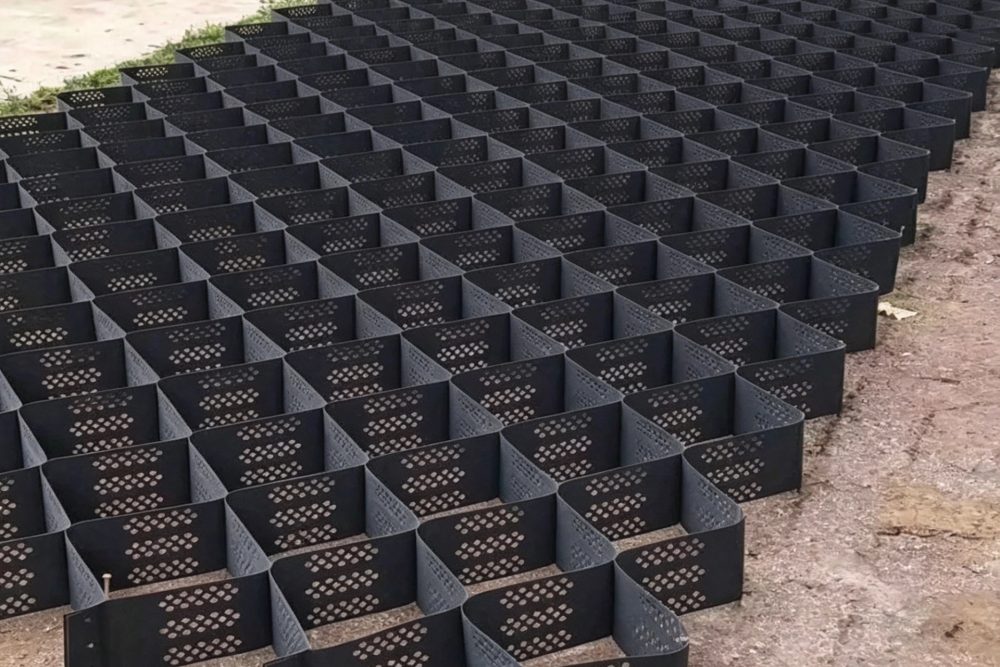
Geocell is a three-dimensional cellular confinement structure. When expanded and filled with suitable soil, sand, gravel or other approved materials, the interconnected polymer cells help restrict lateral movement of the infill and distribute loads across the stabilized area.
Depending on the required product specification, Jwell can configure the production line for different sheet widths, thicknesses, cell depths, perforation patterns and welding configurations.
⚙ Complete Production System
🧩 3D CellularStructure
💧 Perforated & Solid Options
🔄 Continuous Automated Production
🎯 Application-Based Configuration
📦 Integrated Finishing & Baling
The extrusion system is the starting point of the geocell manufacturing process. HDPE or PP raw material is melted, mixed and homogenized before being formed into a controlled polymer sheet or strip.
Stable extrusion conditions help maintain consistent material thickness and width for subsequent perforation, strip processing and welding. The extrusion configuration can be selected according to the required material, product dimensions and production capacity.
The extrusion section typically includes the feeding system, extruder, screen-changing or filtration system, melt pump where required, T-die and downstream sheet-forming equipment.
Key considerations include:
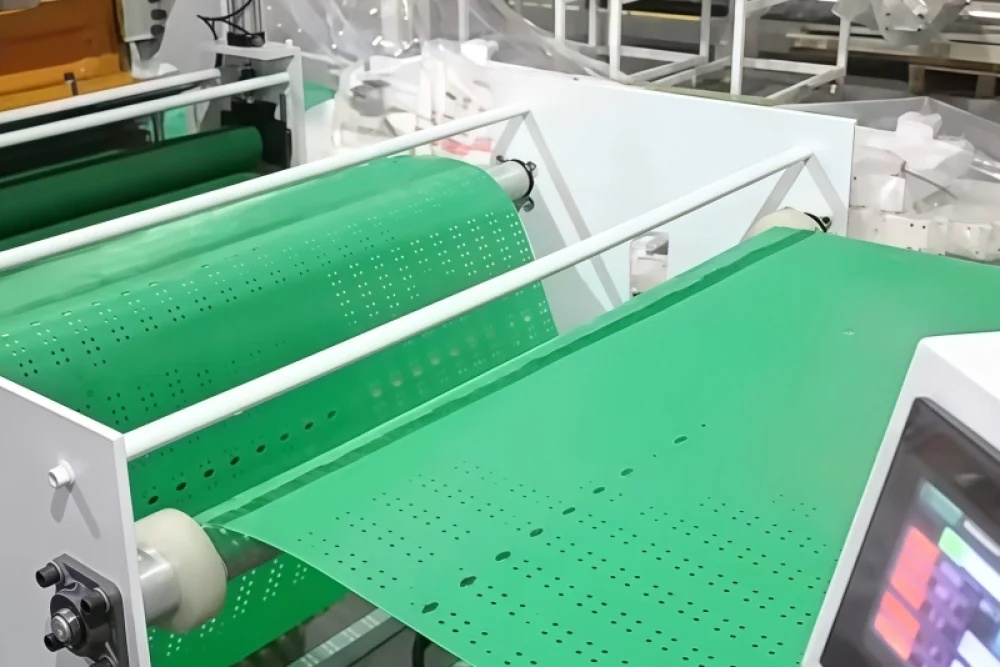
An online perforation system can be integrated into the production line when perforated geocell products are required.
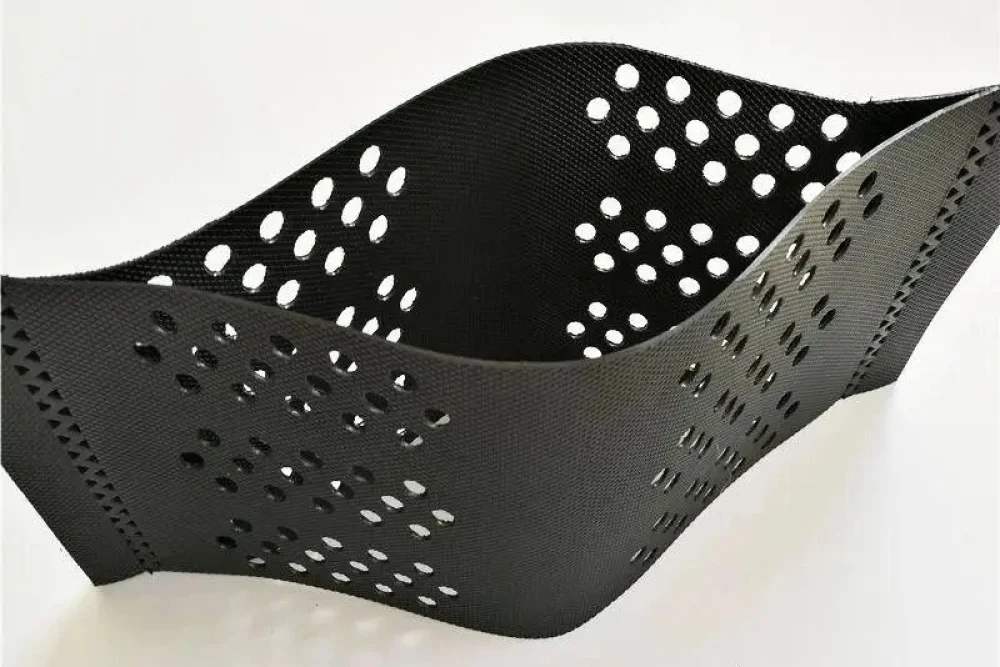
The punching unit creates controlled openings according to the specified hole pattern, spacing and product design. Perforated and unperforated configurations can therefore be produced according to the intended engineering application.
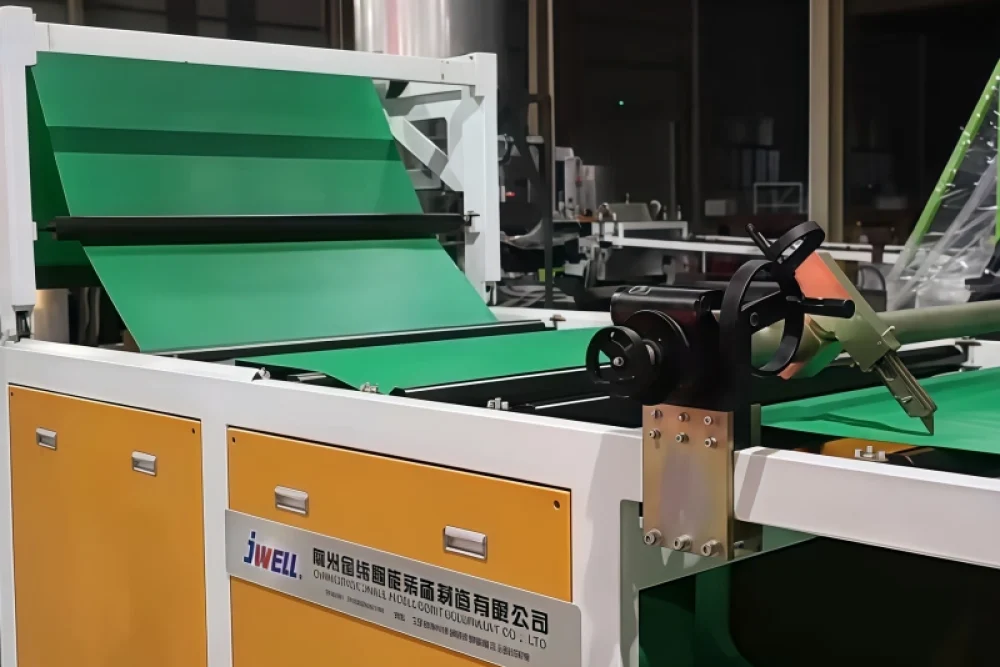
After extrusion and optional perforation, the polymer material is prepared for the welding process.
The strip processing and feeding section controls the positioning and movement of the polymer material before it enters the welding system. Stable feeding is important because the welding interval directly affects the final cell geometry.
The system is designed to coordinate:
Welding is the core conversion process in geocell manufacturing.
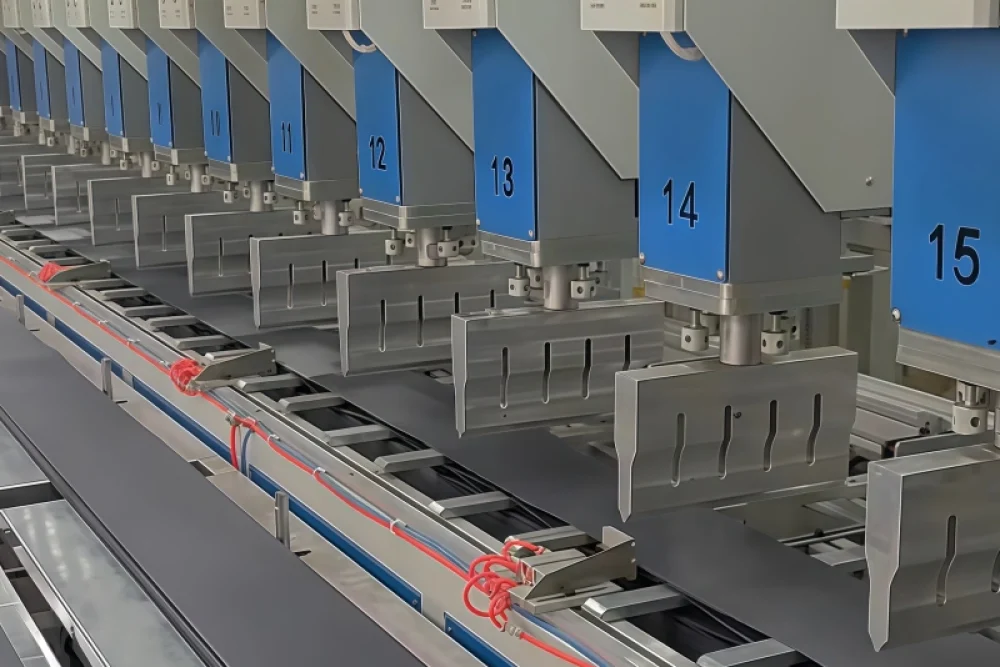
The ultrasonic welding system joins polymer strips at predetermined points. High-frequency vibration generates localized heat at the contact points, creating repeated welded connections between the strips.
When the welded material is expanded, these connection points form the characteristic three-dimensional cellular structure of the geocell.
Different geocell applications require different cell dimensions. The production line can therefore be configured according to the required cell depth, welding pitch, strip dimensions and finished panel size.
After welding, the continuous geocell material is transferred to the downstream handling section.
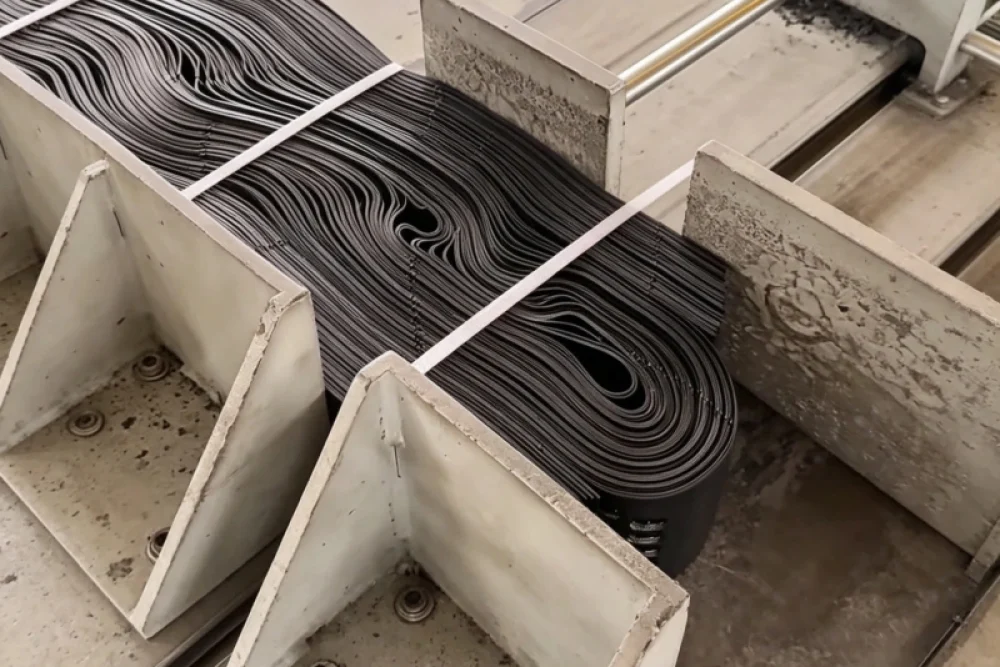
Traction and rewinding equipment can maintain stable material movement and collect the welded product. Depending on the product configuration, downstream equipment can also include folding, bundling and baling systems.
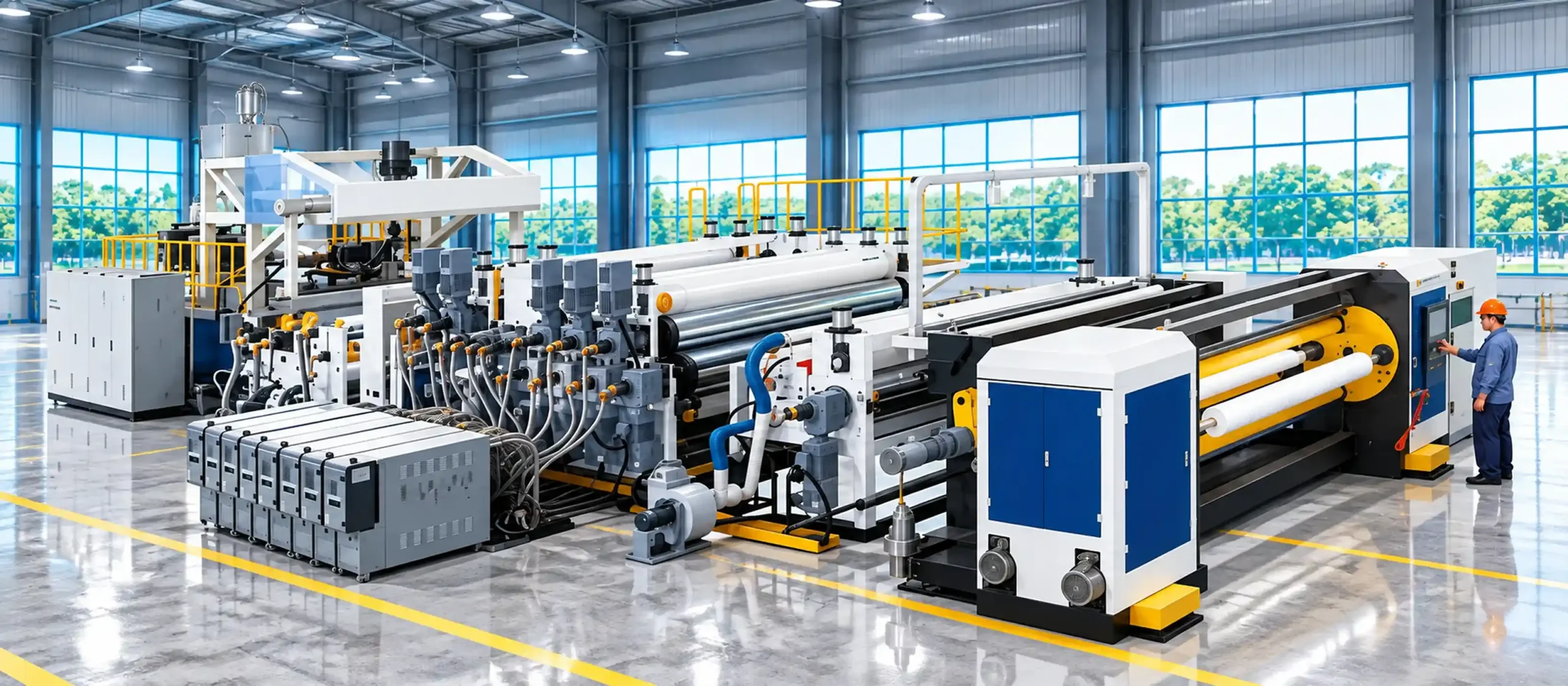
The complete geocell production line integrates the main production sections into a coordinated manufacturing system.
The control configuration can be customized according to the line design and customer’s production requirements.
| Parameter | Typical Specification |
|---|---|
| Product | Geocell |
| Raw Material | HDPE / PP |
| Production Capacity | 200–500 kg/h* |
| Product Width | 600–1500 mm* |
| Typical Product Width | Approximately 1220–1250 mm for common configurations* |
| Sheet / Strip Thickness | 0.8–2.0 mm* |
| Product Type | Perforated / Unperforated |
| Punching Speed | 20–70 pcs/min* |
| Welding System | Ultrasonic Welding* |
| Welding Pitch | Customized |
| Cell Geometry | Customized |
| Perforation Pattern | Customized |
| Downstream Handling | Traction / Rewinding / Folding / Baling |
| Control System | PLC + HMI |
| Line Configuration | Customized |
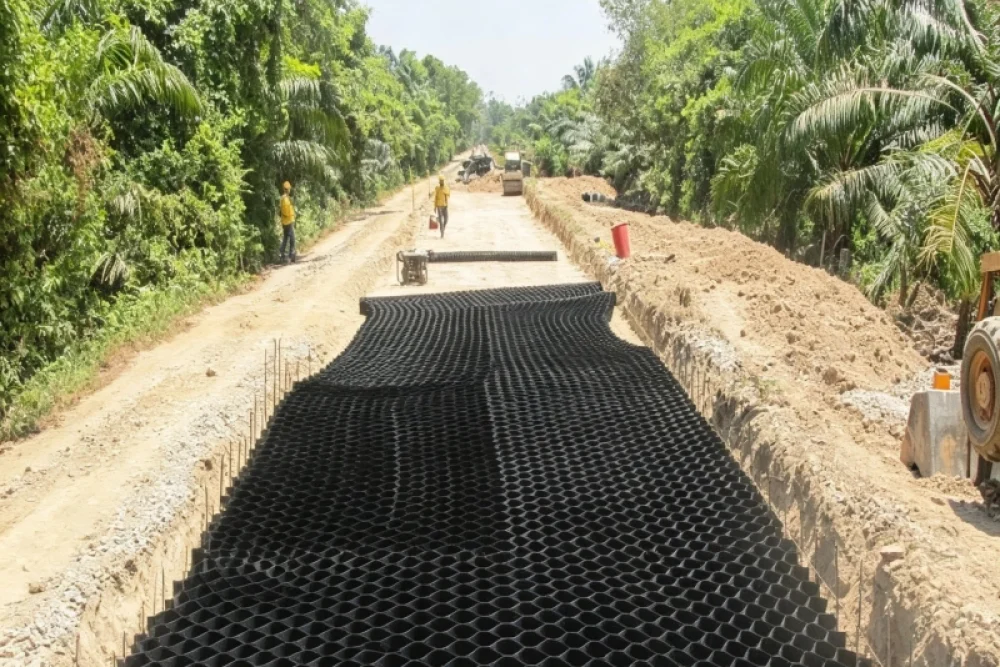
Geocells are widely used as part of engineered road and ground stabilization systems. When filled with suitable aggregate or soil, the cellular structure confines the infill and helps distribute applied loads across the stabilized area.
Typical applications include:
Geocell can be incorporated into a designed pavement or ground stabilization system where improved confinement and load distribution are required. The appropriate cell depth, infill and installation method depend on project conditions.
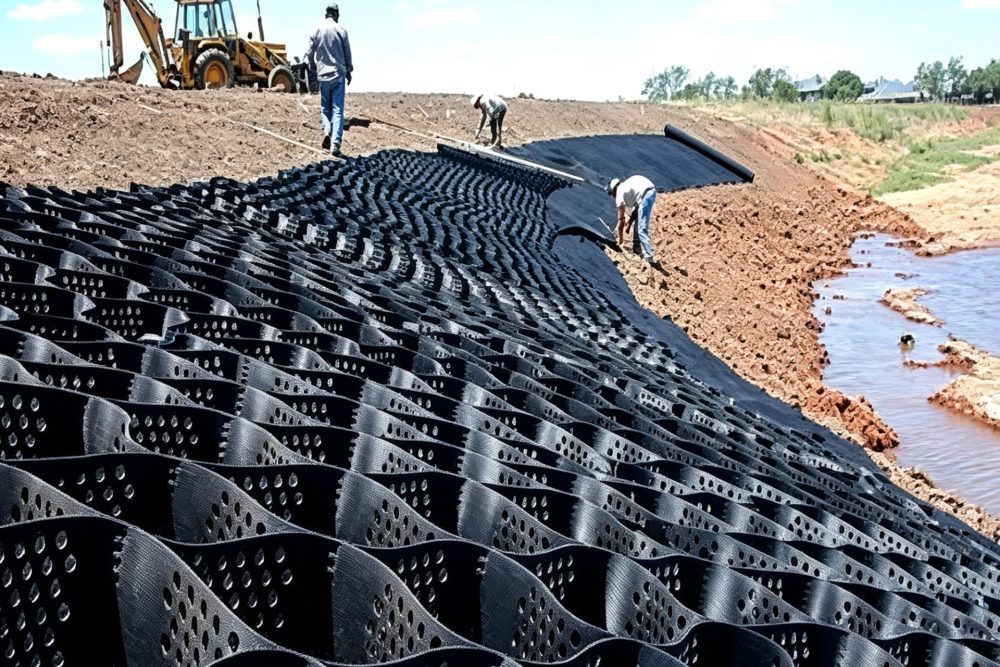
Geocells can be installed and anchored on slopes before being filled with soil, aggregate or other suitable materials.
The cellular structure helps retain the infill and reduce surface movement. Soil-filled configurations can also be incorporated into vegetation-based slope protection systems where appropriate.
Typical applications include:
The final system should consider slope angle, drainage, anchoring, infill material, rainfall and other site-specific conditions.
Geocells can be used in areas where the ground structure must support repeated or concentrated loads.
Typical applications include:
The confined infill can provide a more stable load-bearing layer and help distribute loads over challenging subgrades when incorporated into an appropriate engineering design.
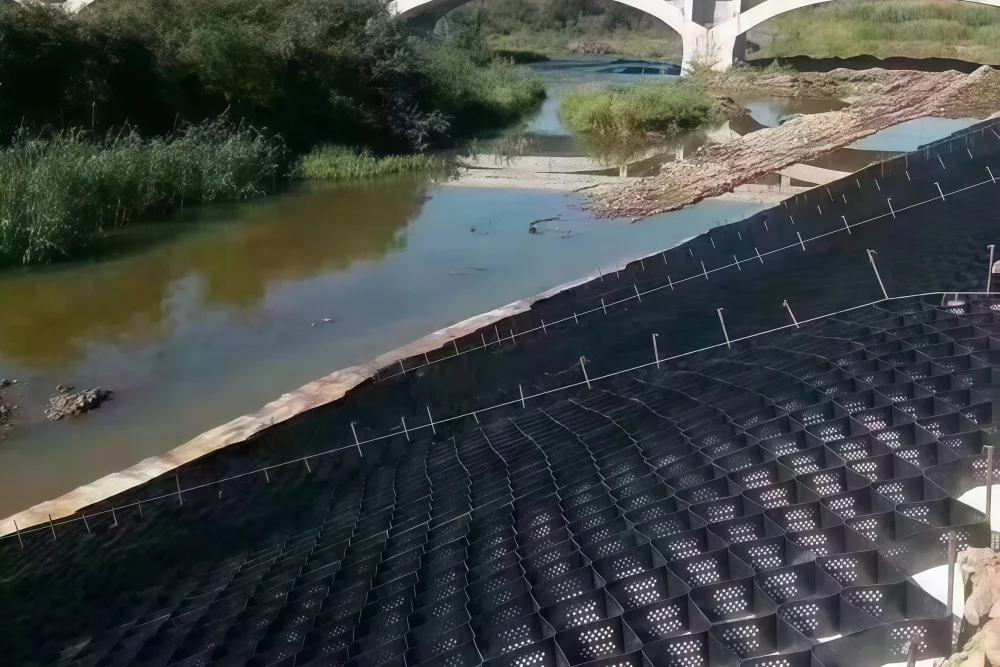
Geocell systems can be used in engineered erosion-control structures for riverbanks, drainage channels, canals, lakeshores and other areas exposed to water movement.
Suitable configurations can help retain soil or aggregate and stabilize the surface against erosion and displacement.
Typical applications include:
The geocell system should be designed according to hydraulic conditions, slope geometry, drainage requirements and the selected infill material.
Geocell is a three-dimensional cellular confinement system made from interconnected polymer strips, commonly produced from HDPE or PP.
When the geocell panel is expanded and filled with suitable soil, sand, gravel or other approved infill material, the cell walls provide lateral confinement and help limit the movement of the infill.
Unlike a conventional flat reinforcement layer, geocell creates a three-dimensional structure around the infill material.
This makes geocell suitable for a range of geotechnical applications, including:
The performance of a geocell system depends on the product design, infill material, installation method, subgrade conditions and overall engineering design.
When expanded, the interconnected polymer strips form a three-dimensional cellular network. The cell walls restrict lateral movement of the infill material.
The confined infill forms a more stable structural layer that can help distribute applied loads over the underlying area.
By limiting the movement of soil or aggregate within individual cells, geocell systems can improve the stability of the filled layer.
In appropriate applications, geocells can help stabilize slopes, road surfaces, embankments and other areas exposed to soil movement or erosion.
Geocell performance is project-specific. Cell dimensions, infill material, subgrade conditions, drainage, anchoring and installation methods should be determined according to the engineering requirements of each project.
The manufacturing process of geocell involves more than polymer extrusion alone. The extruded material must be processed, optionally perforated, positioned and welded to create the final cellular structure.
HDPE or PP raw materials are prepared according to the required product formulation and processing conditions.
↓
The material is melted and homogenized in the extruder before being formed into a controlled polymer sheet or strip.
↓
The melt passes through the die and downstream forming section to achieve the required product width and thickness.
↓
For perforated geocell products, an optional punching system creates the specified hole pattern.
↓
The polymer material is prepared and accurately positioned before entering the welding section.
↓
Polymer strips are welded at controlled intervals to create the connection points that define the cellular geometry.
↓
The welded geocell structure is collected, folded or otherwise prepared for downstream handling.
↓
Finished geocell products are bundled or baled for storage, transportation and installation.
8–15 m/min depending on strip thickness and weld pattern.
Yes. The integrated perforation unit produces standard perforation patterns required by ASTM and EN geocell specifications.
HDPE and PP are commonly used polymer materials for geocell production. The appropriate material grade depends on the required product properties, processing conditions and application.
The reference configuration shown for this production system provides a production capacity of approximately 200–500 kg/h. Actual output depends on the polymer material, product thickness, width, cell geometry, welding configuration and operating conditions.
Geocell is a three-dimensional cellular confinement system, while geogrid is generally a two-dimensional planar reinforcement product. Geocell primarily confines infill within interconnected cells, while geogrid provides tensile reinforcement and interaction with surrounding soil or aggregate.

Jwell WPC Flooring Production Line produces lightweight, durable wood-plastic composite flooring with a foamed core, precision calendering, embossing, UV coating and automated profiling.

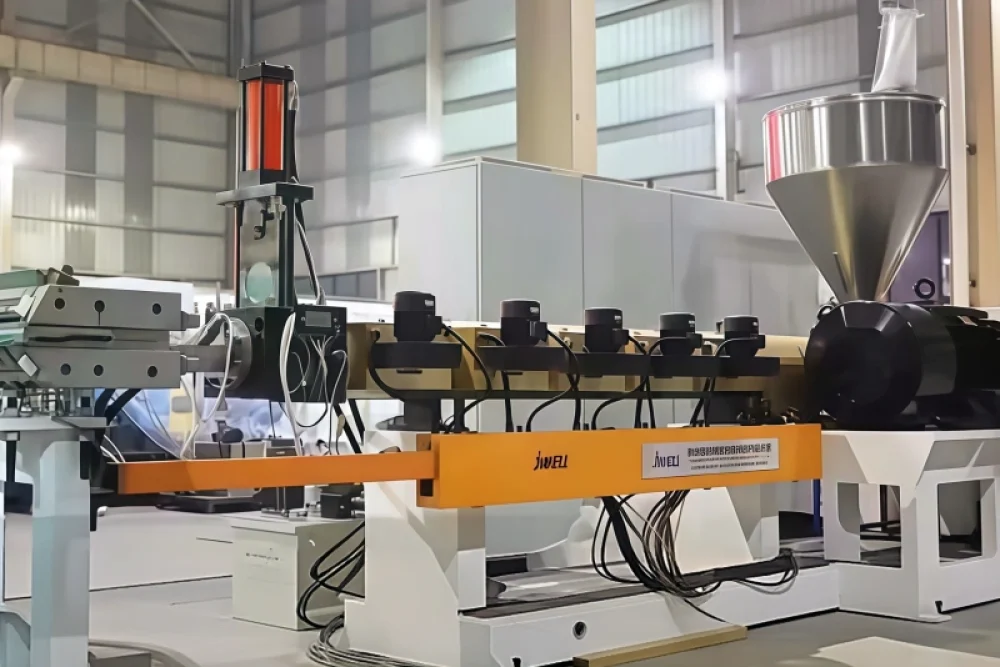
Jwell SPC Flooring Production Line delivers turnkey production from mixing and extrusion to calendering, UV coating, profiling, lamination and packaging.
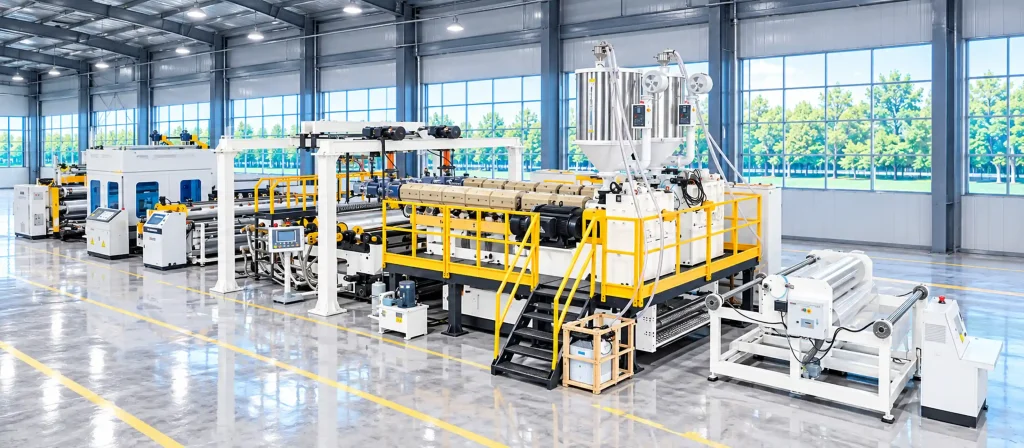
JWELL TPU Casting & Laminating Film Extrusion Line integrates precision casting, online lamination and automatic winding to produce TPU composite films and laminated fabrics for footwear, textiles and outdoor applications.
Jwell can configure the geocell production line according to the required material, product width, thickness, cell geometry, perforation requirements, welding configuration and production capacity.
The production system can integrate polymer extrusion, sheet forming, optional perforation, strip processing, ultrasonic welding and downstream product handling.
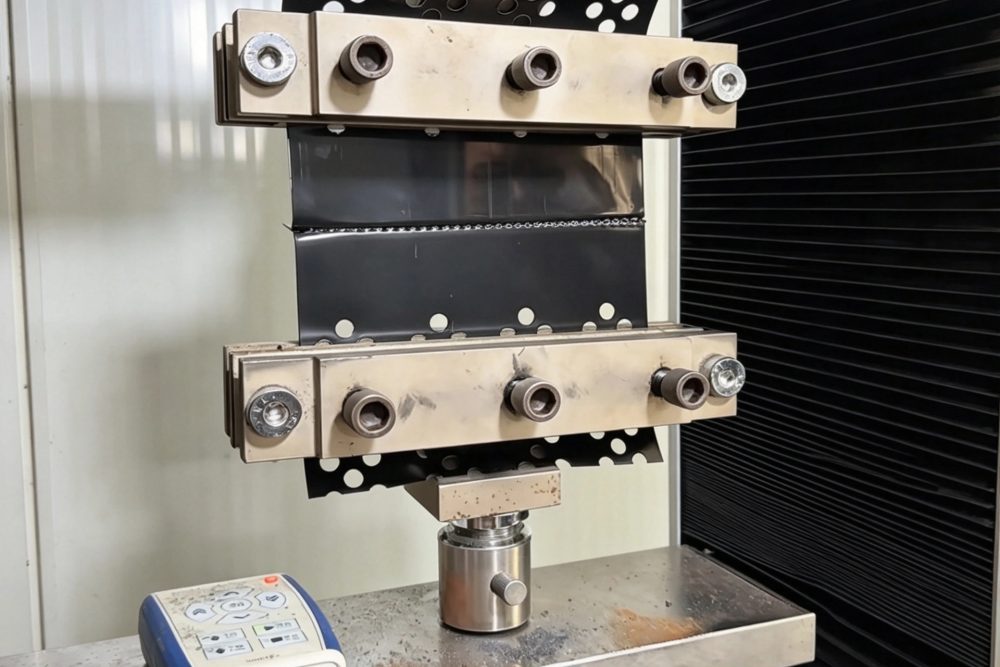
The production line can be tested according to the agreed technical specification before delivery. Technical support can cover installation, commissioning, operator training and production troubleshooting according to the project scope.
Jwell Machinery Co., Ltd sets up in 1997 , we are large manufacturer of plastic extrusion machinery in China, our headoffice was located in Shanghai.
SOLUTIONS
PRODUCTS
CONTACT
Copyright © Jwell Machinery Co., Ltd 2026. All rights reserved. Privacy Policy | Terms & Conditions | Site Map
Tell us about your specific requirements. Our team can help you identify a solution for your project.