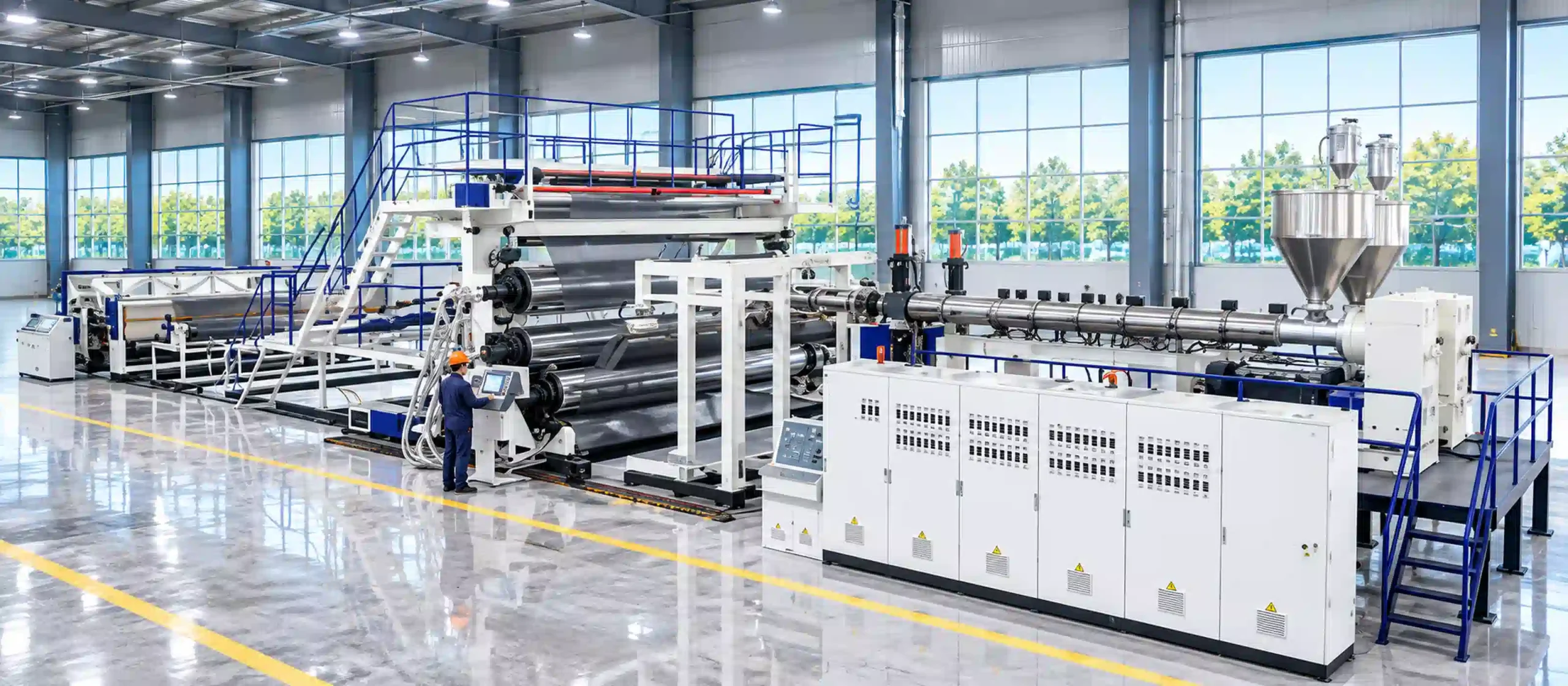
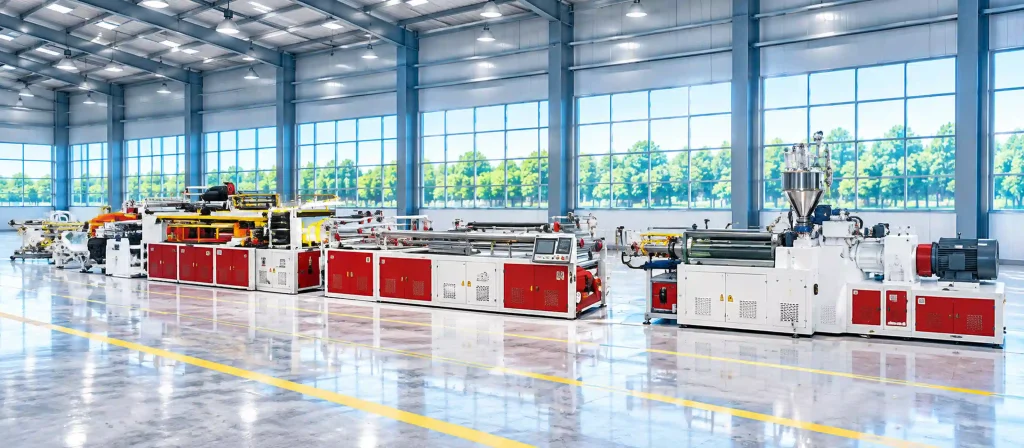
WPC Flooring Production Line
Jwell WPC Flooring Production Line produces lightweight, durable wood-plastic composite flooring with a foamed core, precision calendering, embossing, UV coating and automated profiling.
Jwell currently focuses on the front-end sheet extrusion system for PP and HDPE geogrid production. The system is designed to produce a stable, uniform polymer sheet that can be supplied to subsequent punching, stretching and other downstream processes for geogrid manufacturing.
The extrusion section covers key processes including raw material feeding, polymer melting and homogenization, melt filtration, flat sheet extrusion, T-die forming and sheet cooling.
The front-end extrusion system can be configured according to the target polymer, sheet width, sheet thickness, production capacity and downstream geogrid process.
Raw Material Feeding → Extrusion → Melt Filtration → Flat T-Die → Sheet Forming → Cooling
The downstream processes, such as punching, longitudinal stretching, transverse stretching, heat setting and final winding, are outside the current scope of Jwell’s geogrid extrusion-line supply.
This approach allows Jwell to focus on providing a stable and precisely controlled extrusion and sheet-forming section, which serves as the starting point for consistent downstream geogrid production.
⚙️ Precision Sheet Extrusion
⬡ Controlled Aperture Formation
↔️ Uniaxial & Biaxial Stretching
🌡️ Multi-Zone Temperature Control
📏 Tensile Property Control
🔄 Continuous Production
Application-Based Engineering
The extrusion system is designed to provide stable polymer melting, mixing and conveying throughout continuous production.
A stable melt condition creates a consistent foundation for the subsequent sheet-forming process and helps reduce variations in the extruded sheet.
The extrusion configuration can be selected according to the PP or HDPE grade and required production capacity.
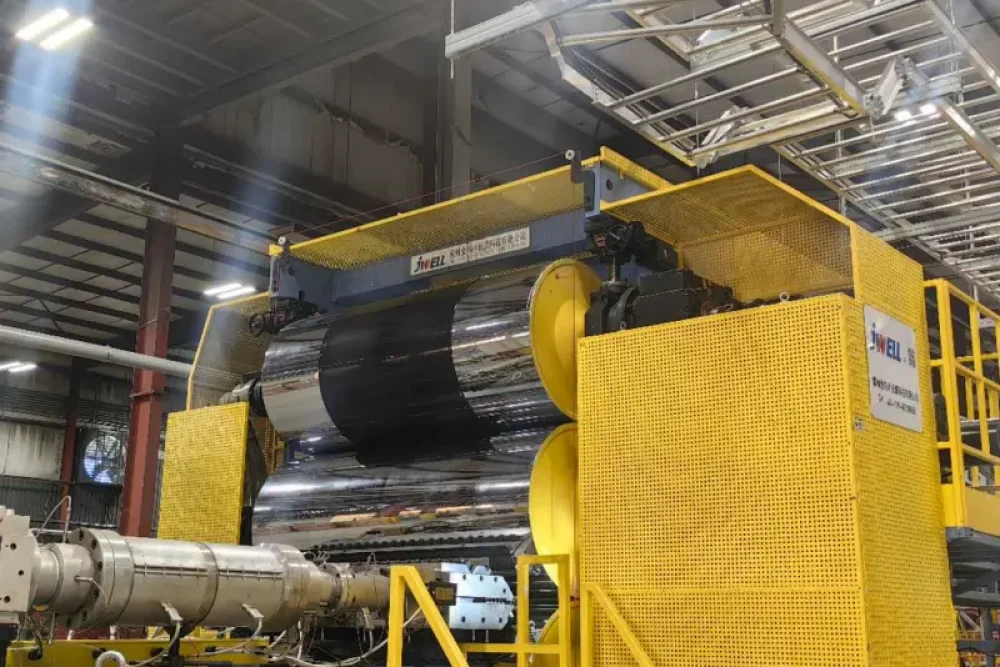
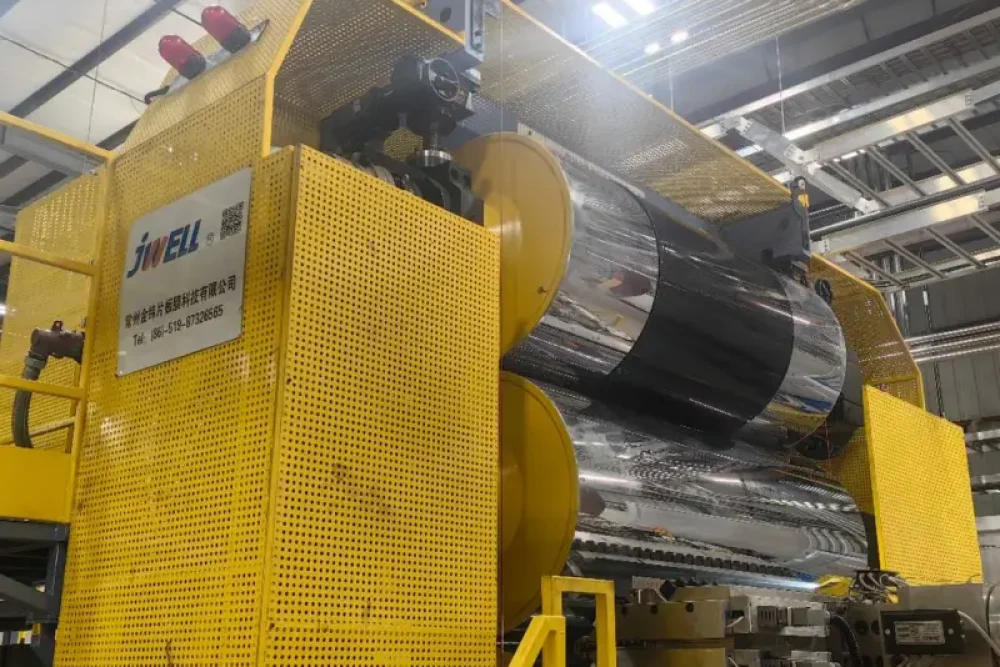
The screw and barrel system is designed to provide controlled polymer melting and homogenization before the melt reaches the die.
Temperature zones, screw speed and processing conditions can be adjusted according to the selected polymer and target sheet specification.
Stable homogenization helps provide a consistent melt for continuous flat-sheet production.
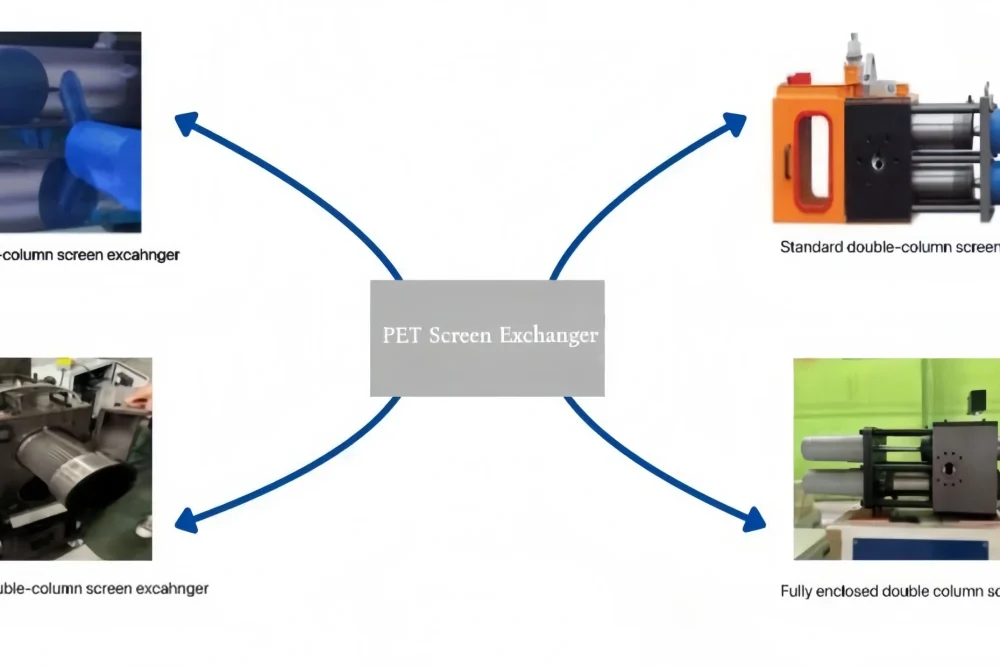
A melt filtration system is installed before the flat die to remove contaminants from the polymer melt.
Effective filtration helps protect the die and downstream equipment while supporting more stable sheet production.
The filtration configuration can be selected according to the raw material condition, contamination level and production requirements.
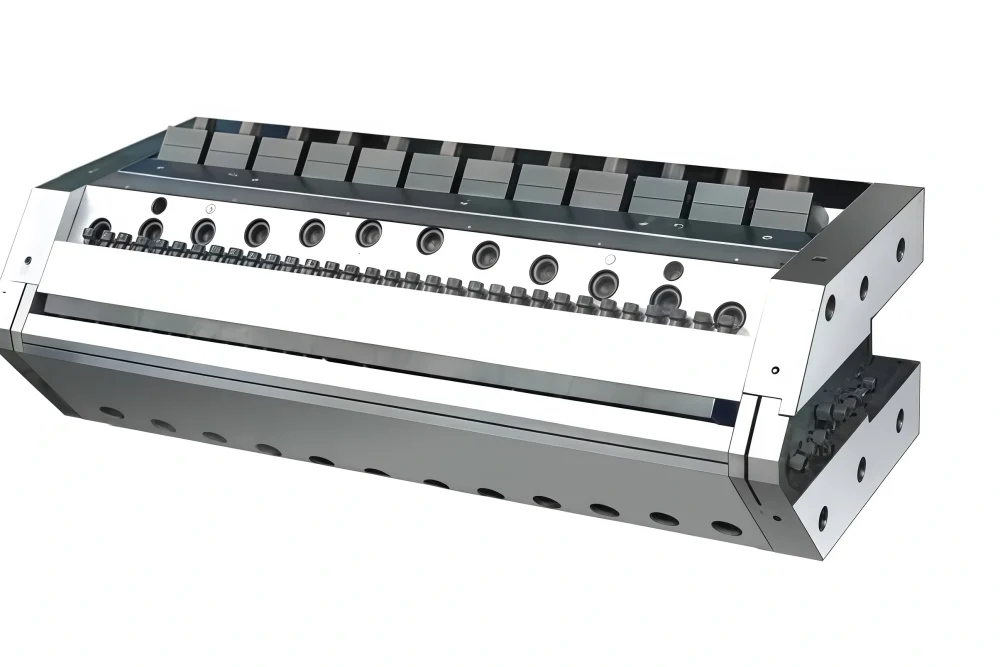
The flat T-die distributes the polymer melt across the required sheet width and forms the continuous geogrid substrate sheet.
Die design and flow distribution are important for maintaining consistent sheet thickness across the working width.
The die can be engineered according to the target sheet width, thickness and polymer processing characteristics.
Consistent sheet thickness is an important requirement for downstream geogrid punching and stretching.
Jwell’s extrusion system combines stable melt pressure, controlled die temperature and calibrated sheet-forming conditions to help achieve uniform sheet thickness across the production width.
The final sheet specification can be adjusted according to the requirements of the downstream geogrid process.
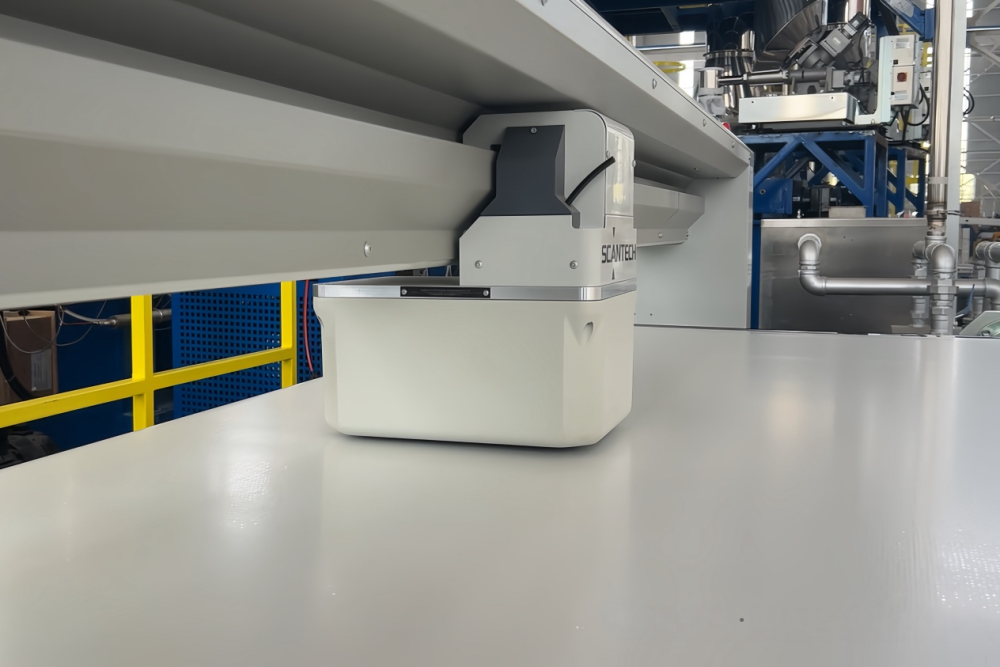
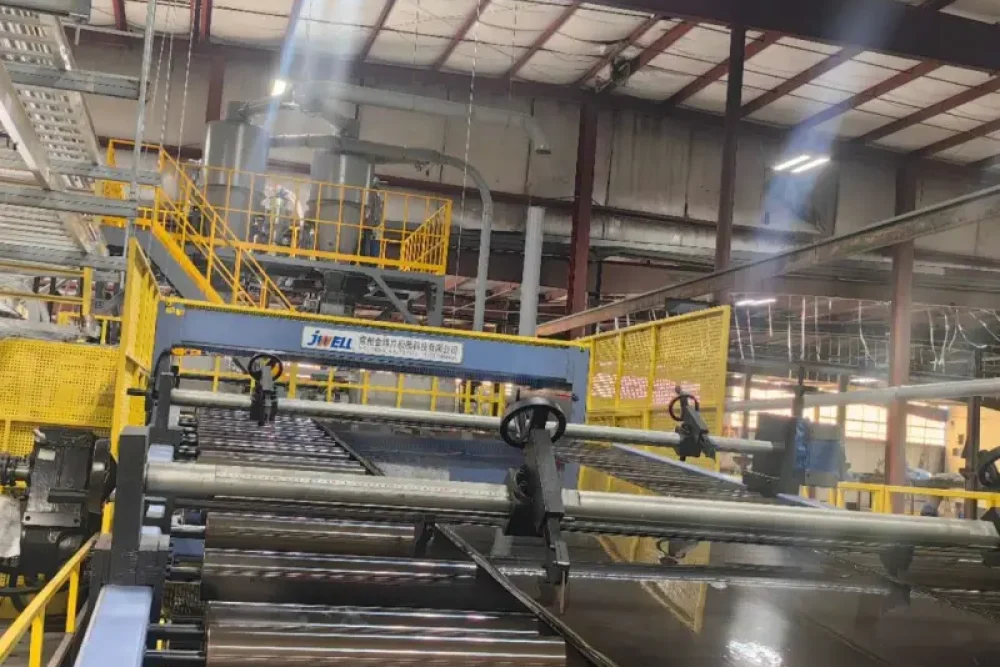
After leaving the T-die, the polymer sheet enters the cooling section for controlled temperature reduction and dimensional stabilization.
The cooling configuration is designed to provide stable sheet handling before the material enters subsequent processing equipment.
Cooling conditions can be adjusted according to polymer type, sheet thickness and production speed.
Geogrid manufacturers may require different sheet widths, thicknesses, materials and production capacities.
Jwell can configure the front-end extrusion system according to:
The objective is to provide a stable extrusion platform that matches the customer’s downstream geogrid manufacturing process.
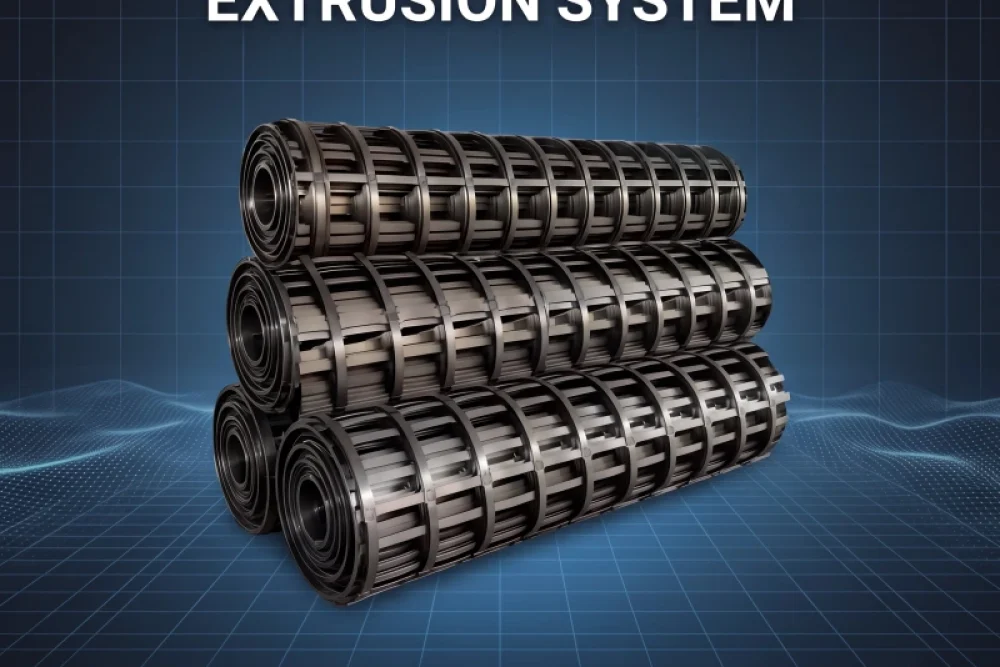
The front-end extrusion process determines the quality and consistency of the sheet supplied to downstream geogrid manufacturing equipment.
01. Raw Material Feeding
PP or HDPE resin is accurately fed into the extrusion system according to the required formulation and production rate.
02. Melting & Homogenization
The extruder melts and homogenizes the polymer under controlled temperature, pressure and screw-speed conditions.
03. Melt Filtration
The molten polymer passes through a filtration system before entering the flat die to improve melt cleanliness and process stability.
04. Flat T-Die Extrusion
The homogenized melt is distributed across the die width and formed into a continuous flat sheet.
05. Sheet Calibration & Cooling
The extruded sheet is cooled and stabilized to achieve the required thickness and dimensional consistency.
06. Transfer to Downstream Processing
The finished sheet is supplied to subsequent punching, stretching and forming processes used for geogrid production.
| Parameter | Typical Configuration |
|---|---|
| Processing Materials | PP / HDPE |
| Supply Scope | Front-End Sheet Extrusion |
| Sheet Type | Flat Polymer Sheet |
| Sheet Width | Customized according to project |
| Sheet Thickness | Customized according to product requirements |
| Production Capacity | Customized according to sheet specification |
| Extrusion System | Single-Screw Extrusion |
| Die | Flat T-Die |
| Filtration | Melt Filtration System |
| Cooling | Roll / Cooling System |
| Control | PLC + HMI |
| Downstream Process | Punching / Stretching by customer or downstream equipment supplier |
| Line Layout | Customized |
Final technical specifications are determined according to the selected polymer, sheet dimensions, production capacity and downstream geogrid manufacturing requirements.
Polypropylene is commonly selected for geogrid production because of its combination of processability, strength and chemical resistance.
The extrusion system can be configured to process PP grades suitable for the customer’s downstream geogrid manufacturing process.
The appropriate resin grade, processing temperature and extrusion conditions should be determined according to the final product specification.
HDPE can also be processed into the substrate sheet used for geogrid manufacturing.
The extrusion system is configured around the melt characteristics of the selected HDPE grade, including extrusion temperature, screw configuration, die conditions and cooling requirements.
The final polymer grade should be selected according to the required geogrid structure and application.
The sheet produced by the Jwell front-end extrusion system can be supplied to subsequent geogrid manufacturing processes.
A typical downstream process may include:
Extruded Sheet → Punching → Longitudinal Stretching → Transverse Stretching → Heat Setting → Winding
The exact downstream configuration depends on whether the final product is a uniaxial or biaxial geogrid.
The extruded sheet can be further processed through punching and primarily machine-direction stretching to develop reinforcement in one principal direction.
The extruded sheet can undergo punching followed by longitudinal and transverse stretching to develop reinforcement in two directions.
Jwell’s current supply scope covers the front-end extrusion and sheet-forming section. Downstream punching and stretching equipment is not included in the current geogrid extrusion-line scope.
Biaxial geogrids can be installed between aggregate layers and the underlying soil to improve load distribution and help control deformation.
They are used in road and highway construction where subgrade conditions, traffic loading and aggregate layer design require additional reinforcement.
Typical applications include:
The final geogrid specification should be selected according to the engineering design, soil conditions, traffic loading and applicable project standards.
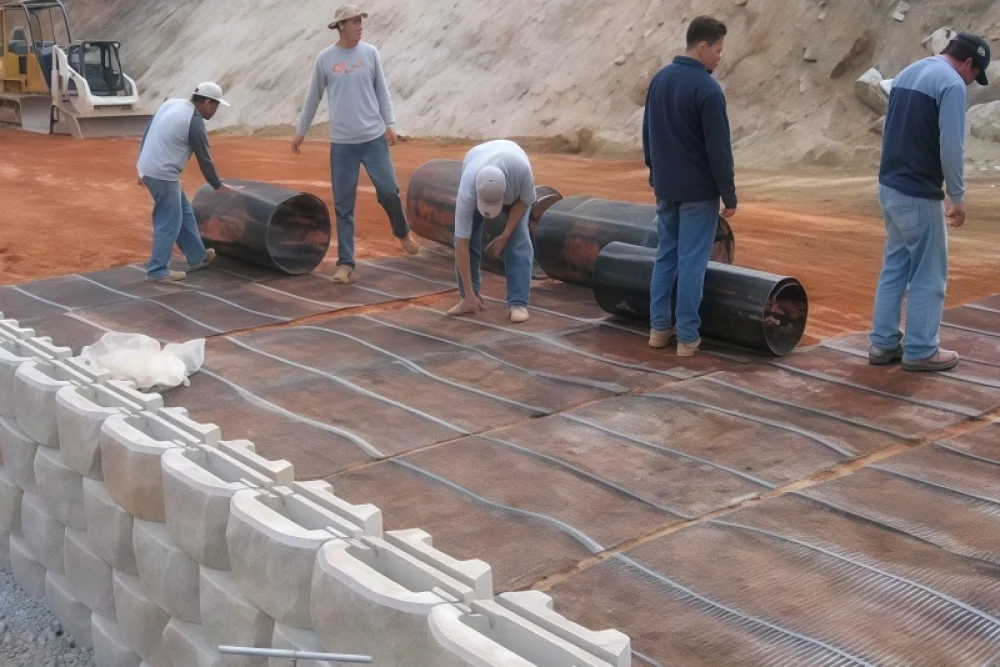
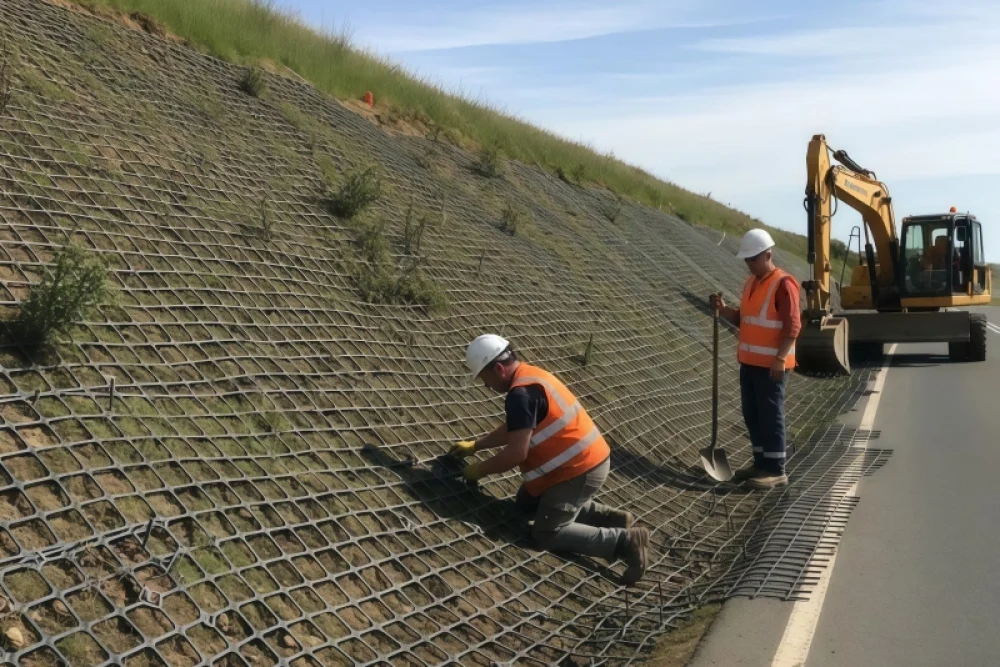
Uniaxial geogrids are widely used as tensile reinforcement in mechanically stabilized earth structures.
The geogrid connects the reinforced soil mass with the facing system and helps resist lateral movement.
Typical applications include:
The required tensile strength, creep resistance, aperture structure and reinforcement length should be determined by the project engineer.
Geogrids can be incorporated into reinforced slopes and embankments to improve soil mass stability and control deformation.
Applications include:
Uniaxial and biaxial structures can be selected according to the direction and distribution of the required reinforcement.
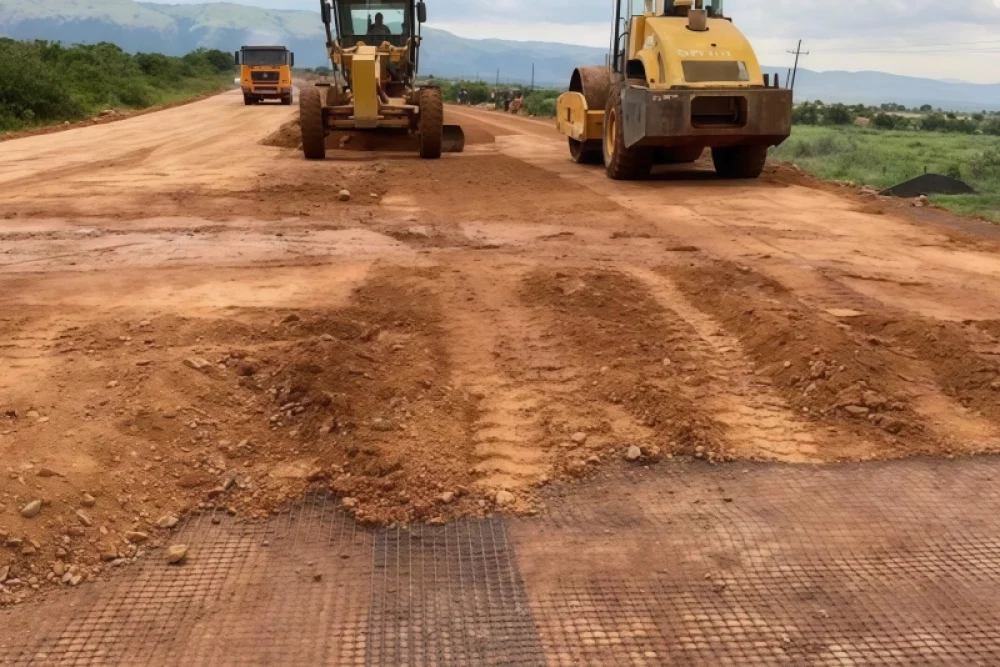
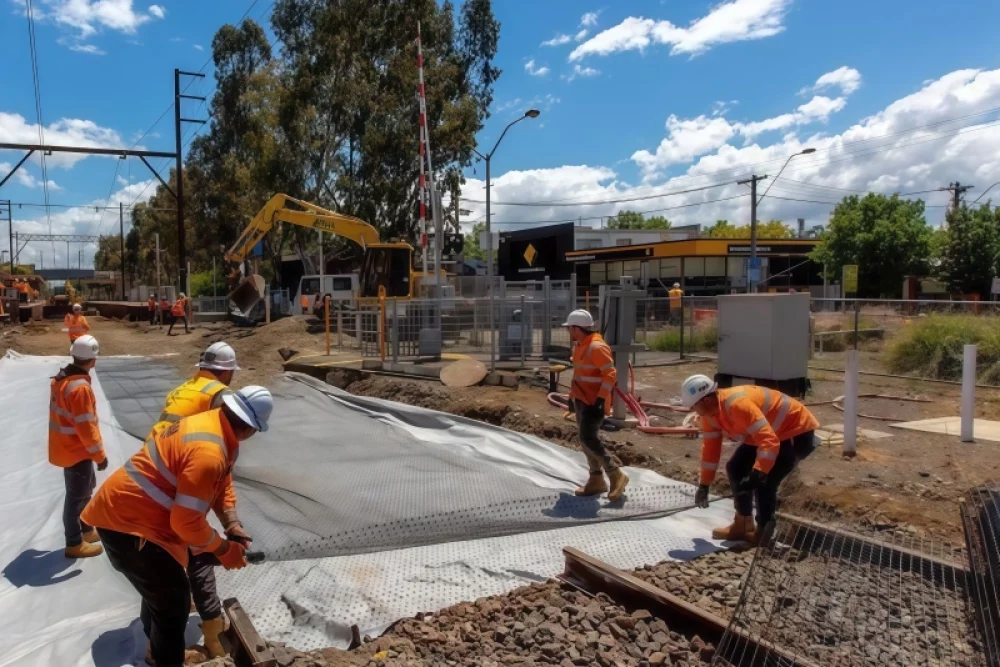
Geogrids can also be used in infrastructure projects where weak or variable subgrade conditions require additional reinforcement.
Potential applications include:
The geogrid structure and mechanical properties should be matched to the project load conditions and engineering design.
PP and HDPE are commonly used for plastic geogrid production. The appropriate polymer grade should be selected according to the required tensile properties, processing conditions and final application.
Uniaxial geogrid is primarily reinforced in one direction and is commonly used for retaining walls, reinforced slopes and other applications with a dominant reinforcement direction.
Biaxial geogrid is reinforced in both machine and transverse directions and is commonly used for road base and foundation stabilization.
The production configuration depends on the required product range. A line designed for specific uniaxial and biaxial products can be engineered with the corresponding stretching and forming systems.
The exact configuration should be confirmed according to the required product specifications.
Tensile performance is influenced by polymer grade, sheet thickness, molecular orientation, stretching ratio, stretching temperature, line speed, aperture geometry and heat-setting conditions.
Therefore, tensile strength should be considered as a result of the complete production process rather than a single machine parameter.
Aperture dimensions depend on the punching pattern, sheet design and stretching conditions. Jwell can configure the forming and stretching system according to the customer’s required geogrid geometry.
Yes. Line width, output, extrusion system, punching structure, stretching configuration, heating system, automation, winding system and plant layout can be engineered according to the target product and production requirements.
Planning a PP or HDPE geogrid production project?
Send us your target geogrid type, roll width, tensile strength, aperture size, production capacity and raw material information.
Jwell can provide a production line configuration, technical proposal and layout based on your finished-product requirements.
Jwell currently focuses on the front-end sheet extrusion section, including material feeding, extrusion, melt filtration, flat T-die sheet forming and cooling.
Looking for a PP or HDPE front-end extrusion system for geogrid production?
Send us your target material, sheet width, sheet thickness, production capacity and downstream process requirements.
Jwell can evaluate the requirements and provide a suitable extrusion system configuration for your geogrid manufacturing project.
Request a Technical Proposal →
Jwell WPC Flooring Production Line produces lightweight, durable wood-plastic composite flooring with a foamed core, precision calendering, embossing, UV coating and automated profiling.
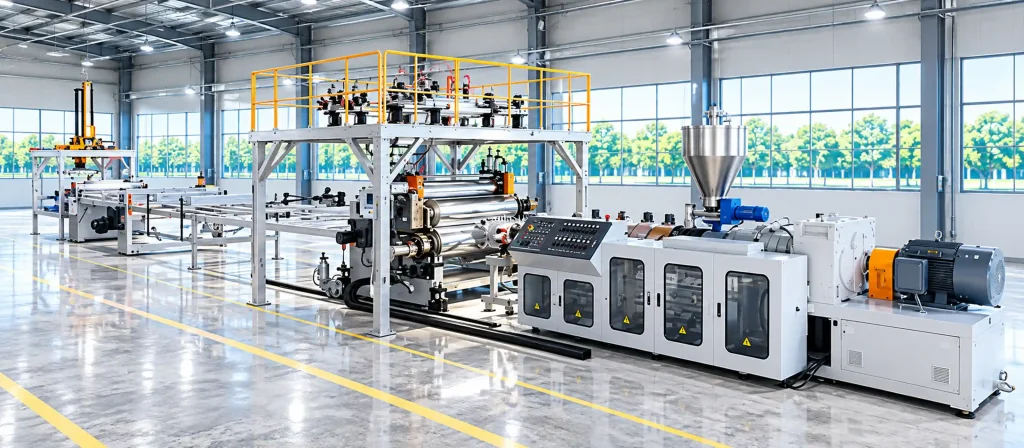
Jwell SPC Flooring Production Line delivers turnkey production from mixing and extrusion to calendering, UV coating, profiling, lamination and packaging.
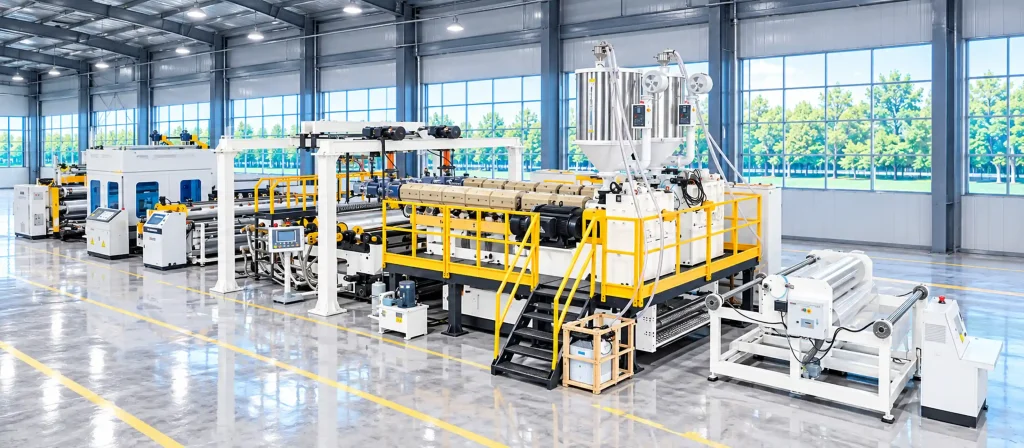
JWELL TPU Casting & Laminating Film Extrusion Line integrates precision casting, online lamination and automatic winding to produce TPU composite films and laminated fabrics for footwear, textiles and outdoor applications.
Jwell combines extrusion, sheet forming, punching, stretching and winding technologies into an integrated geogrid production system. Our engineering team considers the relationship between polymer processing, sheet thickness, stretching conditions, aperture structure and final mechanical properties when configuring the line.
Every geogrid product has different requirements for material, width, aperture geometry, tensile strength and production capacity. Jwell can customize the extrusion, punching, stretching, heating, control and winding sections around the customer’s target product, whether the project requires uniaxial or biaxial geogrid production.
From process design and equipment configuration to installation, commissioning and technical support, Jwell provides support throughout the production-line project. The goal is not simply to supply individual machines, but to help customers establish a stable and practical geogrid manufacturing system for their target market.

Jwell Machinery Co., Ltd sets up in 1997 , we are large manufacturer of plastic extrusion machinery in China, our headoffice was located in Shanghai.
SOLUTIONS
PRODUCTS
CONTACT
Copyright © Jwell Machinery Co., Ltd 2026. All rights reserved. Privacy Policy | Terms & Conditions | Site Map
Tell us about your specific requirements. Our team can help you identify a solution for your project.