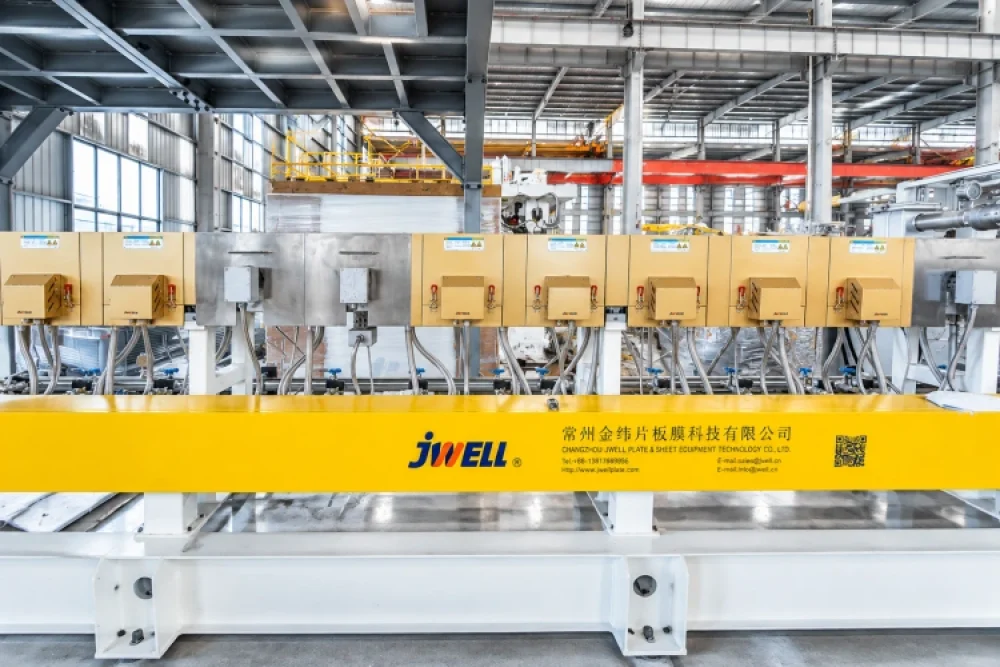
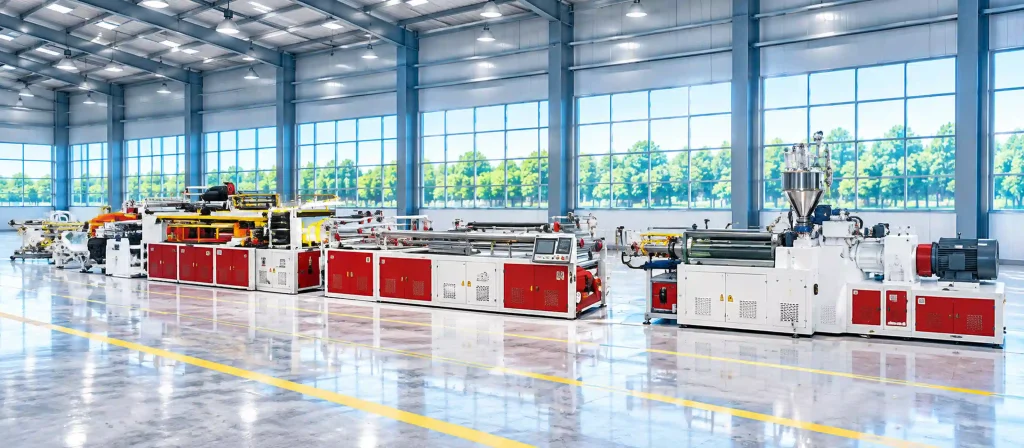
WPC Flooring Production Line
Jwell WPC Flooring Production Line produces lightweight, durable wood-plastic composite flooring with a foamed core, precision calendering, embossing, UV coating and automated profiling.

JWELL designs and manufactures PETG decorative film extrusion lines for producing surface films used in furniture panels, cabinet doors, wardrobes, interior doors, and decorative wall panels.
The production line is designed for PETG materials used in furniture surface lamination, where consistent thickness, smooth surface appearance, and controlled extrusion conditions are important for downstream processing.
JWELL provides single-layer PETG film extrusion and customized GAG multilayer co-extrusion configurations according to customers’ raw material requirements, film structure, production capacity, and finished surface applications.
The current PETG decorative film configuration offers a reference thickness range of 0.15–1.2 mm and an output capacity of 600–800 kg/h. Final performance specifications are confirmed according to the selected equipment configuration and actual production conditions.
JWELL supports equipment selection, technical consultation, factory acceptance testing (FAT), installation guidance, and commissioning for PETG decorative film production projects.
Engineered for PETG Furniture Decorative Film Production
|
▱
Designed for furniture decorative film |
▤
Precision die and calendering |
|
✧
Gloss and matte surface options |
⚙
Controlled PETG melt processing |
|
↻
Coordinated tension and winding |
☷
Configured for project requirements |
The extrusion system is the core unit of the PETG decorative film production line.
JWELL designs the screw and barrel configuration according to PETG material characteristics, production capacity, and film quality requirements.
The optimized screw structure provides efficient material plasticization, uniform melting, and stable melt delivery, ensuring continuous production of high-quality decorative films.
The screw and barrel system adopts advanced material treatment technology to improve wear resistance and processing stability.
Special screw flight designs optimize PETG material conveying, melting efficiency, and melt homogenization.
The barrel heating system provides accurate temperature control and uniform heat distribution, supporting stable extrusion conditions.
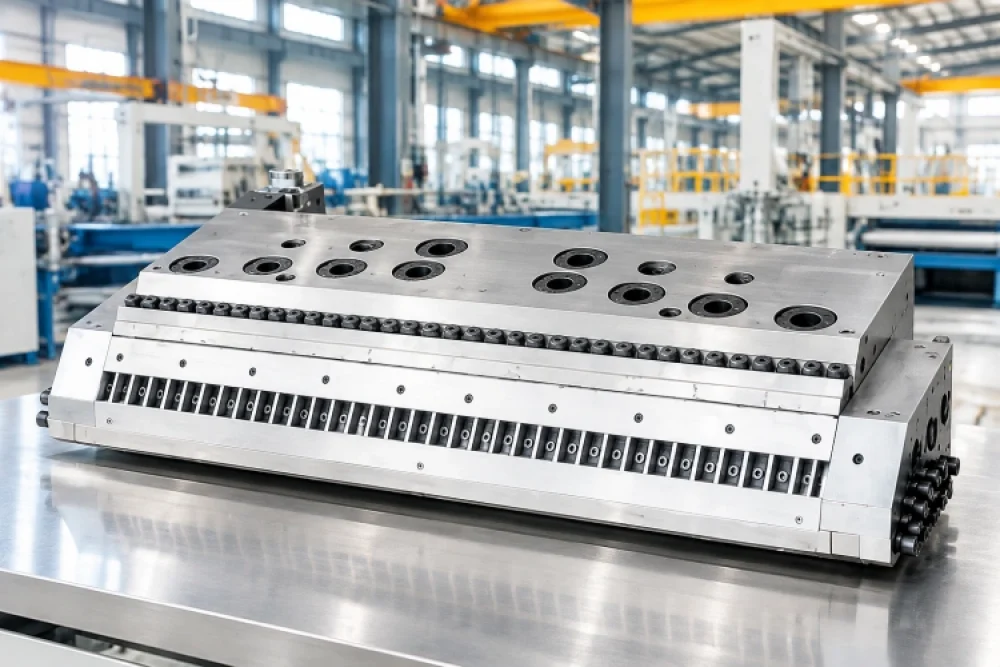
The precision T-die is designed with optimized flow channels to ensure uniform melt distribution across the film width.
The hanger-type flow channel design helps achieve stable melt flow and consistent film thickness.
High-quality die steel materials provide excellent durability and processing reliability.
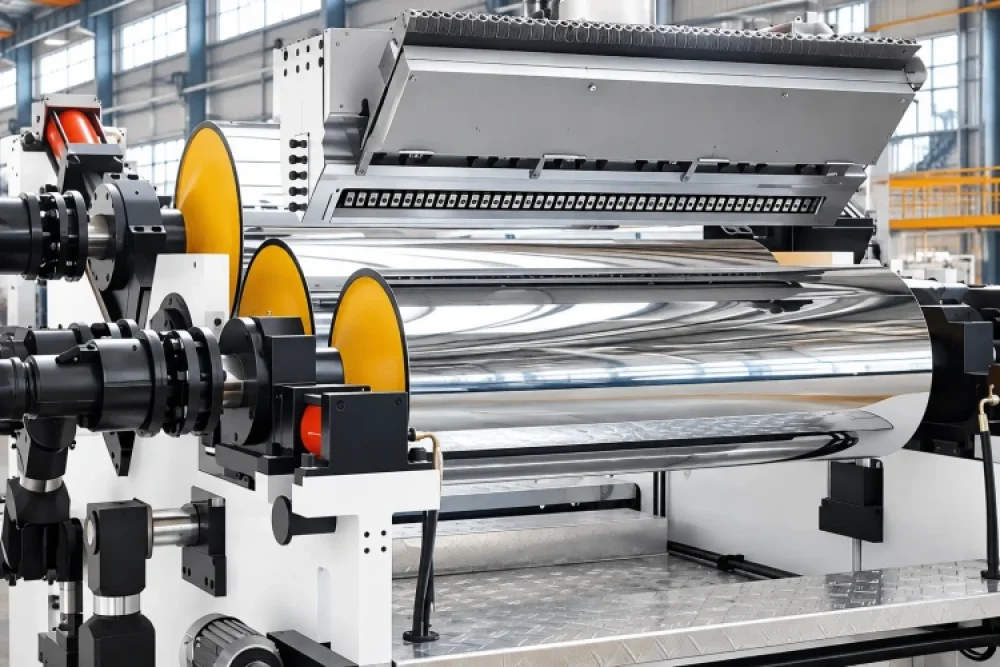
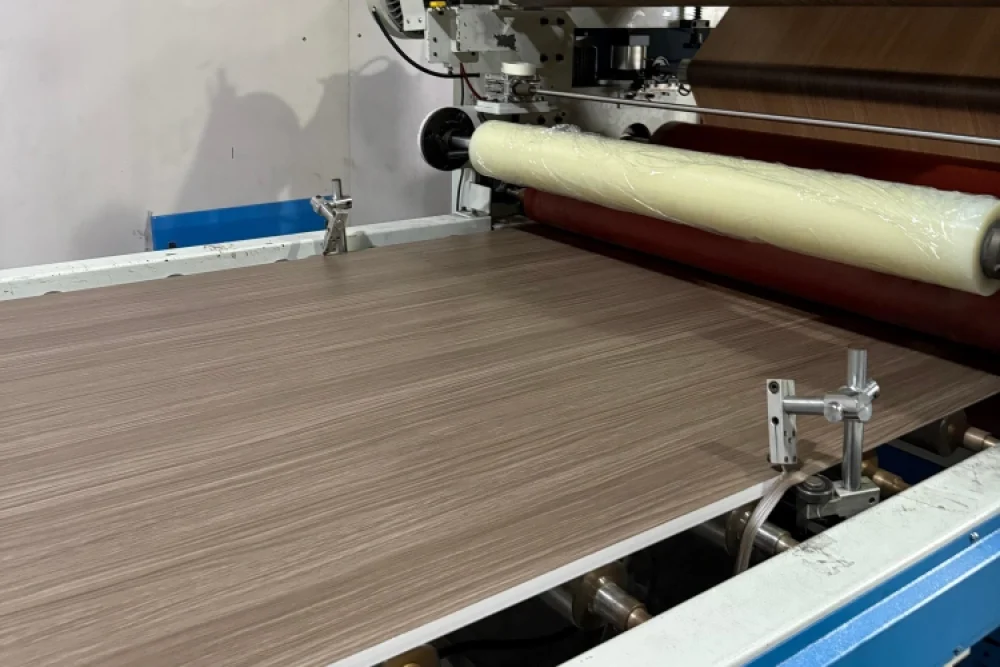
The three-roll calender is one of the most important components for PETG decorative film production.
The J-type roller arrangement optimizes mechanical balance and improves film forming stability.
Temperature-controlled precision rollers provide cooling, shaping, and surface finishing during film production.
The roller surface quality directly influences the final appearance of PETG decorative film, including gloss, smoothness, and flatness.
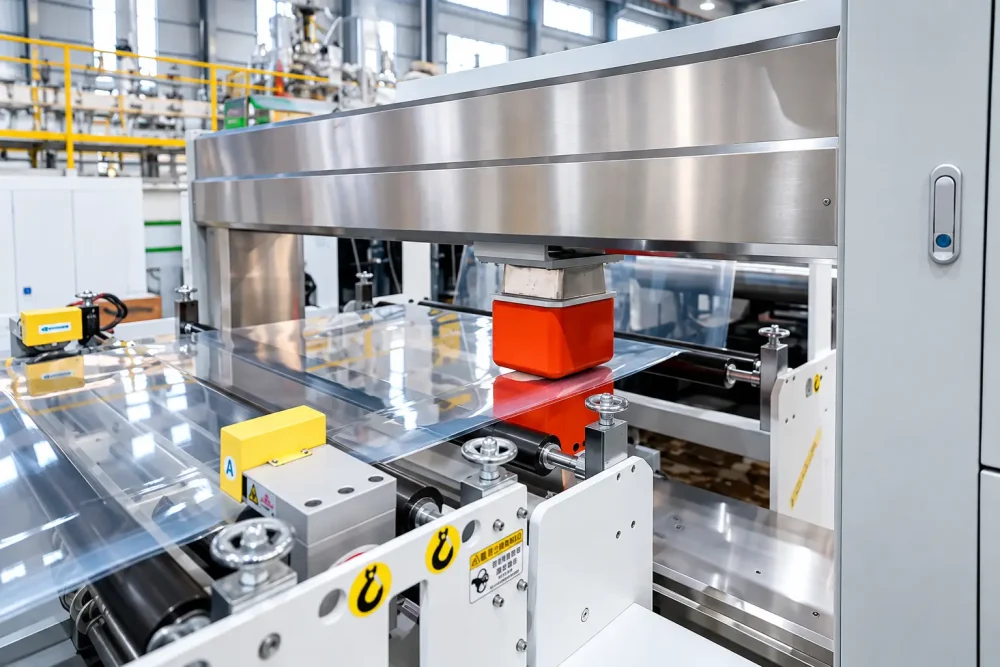
The edge trimming system removes excess film edges to achieve the required finished width.
The haul-off unit provides controlled traction and coordinates film movement with the extrusion and calendering sections.
Depending on the project configuration, the line can incorporate suitable cutting equipment for downstream processing requirements.
Key Benefit: Coordinated traction and trimming support consistent film width, smooth material transfer, and continuous production.
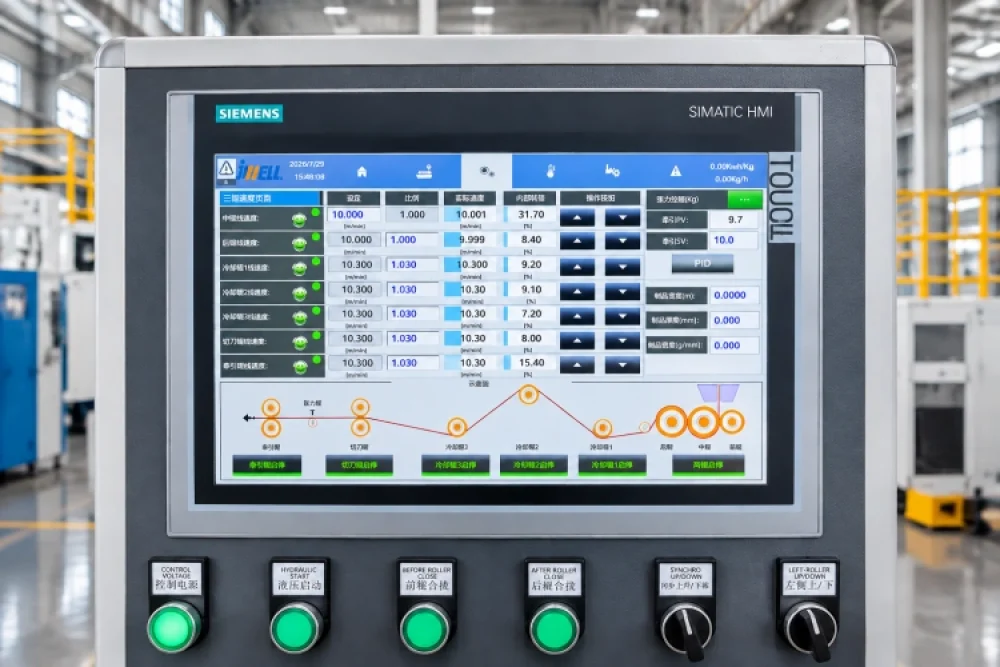
The production line is equipped with an industrial PLC and HMI control system for centralized operation and monitoring.
The system coordinates the extruder, temperature control, calendering unit, thickness measurement system, haul-off, and winding equipment.
Operators can monitor production parameters and adjust process conditions through an intuitive interface.
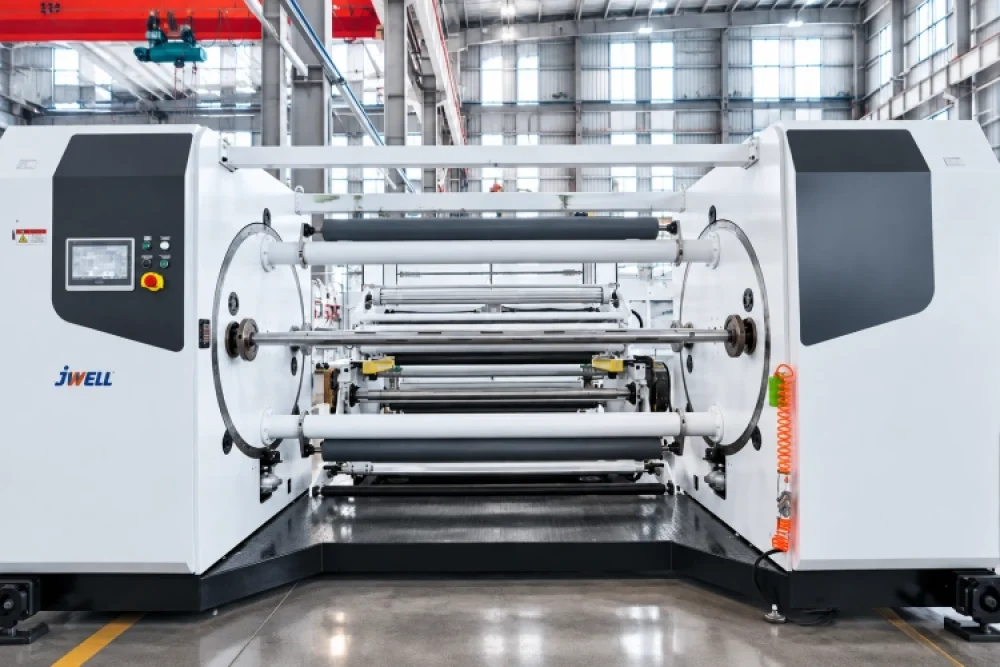
The multi-station center winding system enables continuous roll collection of finished PETG decorative film.
The winding system provides controlled tension management and efficient roll changing according to production requirements.
It supports stable roll formation for subsequent printing, coating, and furniture lamination processes.
| Parameter | JW-75 | JW-85 | JW-95 |
|---|---|---|---|
| Screw Diameter | 75 mm | 85 mm | 95 mm |
| L/D Ratio | 44:1 | 44:1 | 44:1 |
| Main Motor Power | 160 kW | 220 kW | 250 kW |
| Measured Output | 200–300 kg/h | 600 kg/h | 800 kg/h |
| Screw Speed | 30–90 rpm | 30–85 rpm | 30–80 rpm |
| Processing Temperature | 210–230°C | 210–230°C | 210–230°C |
| Applicable Sheet Width | 800–1,500 mm | 1,000–1,800 mm | 1,200–2,200 mm |
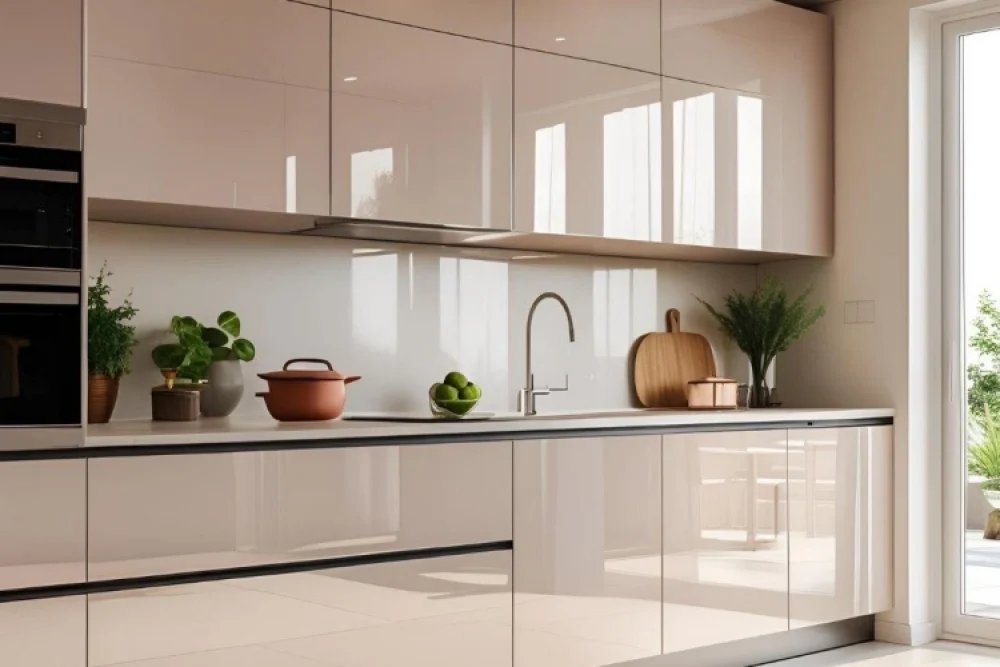
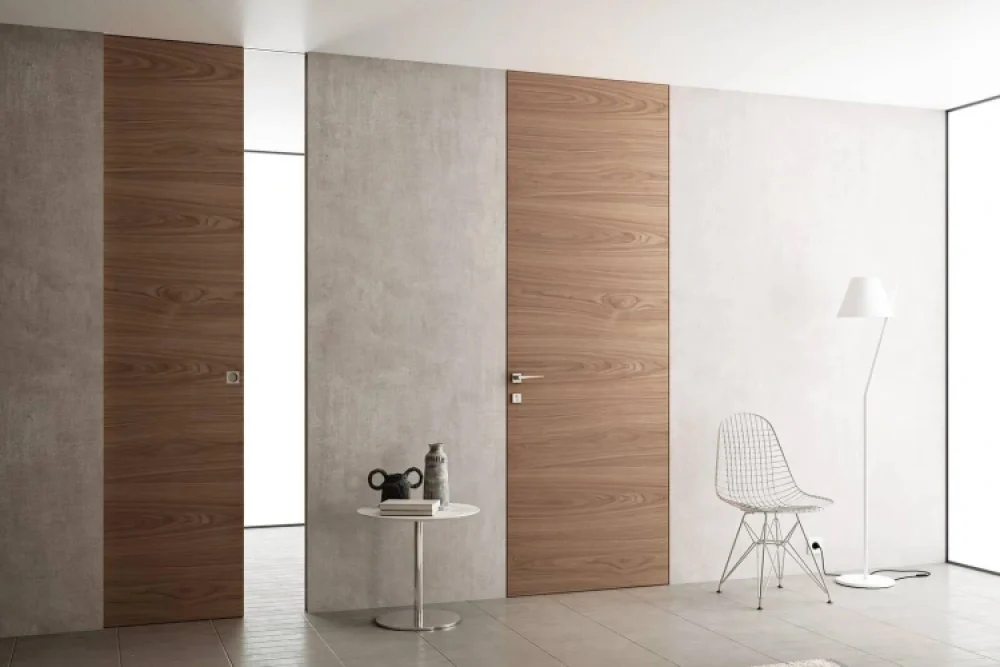
PETG decorative films can be used as surface materials for kitchen cabinet doors and furniture panels. With suitable film formulations and finishing processes, they can support smooth, high-gloss, matte, or colored decorative surfaces.
Film compatibility with the selected furniture board and lamination system should be verified for the intended application.
PETG decorative films are suitable for selected wardrobe doors, storage cabinets, shelving panels, and furniture components.
Manufacturers can evaluate different film colors, surface finishes, and decorative patterns to match their furniture designs and downstream lamination requirements.
PETG decorative films can be applied to compatible interior door surfaces and decorative wall panels.
Surface appearance, adhesive compatibility, dimensional stability, and bonding performance should be evaluated according to the finished panel structure and installation environment.
PETG decorative films can serve as a surface layer for compatible furniture boards, including selected MDF and engineered wood substrates.
The PETG film extrusion line produces the film material. Adhesive application, printing, lamination, and other finishing operations may require separate downstream equipment.
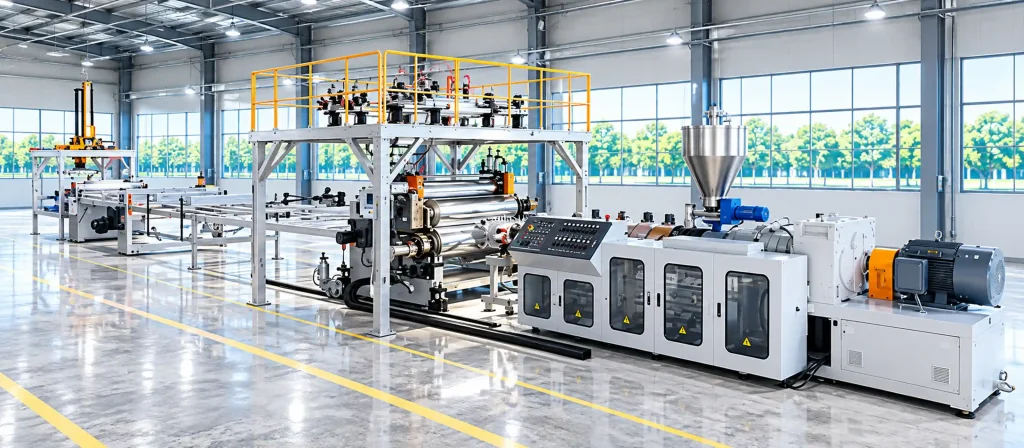
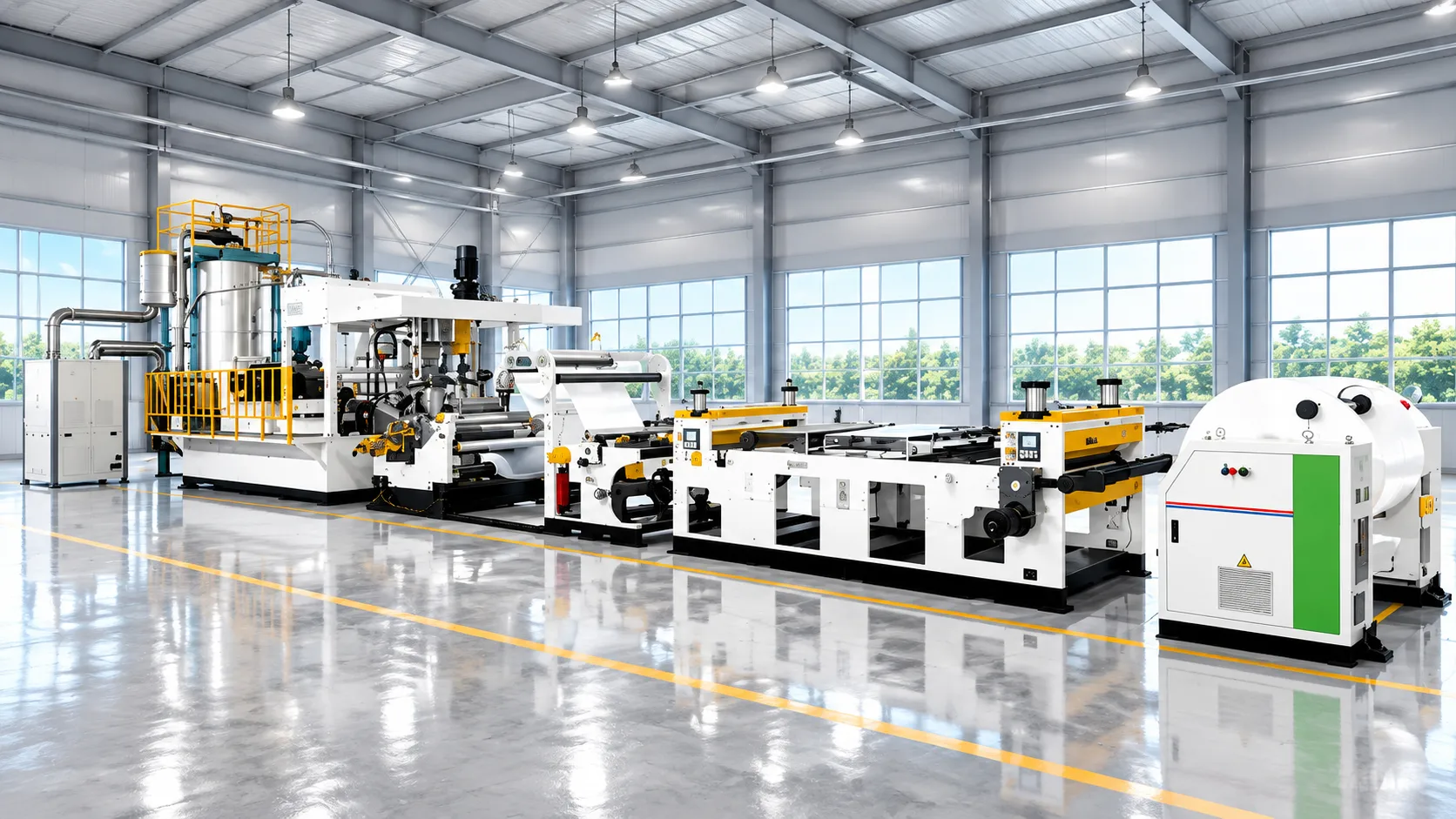
A PETG decorative film extrusion line is a production system used to manufacture PETG-based films for furniture surface decoration, cabinet doors, wardrobes, interior doors, and decorative panels.
A typical production line includes material feeding, extrusion, melt filtration, a precision flat die, three-roll calendering, cooling, haul-off, and winding equipment.
JWELL’s current reference PETG decorative film production line has a listed output capacity of 600–800 kg/h.
Actual output depends on the PETG resin grade, film thickness, effective width, extrusion configuration, and operating conditions. Final production capacity is confirmed according to the customer’s project requirements.
The current reference thickness range is 0.15–1.2 mm.
The achievable thickness range depends on the selected extruder, T-die, calendering system, material formulation, and finished-film requirements. Project-specific specifications should be confirmed during technical evaluation.
PETG decorative films can be developed with different surface appearances, including high-gloss, matte, and colored finishes.
The final surface appearance depends on the material formulation, calender roller finish, temperature settings, and any required downstream finishing processes.
Specific surface effects should be validated through material and production trials.
PETG decorative films can be evaluated for lamination onto compatible MDF, engineered wood, and other furniture panel substrates.
The adhesive formulation, panel surface preparation, lamination temperature, pressure, and bonding performance must be selected and verified for the intended application.
The PETG extrusion line produces the decorative film, while lamination may require separate equipment.
Single-layer PETG decorative film is produced from a PETG-based material stream.
GAG decorative sheet typically uses a multilayer PETG/APET/PETG structure, combining PETG outer layers with an APET core.
GAG production requires a compatible co-extrusion system. Material selection, layer ratios, and processing requirements differ from single-layer PETG production.
A typical configuration includes material feeding equipment, an extruder, melt filtration, a precision T-die, a three-roll calender, cooling equipment, a haul-off unit, and a winding system.
Depending on the project, optional equipment may include online thickness measurement, automatic die adjustment, cutting systems, and additional downstream processing equipment.
The final equipment list is confirmed in the technical proposal.
To prepare a suitable equipment proposal, please provide the PETG raw material grade, required film thickness and width, target production capacity, surface finish requirements, and downstream application.
Please also specify whether the film will be used for cabinet doors, wardrobes, furniture panels, interior doors, or other decorative products.
JWELL can then evaluate the appropriate extrusion configuration and auxiliary equipment for your project.

Jwell WPC Flooring Production Line produces lightweight, durable wood-plastic composite flooring with a foamed core, precision calendering, embossing, UV coating and automated profiling.

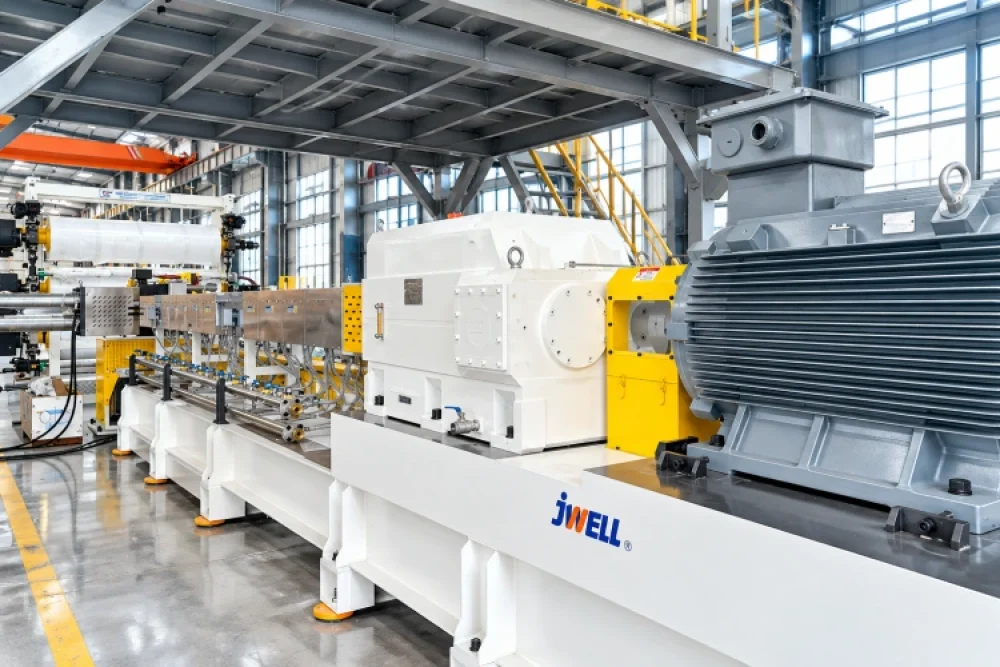
Jwell SPC Flooring Production Line delivers turnkey production from mixing and extrusion to calendering, UV coating, profiling, lamination and packaging.
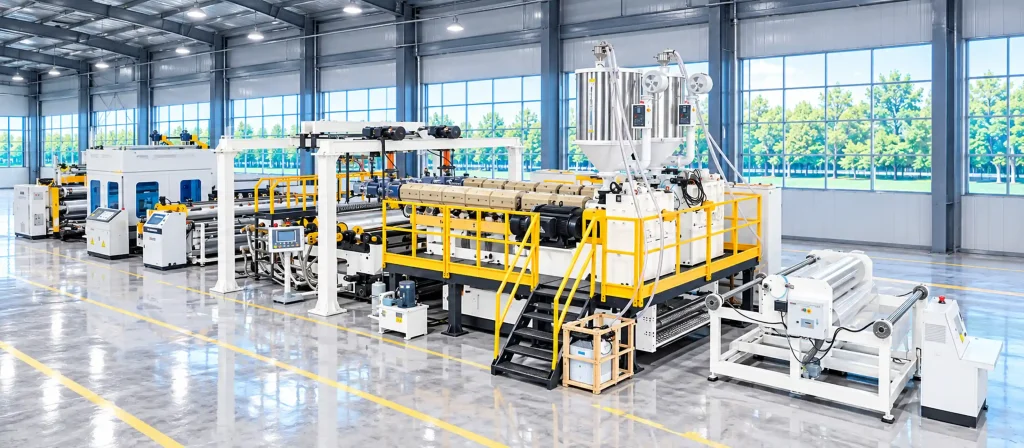
JWELL TPU Casting & Laminating Film Extrusion Line integrates precision casting, online lamination and automatic winding to produce TPU composite films and laminated fabrics for footwear, textiles and outdoor applications.
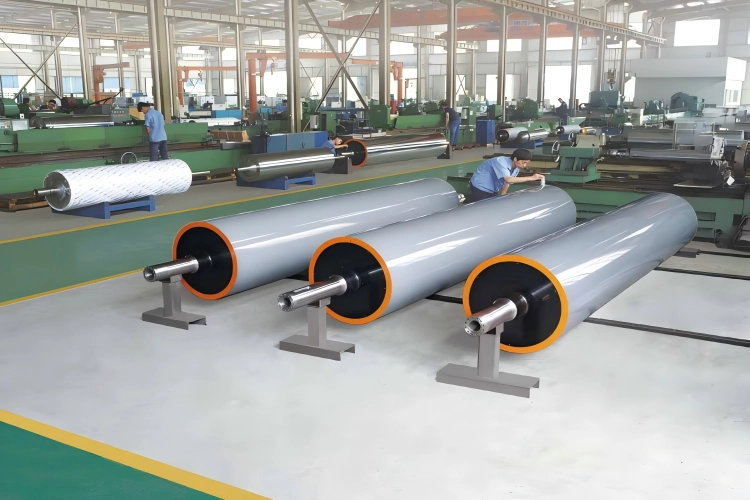
JWELL develops and manufactures extrusion equipment and integrated production systems for plastic sheet and film applications.
Our engineering capabilities cover extruder configuration, screw and barrel design, melt filtration, precision T-dies, calendering systems, and downstream equipment integration.
These technologies support the development of PETG decorative film extrusion solutions for furniture and interior surface applications.
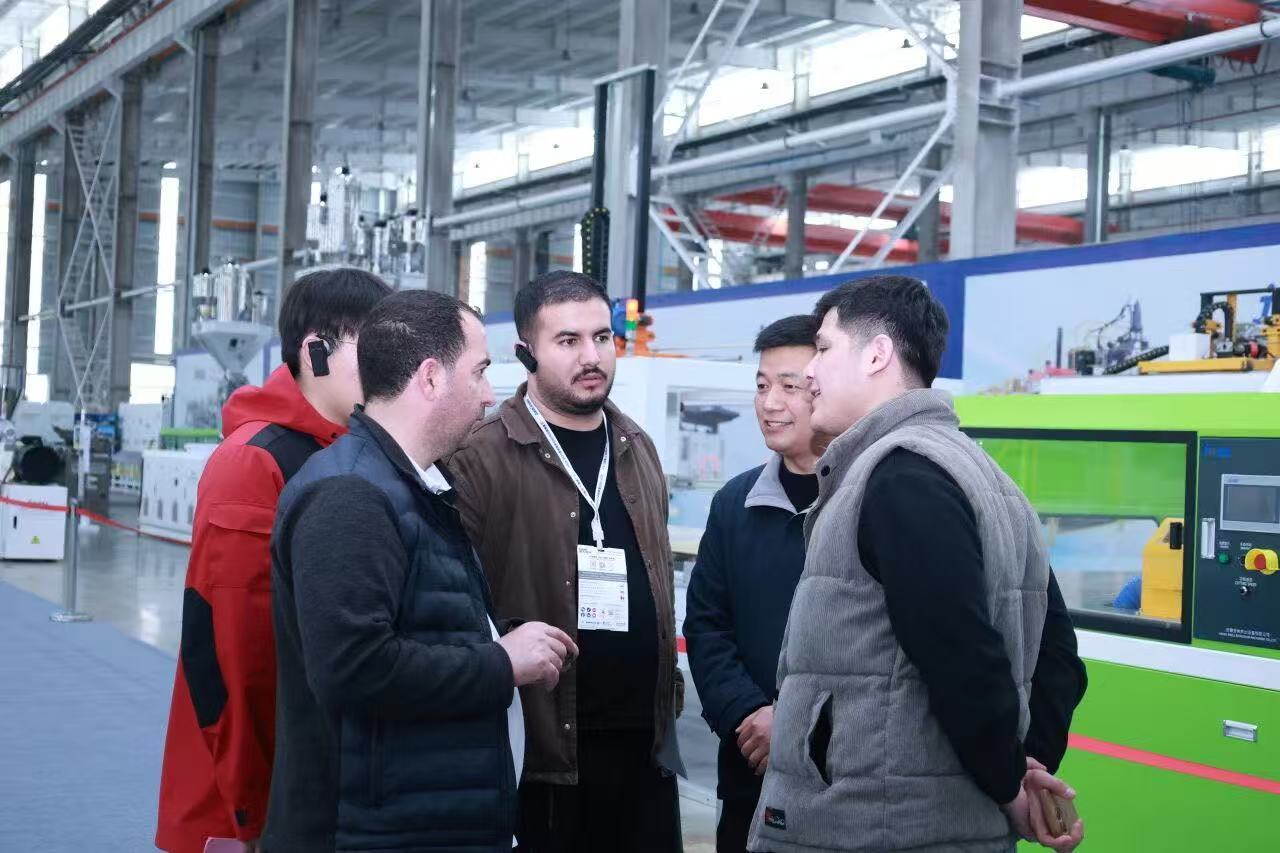
Different furniture decorative film projects require different material formulations, film dimensions, surface finishes, and production capacities.
JWELL evaluates the complete production requirements to recommend suitable extrusion equipment, film forming systems, temperature control, cooling, and winding configurations.
Optional equipment can be considered according to requirements for thickness measurement, surface finishing, and downstream processing.
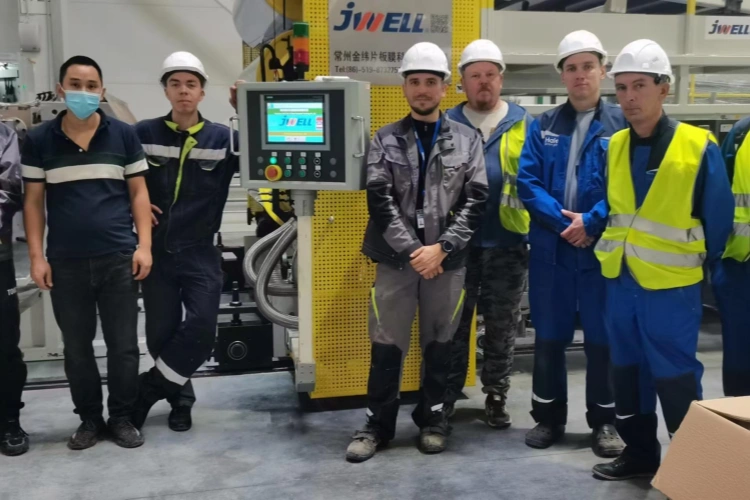
JWELL supports equipment projects through technical consultation, equipment configuration, factory acceptance testing (FAT), installation guidance, commissioning assistance, and operator training.
Factory testing arrangements can be discussed according to the agreed project scope. Customers can review relevant equipment operation and technical documentation before shipment where included in the contract.
Our team also provides after-sales technical support according to the service terms agreed for each project.

Jwell Machinery Co., Ltd sets up in 1997 , we are large manufacturer of plastic extrusion machinery in China, our headoffice was located in Shanghai.
SOLUTIONS
PRODUCTS
CONTACT
Copyright © Jwell Machinery Co., Ltd 2026. All rights reserved. Privacy Policy | Terms & Conditions | Site Map
Tell us about your specific requirements. Our team can help you identify a solution for your project.