
TPU Automotive Interior Line

Discuss Your Automotive Composite Project

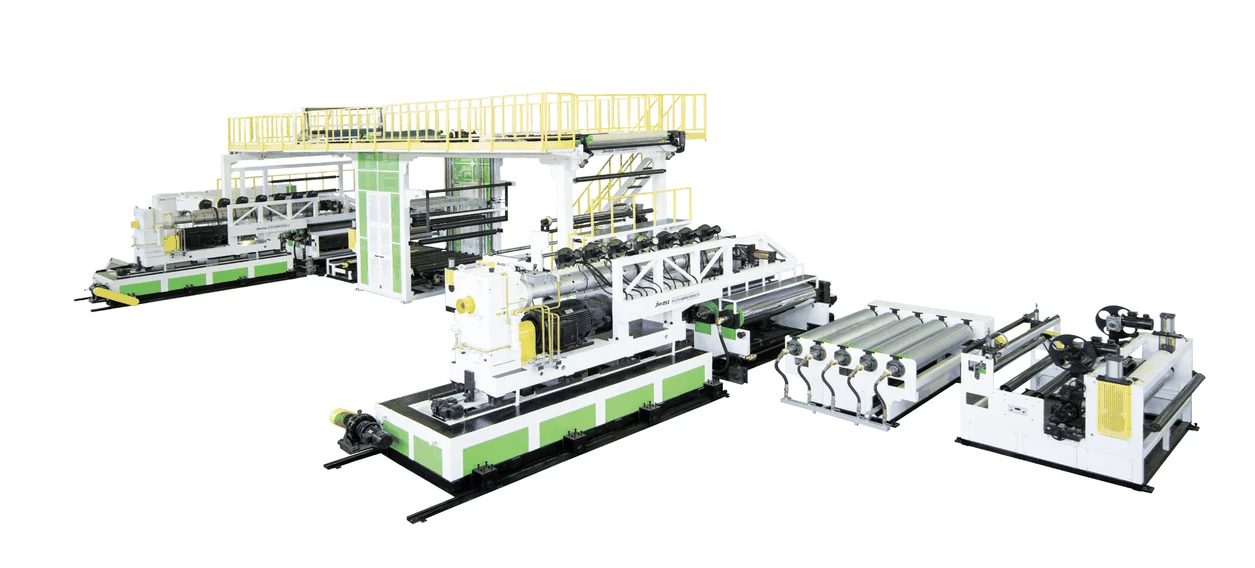
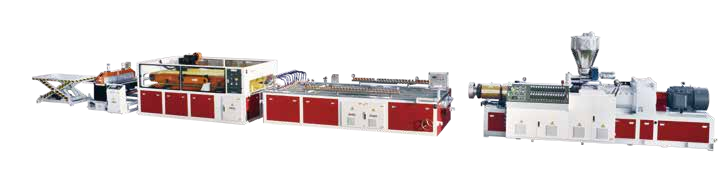
Full production run: TPU drying → 3-extruder co-extrusion → multi-manifold die → 3-roll polishing with release-foil grain → finished composite plate.

TPU/ABS Automotive Interior Composite Plate Extrusion Line: Related JWELL Extrusion Lines

The TPU/ABS Automotive Interior Composite Plate Extrusion Line is part of JWELL’s complete extrusion portfolio. Customers evaluating this TPU/ABS Automotive Interior Composite Plate Extrusion Line also frequently request our TPU Shoe Material Foam Thick Plate Line | Jwell and TPU Film Extrusion Line | Thermoplastic Polyurethane Film | Jwell, which share the same proven screw, die and control platforms. For layout drawings, pricing and lead times, contact JWELL Machinery directly.

# Item Key Point
1 🌀 2-3 Layer Co-Extrusion System Independent TPU Surface, Tie-Layer, and ABS Substrate Control — SEO: multi layer co extrusion automotive, TPU ABS composite extrusion, independent layer control, tie layer co
2 ⚡ Release-Foil Grain Texturing OEM-Matched Leather Grain for Premium Automotive Interiors — SEO: release foil grain texturing, automotive interior grain finish, OEM leather grain composite, TPU surface
3 🎯 OEM Color Matching Gravimetric Dosing + In-Line Spectrophotometer for Delta E <1.0 — SEO: automotive color matching extrusion, delta E color consistency, gravimetric color dosing, OEM interior co
4 🔄 Thermoforming-Ready Controlled Layer Thickness Profile for 3D Dashboard and Door Panel Molding — SEO: thermoforming composite plate, automotive interior thermoforming, dashboard skin extrusion, 3D interior t

2-3 Layer Co-Extrusion System — Independent TPU Surface, Tie-Layer, and ABS Substrate Control

SEO: multi layer co extrusion automotive, TPU ABS composite extrusion, independent layer control, tie layer co extrusion

The TPU/ABS automotive composite plate line uses a 2-3 extruder co-extrusion configuration, each extruder dedicated to a specific layer and optimized for that material’s processing requirements:

– TPU Surface Layer Extruder (65-90 mm, 30:1 L/D): Single-screw with barrier flight and mixing section, processing TPU at 180-210°C. TPU’s moisture sensitivity (absorbs 0.2-0.5% moisture, causing hydrolysis and bubble defects at processing temperatures) requires a desiccant dryer (-40°C dew point, 3-4 hours at 80-90°C) feeding this extruder. The screw is designed for low-shear melting to preserve TPU’s molecular weight and the soft-touch feel that degrades with excessive shear.

– Tie-Layer Extruder (35-45 mm, 28:1 L/D): Dedicated extruder for the bonding layer between TPU and ABS. The tie-layer resin (typically a TPU/ABS compatibilizer or a thermoplastic copolyester elastomer) is metered at 5-15% of total composite thickness. The independent tie-layer extruder enables precise control of bonding strength — critical for thermal cycling resistance where the TPU and ABS layers expand at different rates (CTE of TPU ~150-200 × 10⁻⁶/K vs ABS ~70-90 × 10⁻⁶/K).

– ABS Substrate Extruder (90-150 mm, 33:1 L/D): Single-screw vented extruder providing the bulk (70-85%) of the composite thickness. Operates at standard ABS processing conditions (190-230°C). The large diameter provides the throughput capacity for the ABS layer that the thinner, slower TPU layer would otherwise limit.

The three melt streams converge in either a multi-manifold die (each layer has an independent flow channel within the die, merging at the die exit — highest layer uniformity, preferred for automotive OEM specifications) or a feedblock + single-manifold die (layers merge before entering the die — simpler, lower cost for non-OEM applications). The multi-manifold option provides ±2% layer thickness uniformity across the full sheet width.

Release-Foil Grain Texturing — OEM-Matched Leather Grain for Premium Automotive Interiors

SEO: release foil grain texturing, automotive interior grain finish, OEM leather grain composite, TPU surface texturing

The visible surface of an automotive dashboard or door panel is defined by its grain pattern — the microscopic texture that creates the visual and tactile perception of quality. Automotive OEMs specify grain patterns by name and grade (e.g., GM “Monterey” grain, Ford “Madrid” grain, VW “Lugano” leather grain), and the composite plate must replicate this pattern exactly — any deviation in grain depth, peak-to-valley ratio, or gloss level is visible to the consumer and grounds for part rejection.

Jwell offers two grain texturing technologies:

Release-Foil System (OEM-spec): A continuous PET carrier foil web with the grain pattern etched into its surface is fed between the TPU melt surface and the polished roller. Under controlled roller temperature (90-130°C for TPU) and nip pressure, the grain pattern transfers to the TPU surface as it cools below its softening point. The foil is peeled away after cooling, leaving the grain permanently embossed in the TPU surface. After use, the foil is rewound (100-500 meter rolls) and can be reused 3-8 times depending on grain depth and TPU grade. The foil system provides the highest grain fidelity — grain depth accuracy of ±5 μm versus ±15 μm for engraved rollers — and is specified by automotive OEMs for premium vehicle interiors (dashboard skins, door panel upper surfaces visible at eye level).

Engraved Embossing Roller (cost-optimized): A chrome-plated roller with the grain pattern laser-engraved onto its surface. The TPU melt contacts the roller directly, and the grain transfers during cooling. Simpler, lower running cost (no foil consumable), and faster changeover — but limited to standard grain patterns (leather, matte, technical) that do not require OEM-specific registration. Suitable for cost-sensitive vehicle segments, non-visible interior surfaces, and industrial applications.

OEM Color Matching — Gravimetric Dosing + In-Line Spectrophotometer for Delta E <1.0

SEO: automotive color matching extrusion, delta E color consistency, gravimetric color dosing, OEM interior color specification

Automotive OEM color specifications are unforgiving. The GM interior color standard (GMW14162) requires Delta E <1.0 (CIE Lab* color space) between the master color plaque and production parts, and Delta E <0.5 between production batches produced on different dates. The dashboard skin color must match the door panel color, which must match the center console color — all produced on potentially different days or weeks. A perceptible color mismatch between dashboard and door panel is a "warranty-customer-satisfaction" defect — the highest severity classification in automotive quality systems.

Jwell’s color consistency system for the TPU/ABS line operates on three levels:

1. Gravimetric Dosing: The TPU color masterbatch is metered into the TPU extruder feed by a dedicated gravimetric feeder with ±0.5% batch accuracy. The feeder’s load cell continuously monitors weight loss, and the dosing screw RPM is automatically adjusted to maintain the programmed masterbatch percentage. Each batch dispense is logged for quality records.

2. In-Line Spectrophotometer: A spectrophotometer positioned after the 3-roll stack measures the composite surface color (L, a, b* values) at programmable intervals (typically every 5-10 minutes during production). The measurement is compared against the stored target values for the current OEM color specification, and an alarm triggers if Delta E exceeds the warning limit (typically 0.8).

3. PLC Recipe Storage: Each OEM color/grain combination is stored as a named recipe containing: TPU base resin grade, color masterbatch type and percentage, roller temperature profile (affects surface gloss which influences perceived color), and spectrophotometer target values. Recipe recall at product changeover pre-loads all parameters, reducing color stabilization time and transition scrap.

Thermoforming-Ready — Controlled Layer Thickness Profile for 3D Dashboard and Door Panel Molding

SEO: thermoforming composite plate, automotive interior thermoforming, dashboard skin extrusion, 3D interior trim forming

The TPU/ABS composite plate is not the final automotive interior part — it is the raw material that is subsequently thermoformed into 3D shapes: curved dashboard skins, deep-draw door panel inserts, and complex center console covers. The thermoforming process stretches the plate by 50-200% in localized areas (sharp radii, deep pockets, undercut regions), and the composite structure must be engineered to survive this stretch without failure or appearance degradation.

Jwell’s line produces composite plate with a thermoforming-optimized layer structure:

– Graduated TPU thickness: The TPU surface layer can be produced with a thicker center and thinner edges (programmed die lip profile) to compensate for the greater stretch at the edges of dashboard tools — preventing thin spots where grain pattern washout occurs.

– Controlled TPU/ABS thickness ratio: Typical specification is TPU 15-25% of total thickness — thin enough for material cost optimization (TPU at $5-8/kg vs ABS at $2-3/kg), thick enough that the TPU layer survives 150-200% elongation at thermoforming radii without tearing or thinning below the minimum visual thickness (0.15 mm).

– Residual stress control: The 3-roll polishing temperature profile is optimized to minimize residual stress in the composite — stress that causes warpage during thermoforming oven heating and inconsistent part dimensions. Roll temperatures for the TPU side are maintained at 80-100°C and the ABS side at 100-120°C, with slow cooling through the glass transition temperature of each material.

The result is composite plate that thermoforms consistently — 98%+ first-pass yield in typical dashboard and door panel tools, with grain pattern retention of >90% at stretch ratios up to 2:1.

Technical Specifications

Parameter JW-TPU-ABS-2L / JW-TPU-ABS-3L
Extruder Configuration /
Number of Extruders 2 (TPU + ABS) / 3 (TPU + Tie-Layer + ABS)
TPU Extruder (Surface) 75 mm, 30:1 L/D / 75 mm, 30:1 L/D
Tie-Layer Extruder — / 45 mm, 28:1 L/D
ABS Extruder (Substrate) 120 mm, 33:1 L/D / 120 mm, 33:1 L/D
TPU Screw Type Barrier flight + mixing, low-shear / Barrier flight + mixing, low-shear
ABS Screw Type Vented single-screw, 38CrMoAlA nitrided / Vented single-screw, 38CrMoAlA nitrided
Co-Extrusion Die /
Die Type Multi-manifold (recommended) or feedblock / Multi-manifold (recommended) or feedblock
Die Width 1600 mm / 2000 mm / 1600 mm / 2000 mm
Layer Thickness Uniformity ±3% (feedblock) / ±2% (multi-manifold) / ±3% (feedblock) / ±2% (multi-manifold)
Die Surface Finish Chrome-plated, Ra 0.05 μm / Chrome-plated, Ra 0.05 μm
Product Range /
Total Composite Thickness 2.0-6.0 mm / 2.0-6.0 mm
TPU Layer Thickness 0.3-1.0 mm / 0.3-1.0 mm
ABS Layer Thickness 1.7-5.0 mm / 1.7-5.0 mm
Composite Width 800-1800 mm / 800-1800 mm
Output Capacity 200-500 kg/h / 250-600 kg/h
Grain Texturing /
Release-Foil System Optional — OEM-spec grain / Optional — OEM-spec grain
Engraved Roller Standard — cost-optimized / Standard — cost-optimized
Grain Depth Accuracy ±5 μm (foil) / ±15 μm (engraved) / ±5 μm (foil) / ±15 μm (engraved)
Downstream /
Roller Diameter 400 mm / 400 mm
Roller Temperature Range 40-130°C / 40-130°C
Roller Temperature Uniformity ±1°C / ±1°C
Control & Utilities /
PLC Siemens S7-1200 / Siemens S7-1200
HMI 15″ touchscreen / 15″ touchscreen
Dosing System Gravimetric, ±0.5%, up to 6 components / Gravimetric, ±0.5%, up to 6 components
Color Measurement In-line spectrophotometer (optional) / In-line spectrophotometer (optional)
Total Installed Power ~280 kW / ~320 kW
Certifications CE, ISO 9001 / CE, ISO 9001

Dashboard Skins — TPU/ABS Composite for Premium Soft-Touch Instrument Panels

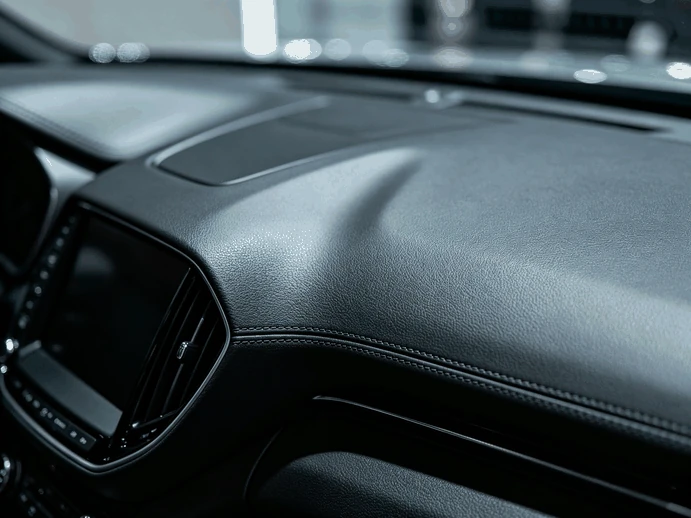
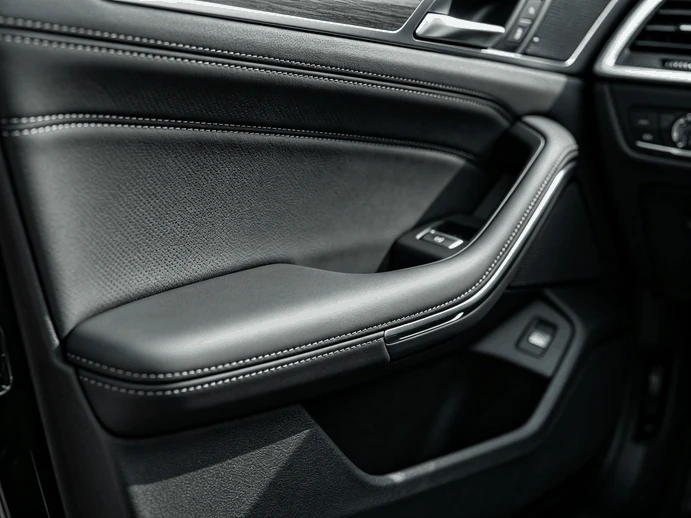
The dashboard (instrument panel) is the largest and most visually prominent interior surface in a vehicle — spanning the full cabin width at eye level for both driver and passenger. It demands premium soft-touch feel (Shore A 75-85 for the TPU surface), consistent grain texture across its entire surface area (typically 1.2-2.0 m² of visible surface), and resistance to extreme environmental conditions: UV radiation through the windshield (equivalent to 5-10 years of Arizona sun exposure), dashboard surface temperatures reaching 85-95°C under summer sun, and repeated contact from hands, cleaning products, and interior accessories.

TPU/ABS composite plate at 3.5-5.0 mm total thickness (1.0 mm TPU / 2.5-4.0 mm ABS) is thermoformed into the 3D dashboard skin, which is then foam-backed (PU foam injected between the skin and a structural substrate) to provide the final soft-touch compressibility that consumers perceive as “premium.” The TPU surface layer provides the visual quality (grain, color, gloss), the tactile quality (warmth, softness, leather-like feel), and the durability (UV resistance, scratch resistance, chemical resistance). The ABS substrate provides the forming stiffness, dimensional stability, and cost-effective bulk.

This is the highest-value application for the Jwell TPU/ABS line — dashboard skins represent approximately 40-50% of the automotive interior composite plate market by value.

Door Panel Inserts — TPU/ABS Composite for Premium Door Trim Surfaces

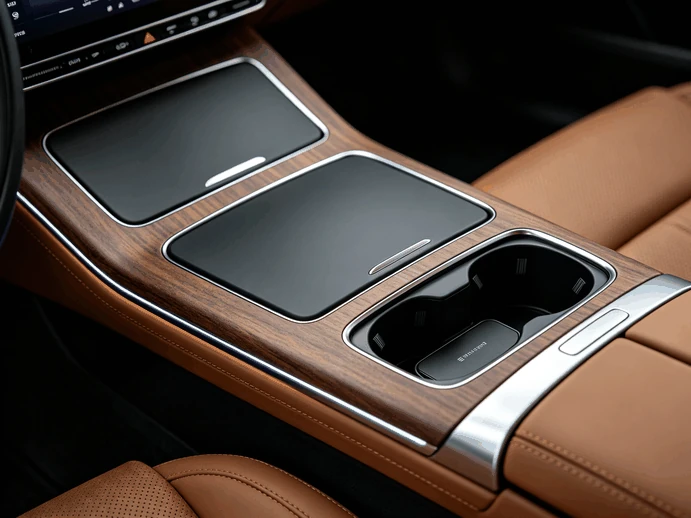
Door panel inserts and armrest surfaces are the second-largest application for TPU/ABS composite plates. The upper door panel insert (the largest visible surface on the door trim, at driver/passenger eye level) and the armrest surface (the most heavily contacted interior surface) require the same premium soft-touch feel and visual quality as the dashboard, with additional requirements: abrasion resistance from repeated arm and elbow contact (Taber abrasion CS-10 wheel, 1000 cycles, <50 mg weight loss per GMW14872), stain resistance to sunscreen, hand cream, and perspiration (common armrest contaminants), and consistent appearance when viewed in grazing light across the door's vertical surface (which highlights grain pattern and gloss variations more severely than the dashboard's more horizontal orientation).

TPU/ABS composite for door panels is typically 3.0-4.5 mm total thickness (0.8 mm TPU / 2.2-3.7 mm ABS), slightly thinner than dashboard skins because door panels experience lower thermal loading and less severe forming geometry. The Jwell line’s release-foil grain system is specified for door panel upper surfaces that are viewed at eye level — the higher grain fidelity of the foil process is visible to the consumer and contributes to the “premium interior” perception that commands $1,000-3,000 option package pricing on mid-range vehicles.

Frequently Asked Questions

What is TPU/ABS composite plate and how is it used in automotive interiors? -

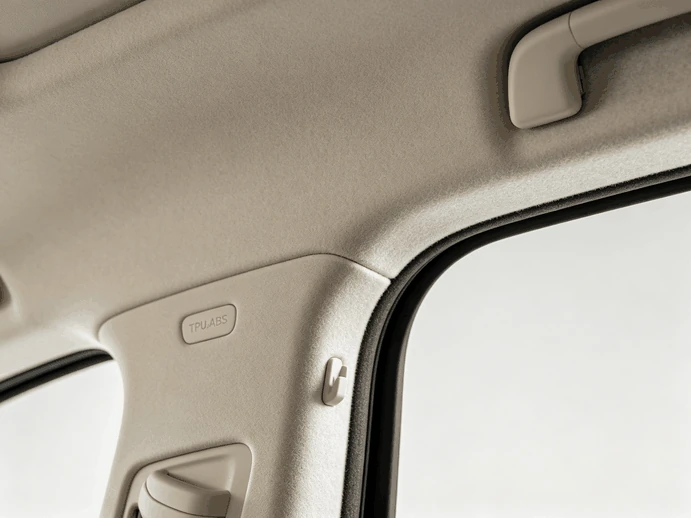
TPU/ABS composite plate is a multi-layer sheet consisting of a soft-touch TPU surface layer (0.3-1.0 mm) co-extruded or laminated onto a rigid ABS substrate (2.0-5.0 mm). The TPU layer provides a leather-like feel, scratch resistance, and color, while the ABS substrate provides stiffness, thermoformability, and cost-effective bulk. After extrusion, the composite plate is thermoformed into 3D automotive interior components: dashboard skins, door panel inserts, center console covers, and pillar trim. The composite replaces traditional PVC slush-molded skins with better haptics, lower VOC emissions, and full recyclability.

What is the difference between TPU/ABS composite plates and slush-molded PVC skins? +

Three key differences: (1) Haptics — TPU provides a warmer, more leather-like feel than PVC, which automotive OEMs increasingly specify for premium interior perception, (2) Emissions — TPU contains no plasticizers so VOC and fogging emissions are near zero versus PVC’s 50-200 μg/g plasticizer migration, meeting tightening interior air quality regulations (VDA 278, GB/T 27630), and (3) Recyclability — TPU/ABS composites are thermoplastic throughout and can be reground and reprocessed, whereas PVC skins create cross-contamination issues in the automotive plastics recycling stream.

How does the Jwell line achieve OEM-matched grain texture and color consistency? +

Grain texture is created either by an engraved embossing roller in the TPU calendaring section (reusable, lower running cost) or by a release-foil system that carries the grain pattern on a continuous foil web pressed against the TPU surface (highest grain fidelity, OEM-preferred for premium vehicles). Color consistency is maintained through gravimetric dosing of TPU color masterbatch with ±0.5% batch accuracy, with in-line spectrophotometer verification at QC intervals. The Siemens PLC stores grain pattern, roller temperature, and color formulation as recipes for each OEM part number.

What output capacity does the line achieve? +

The Jwell TPU/ABS composite plate line delivers 200-600 kg/h depending on configuration. A 3-extruder line (TPU 75mm + tie-layer 45mm + ABS 120mm) producing 1.0mm TPU / 3.0mm ABS composite at 1500mm width achieves approximately 350-450 kg/h. The line speed is governed by the TPU layer thickness (the thinner and more demanding layer) rather than the ABS throughput capacity — the TPU extruder is typically the bottleneck.

Does Jwell provide application trials for TPU/ABS composite plate? +

Yes. Jwell offers application-center trials at the Changzhou facility using the customer’s specified TPU grade, ABS grade, color masterbatch, grain pattern specification, and tie-layer resin. Trials include a full production run producing finished composite plate, followed by thermoforming trials to verify formability and grain retention, and physical testing (gravelometer abrasion, thermal cycling, stain resistance) against the target OEM specification. Trial data is provided as a qualification package for the customer’s own OEM submission.

Related Sheet Extrusion Lines

WPC Flooring Production Line

WPC Flooring Production Line

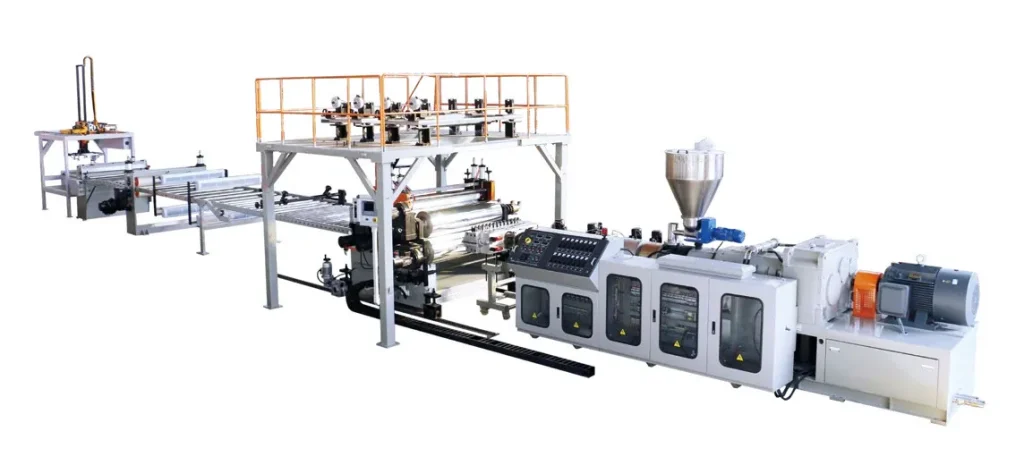
Extruder Type: Conical twin-screw, vented; Screw Material: 38CrMoAlA, nitrided, bimetallic optional; Screw Structure: Conical twin, designed for PVC + wood flour + CaCO₃ + foaming agent; L/D Ratio: Optimized for controlled foaming zone
Learn More ➔
SPC Flooring Production Line

SPC Flooring Production Line

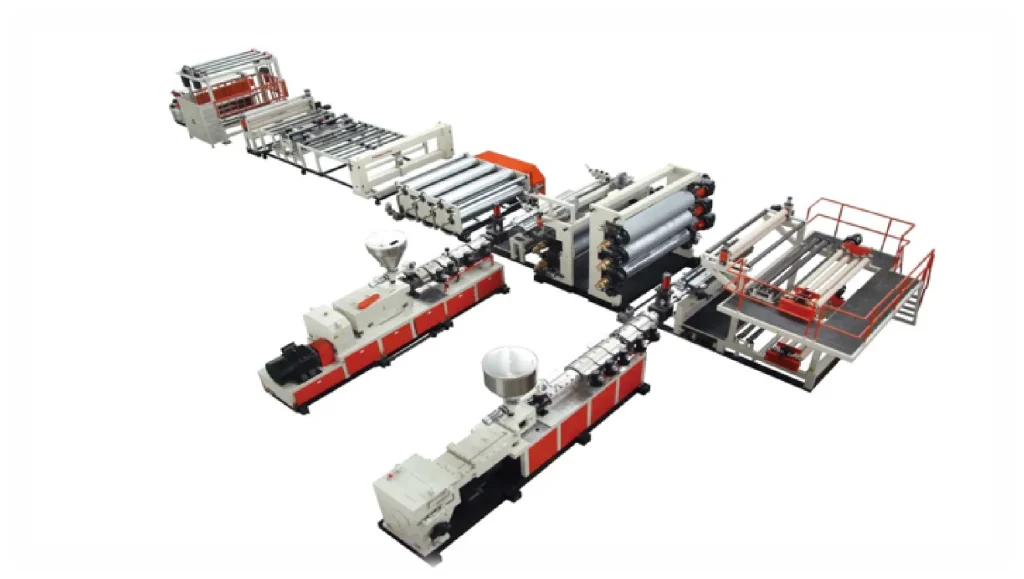
Screw Diameter: Φ 80 mm / Φ 92 mm / Φ 110 mm / Φ 180 mm; Output (24h, SPC): 6-8 T / 12-18 T / 25-32 T / 70-100 T; Line Speed at 4 mm: 0.4-0.6 m/min / 0.8-1.3 m/min / 1.8-2.4 m/min / 5-9 m/min; Screw Material: 38CrMoAlA, nitrided, bimetallic optional / ← Same / ← Same / ← Same

Learn More ➔

Why Choose Jwell for Your PET Sheet Line

🏭

Factory/Experience

Jwell has manufactured PET sheet extrusion equipment since 2005, accumulating field data from over 400 installed PET lines worldwide. Each new machine generation incorporates refinements validated across hundreds of real production environments — not just lab prototypes.

🔬

Test/Validate

Our Changzhou facility operates a full production-scale PET line for customer trials. Bring your raw materials and target specifications — we run your recipe before you commit. The line delivered to your factory is a proven configuration, eliminating startup risk.

🌍

Service/Support

Factory-trained Jwell engineers based in Brazil, Spain, Mexico, and Shanghai travel to customer sites for installation and operator training. Remote diagnostic support via WeChat/WhatsApp responds within 2 hours. Critical spares ship from Shanghai within 48 hours.

Request a Quote or Technical Consultation

Your information will never be shared with third parties.