
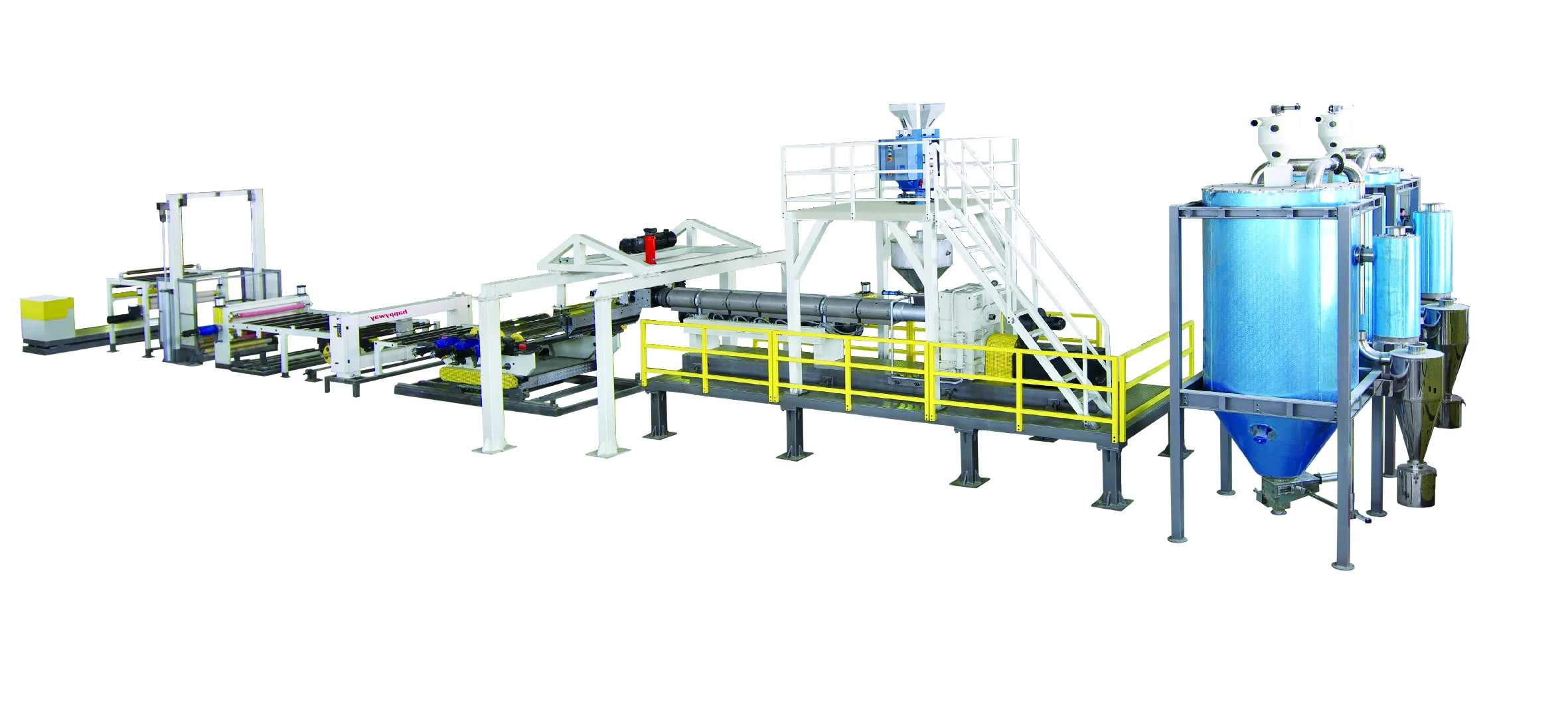
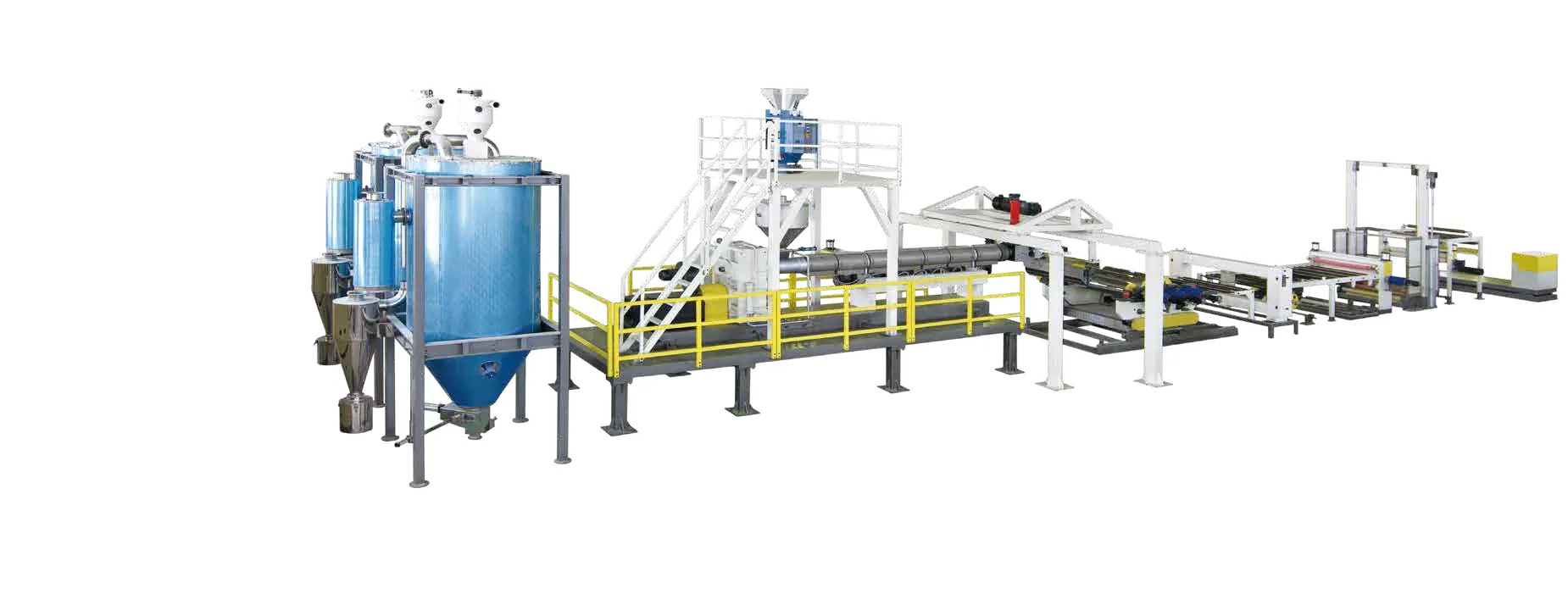
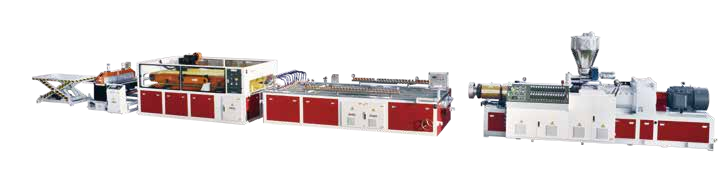
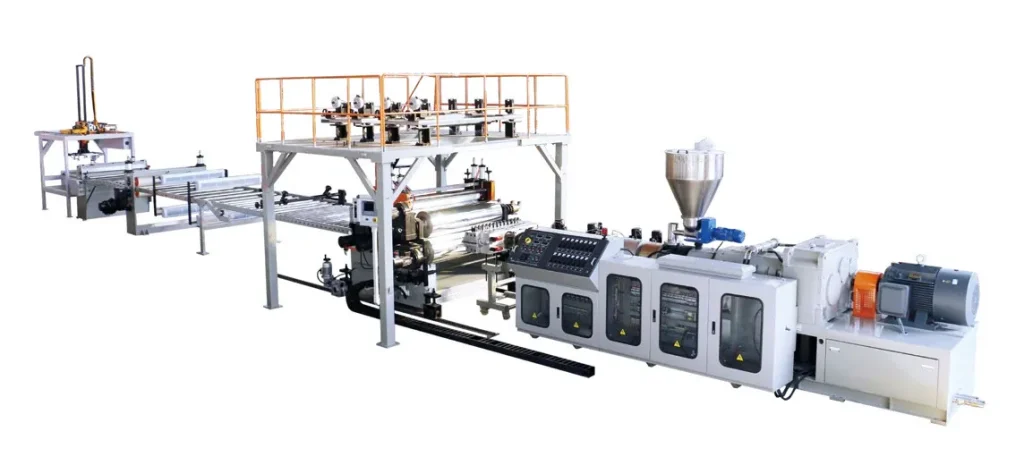
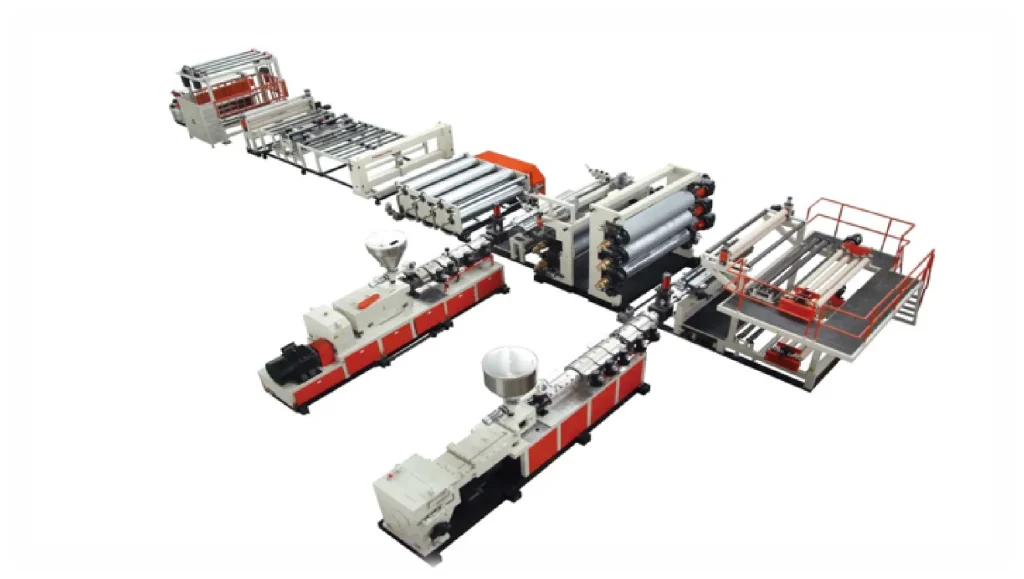
PC sheet extrusion line

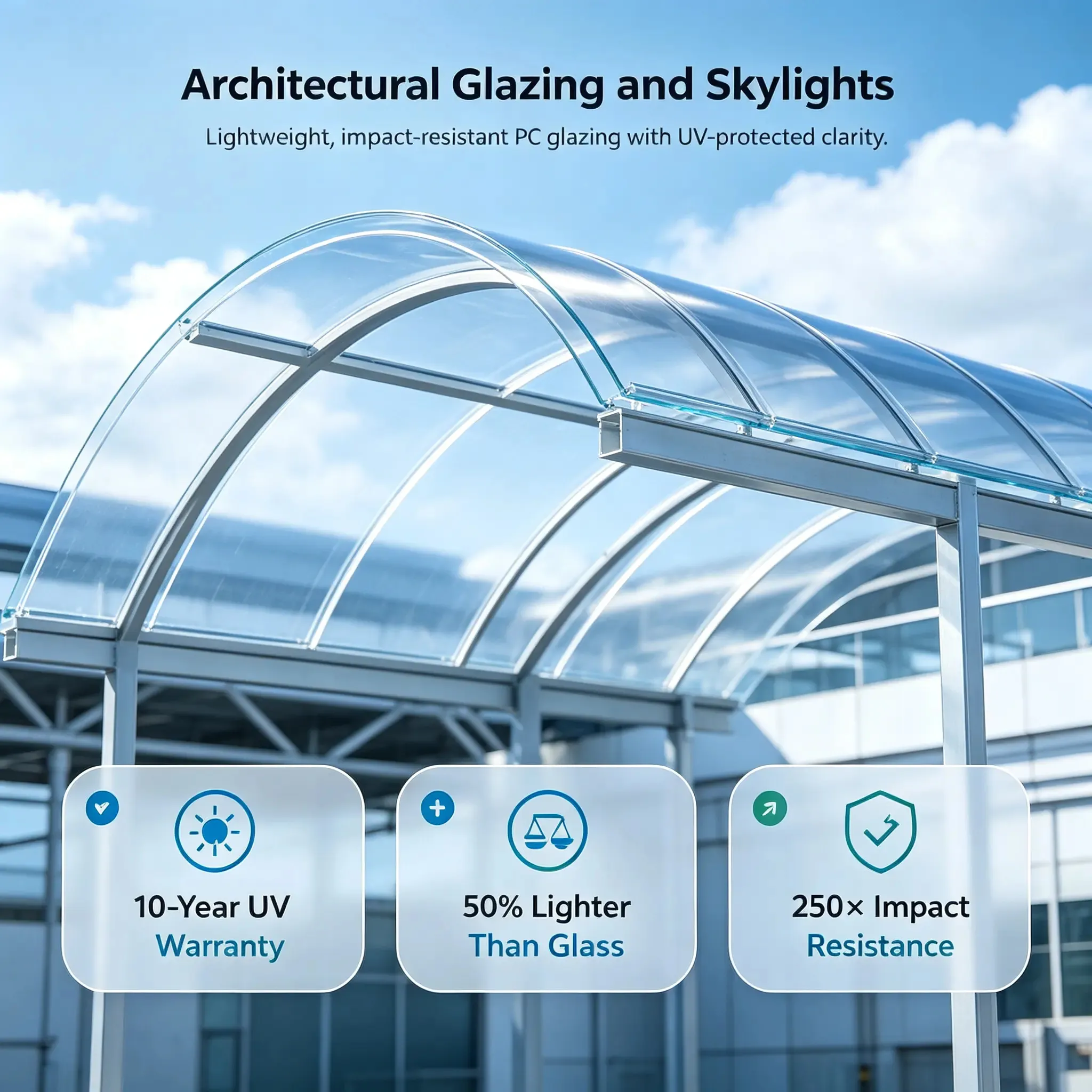
The Jwell polycarbonate (PC) solid sheet extrusion line produces optically clear, virtually unbreakable sheet for applications where impact resistance, transparency, and structural integrity are safety-critical requirements. Operating at outputs of 200 to 500 kilograms per hour across a thickness range from 1.0 to 12.0 millimeters and widths up to 2,100 mm, this line processes polycarbonate resin into sheet that achieves Izod notched impact strength exceeding 650 J/m — approximately 250 times that of glass and 30 times that of acrylic sheet at equivalent thickness. This extraordinary toughness, combined with 88% light transmission and a continuous service temperature range of -40°C to 125°C, positions PC sheet as the engineered solution for applications where failure of the transparent element would create a safety hazard, security breach, or catastrophic equipment damage.

PC sheet extrusion presents distinct processing challenges that separate capable extrusion lines from inadequate ones. Polycarbonate is extremely hygroscopic — it absorbs moisture from ambient air within minutes and must be dried to below 0.02% (200 ppm) moisture content before extrusion, as any residual moisture hydrolyzes the polymer at processing temperatures (280-320°C), causing molecular weight degradation, bubble formation, and catastrophic loss of impact strength. The material’s high melt viscosity demands an extruder with substantial torque capability and a screw geometry that generates sufficient melting energy without excessive shear. And the wide thickness range — from 1 mm glazing sheet to 12 mm structural sheet — requires a roll stack and downstream system that can handle both thin-gauge flexible sheet and thick, rigid plate with equal precision.

Changzhou Jwell Plate & Sheet Equipment Technology Co., Ltd. has developed specialized PC processing expertise through installations serving the security glazing, machine guarding, construction, and transportation industries across 20+ countries. The Jwell PC line incorporates engineering solutions for each of the material’s processing challenges — from a closed-loop drying system with -50°C dew point capability, to a high-torque extruder with PC-optimized screw geometry, to a heavy-duty roll stack designed for the thermal and mechanical demands of thick-sheet calendering.

PC Sheet Extrusion Line: Related JWELL Extrusion Lines

The PC Sheet Extrusion Line is part of JWELL’s complete extrusion portfolio. Customers evaluating this PC Sheet Extrusion Line also frequently request our PMMA Sheet Extrusion Line | Jwell Machinery and PC Hollow Sheet Line | Jwell Machinery, which share the same proven screw, die and control platforms. For layout drawings, pricing and lead times, contact JWELL Machinery directly.

# Item Key Point
1 🌀 Three-Stage Closed-Loop Drying with Moisture Verification PC’s extreme moisture sensitivity — material exposed to ambient air for just 30 minutes absorbs enough water t
2 ⚡ High-Temperature Roll Stack for PC’s Elevated Processing Window Polycarbonate’s glass transition temperature of approximately 147°C requires roll temperatures between 100°C a
3 🎯 Gear Pump Melt Delivery for Stable Die Pressure PC’s high melt viscosity and the low throughput rates characteristic of thick-sheet production create challeng
4 🔄 UV Co-Protection Layer with Coextrusion Capability Polycarbonate exposed to outdoor UV radiation without protection yellows and embrittles within 1-3 years due t

Three-Stage Closed-Loop Drying with Moisture Verification

PC’s extreme moisture sensitivity — material exposed to ambient air for just 30 minutes absorbs enough water to cause visible degradation — demands a drying system that is both aggressive and reliable. Jwell’s three-stage drying package starts with a hopper dryer maintaining 120°C with 4-6 hours residence time (2,500+ liter capacity for 500 kg/h throughput), followed by a second hopper dryer operating in series for redundancy, and an in-line dew point sensor at the drying air inlet that alarms if dew point rises above -40°C. The system includes a nitrogen blanket for the hopper-dryer-to-extruder-feedthroat transition section, preventing the dried pellets from reabsorbing ambient moisture during the final 30 seconds before entering the barrel. For pharmaceutical cleanroom and optical-quality applications, Jwell offers a fully enclosed conveying system from dryer to extruder, purged with -50°C dew point dried air.

High-Temperature Roll Stack for PC's Elevated Processing Window

Polycarbonate’s glass transition temperature of approximately 147°C requires roll temperatures between 100°C and 160°C to achieve proper surface polishing and prevent cooling-stress-induced optical distortion in finished sheet. This is substantially higher than the 30-90°C range used for PET, PS, or PP. Jwell’s PC roll stack uses a pressurized hot-oil circulation system — rather than hot water, which is limited to approximately 120°C at practical system pressures — with individual PID temperature controllers for each of the 3 polishing rolls. The rolls themselves are constructed with thick-wall chromed shells (minimum 25 mm wall thickness after grinding) that provide the thermal mass and stiffness required for uniform heat transfer to thick sheet. The 400-500 mm roll diameter — larger than the 300-400 mm standard for other materials — increases the contact arc length, providing longer polishing time for thick sheet that would otherwise exit the roll stack before surface solidification is complete.

Gear Pump Melt Delivery for Stable Die Pressure

PC’s high melt viscosity and the low throughput rates characteristic of thick-sheet production create challenges for maintaining stable die pressure — pressure fluctuations as small as ±5 bar can produce visible thickness bands in finished sheet. Jwell integrates a melt gear pump between the extruder and the die that acts as both a pressure stabilizer and a throughput metering device. The gear pump, sized for PC’s viscosity range and equipped with hardened tool-steel gears and a variable-speed AC drive, damps out the pressure pulsations inherent in single-screw extrusion and delivers melt to the die at pressure stability of ±1 bar. This pressure stability translates directly to thickness consistency — the scanning beta gauge on Jwell PC lines typically records transverse-direction gauge variation of ±1.5% for 3-6 mm sheet and ±2.0% for 8-12 mm sheet, compared to ±3-5% on lines without gear pump stabilization.

UV Co-Protection Layer with Coextrusion Capability

Polycarbonate exposed to outdoor UV radiation without protection yellows and embrittles within 1-3 years due to photo-degradation of the polymer backbone. Jwell addresses this through a coextrusion system that applies a thin (25-75 micron) UV-protective layer — typically a PC-based compound containing high-concentration UV absorbers — to one or both sheet surfaces during extrusion. The coextruder is a compact 35-45 mm single-screw unit mounted at an angle to the main die adapter, feeding the cap layer material into a multi-manifold die or feedblock. This in-line UV protection is molecularly bonded to the sheet surface and cannot delaminate, peel, or be washed off — unlike post-applied UV coatings — and provides effective protection against UV wavelengths from 290-380 nm. The coextrusion option adds approximately 10-15% to the machine base price and is recommended for any line producing sheet intended for outdoor applications.

Technical Specifications

Parameter Specification
Extruder Type Single-screw, vented, 33:1 L/D
Screw Diameter 120 mm (also available: 90mm, 105mm, 150mm)
Screw Material Nitrided steel, 950 HV, chrome-plated
Barrel Material Bimetallic liner, 58-62 HRC
Drying System Desiccant, honeycomb rotor, -50°C dew point, 3-stage
Output Capacity 200 – 500 kg/h
Sheet Thickness Range 1.0 – 12.0 mm
Sheet Width 1,000 – 2,100 mm
Light Transmission 88-90% at 3mm thickness
Roll Stack 3-roll vertical, 400-500mm dia., individually driven
Roll Temperature Range 100 – 160°C (pressurized hot oil)
Total Installed Power 280 – 520 kW
Line Speed (max) 15 m/min (at 1mm), 1.2 m/min (at 12mm)
Control System Siemens S7-1500 PLC + 15″ HMI

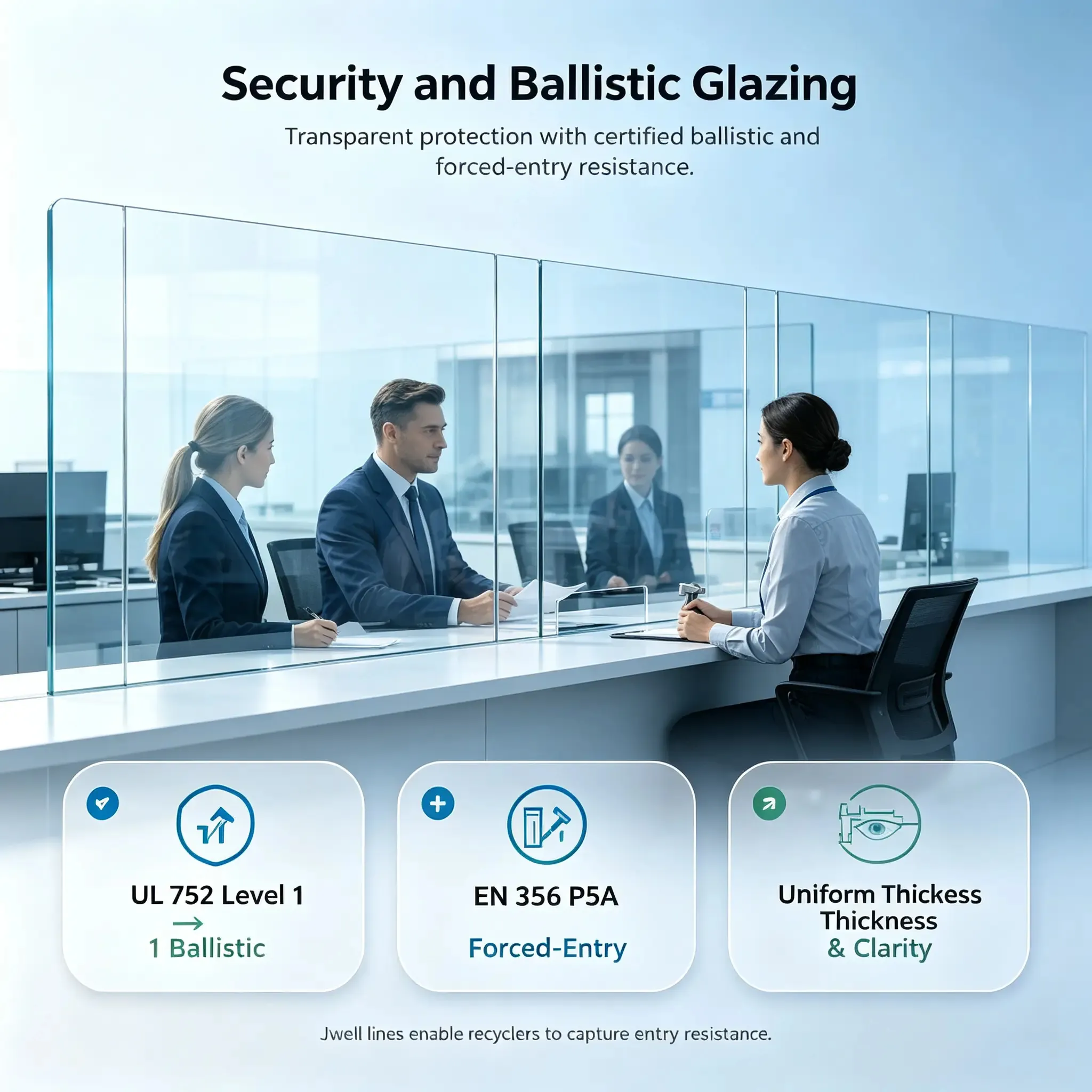
Security and Ballistic Glazing

PC sheet at 6-12 mm thickness forms transparent security barriers in banks, embassies, correctional facilities, ticket booths, and retail environments. At 12 mm thickness, solid PC sheet achieves UL 752 Level 1 ballistic resistance (stops 9mm handgun rounds) and EN 356 P5A forced-entry resistance. The Jwell line produces sheet with the optical clarity required for face-to-face transaction visibility through the barrier and the uniform thickness essential for consistent ballistic performance across the entire panel area.

Machine Guarding and Industrial Safety

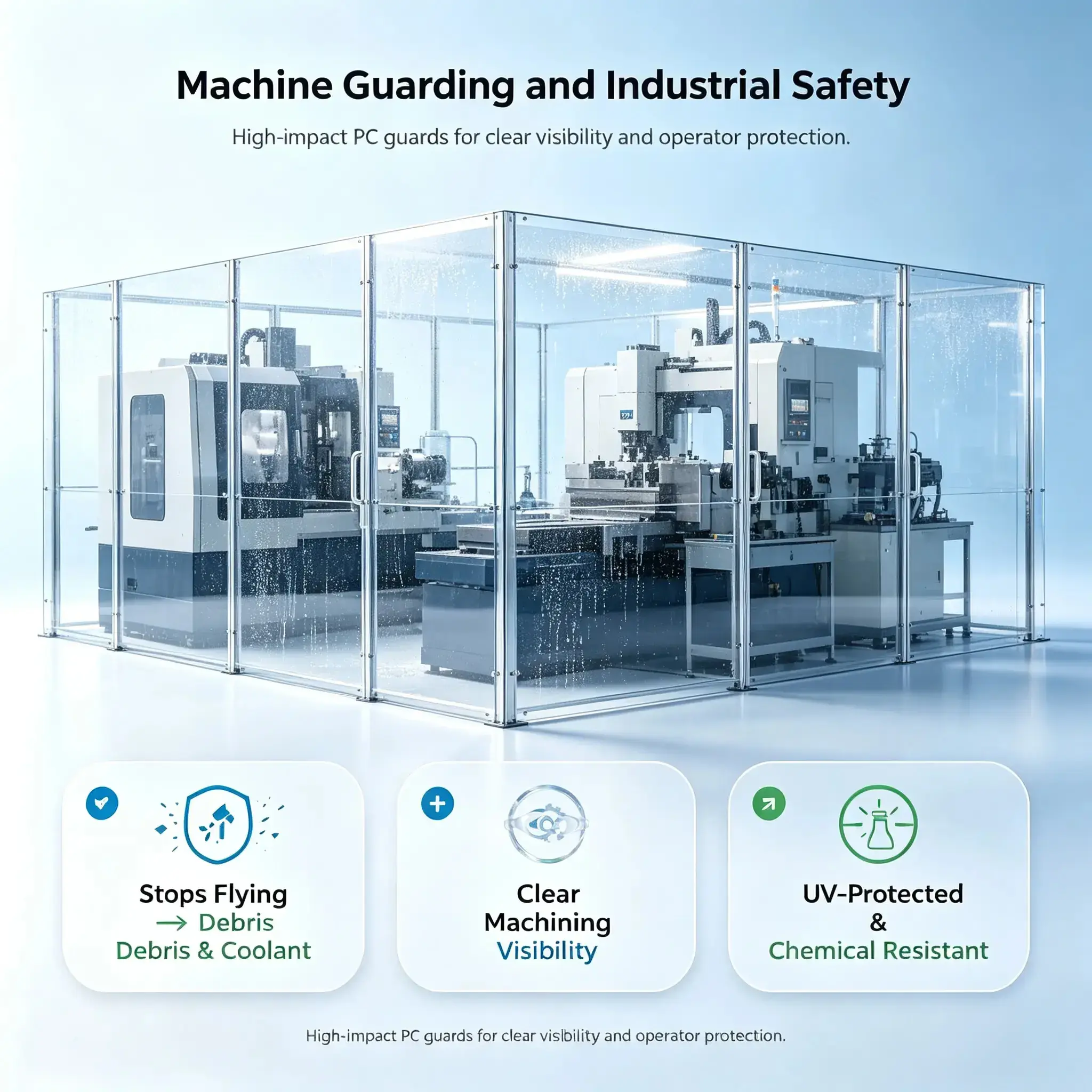
Transparent PC machine guards at 4-8 mm thickness protect operators from flying debris, coolant spray, and accidental tool contact on CNC machining centers, press brakes, injection molding machines, and automated assembly cells. The sheet must withstand high-velocity impacts from ejected workpieces and cutting tool fragments without penetration, while providing clear visibility of the machining process. The Jwell line’s UV-protected PC sheet maintains optical clarity through years of exposure to machine shop cutting fluids, coolants, and cleaning solvents.

Frequently Asked Questions

What is the expected energy consumption for drying polycarbonate, and how does it affect total operating cost? -

PC drying is energy-intensive because the material requires both high temperature (120°C) and long residence time (4-6 hours). A desiccant dryer sized for 500 kg/h throughput — approximately 2,500-3,000 liter hopper capacity — consumes 45-65 kW continuously, representing roughly $35,000-50,000 per year at an industrial electricity rate of $0.10/kWh and 7,000 annual operating hours. The dryer’s regeneration cycle adds another 10-15% energy consumption during the regeneration heater’s active period (typically 20 minutes out of every 2-hour cycle). Jwell’s system incorporates two energy-reduction measures: a heat-recovery coil that preheats incoming process air using exhaust air from the regeneration cycle (reducing regeneration energy by 15-20%), and variable-speed blowers that reduce airflow during periods when the hopper is partially full. Annual drying energy cost is typically $30,000-42,000 for a 500 kg/h line after these efficiency measures — a significant operating expense, but unavoidable given PC’s moisture sensitivity. Attempting to save energy by reducing drying temperature or residence time inevitably leads to sheet quality problems whose cost far exceeds the energy saving.

Can the Jwell PC sheet extrusion line produce multi-wall or corrugated PC sheet, or is it limited to solid sheet? +

The Jwell PC Solid Sheet Extrusion Line is designed exclusively for solid (monolithic) sheet production. Multi-wall PC sheet (twin-wall, triple-wall, X-structure) and corrugated PC sheet require fundamentally different downstream equipment: a multi-wall sheet requires a specialized die with multiple mandrels and an internal air cooling/pressure calibration system, while corrugated sheet requires a corrugator unit with matched forming rolls. These are completely different machines sharing only the upstream extruder. Jwell manufactures dedicated lines for both PC multi-wall sheet (PC Hollow Sheet Extrusion Line) and PC corrugated sheet (PC Corrugated Sheet Extrusion Line) as separate products. When customers need both solid and structured PC sheet production capability, Jwell’s recommendation is to install two dedicated lines rather than attempting to run both products on a single line with changeovers — the downstream equipment differences are too fundamental for practical changeover, and the production volumes for each product type typically justify separate dedicated lines.

Related Sheet Extrusion Lines

WPC Flooring Production Line

WPC Flooring Production Line

Extruder Type: Conical twin-screw, vented; Screw Material: 38CrMoAlA, nitrided, bimetallic optional; Screw Structure: Conical twin, designed for PVC + wood flour + CaCO₃ + foaming agent; L/D Ratio: Optimized for controlled foaming zone
Learn More ➔
SPC Flooring Production Line

SPC Flooring Production Line

Screw Diameter: Φ 80 mm / Φ 92 mm / Φ 110 mm / Φ 180 mm; Output (24h, SPC): 6-8 T / 12-18 T / 25-32 T / 70-100 T; Line Speed at 4 mm: 0.4-0.6 m/min / 0.8-1.3 m/min / 1.8-2.4 m/min / 5-9 m/min; Screw Material: 38CrMoAlA, nitrided, bimetallic optional / ← Same / ← Same / ← Same

Learn More ➔

Why Choose Jwell for Your PET Sheet Line

🏭

Factory/Experience

Jwell has manufactured PET sheet extrusion equipment since 2005, accumulating field data from over 400 installed PET lines worldwide. Each new machine generation incorporates refinements validated across hundreds of real production environments — not just lab prototypes.

🔬

Test/Validate

Our Changzhou facility operates a full production-scale PET line for customer trials. Bring your raw materials and target specifications — we run your recipe before you commit. The line delivered to your factory is a proven configuration, eliminating startup risk.

🌍

Service/Support

Factory-trained Jwell engineers based in Brazil, Spain, Mexico, and Shanghai travel to customer sites for installation and operator training. Remote diagnostic support via WeChat/WhatsApp responds within 2 hours. Critical spares ship from Shanghai within 48 hours.

Request a Quote or Technical Consultation

Your information will never be shared with third parties.