
TPU Shoe Material Line

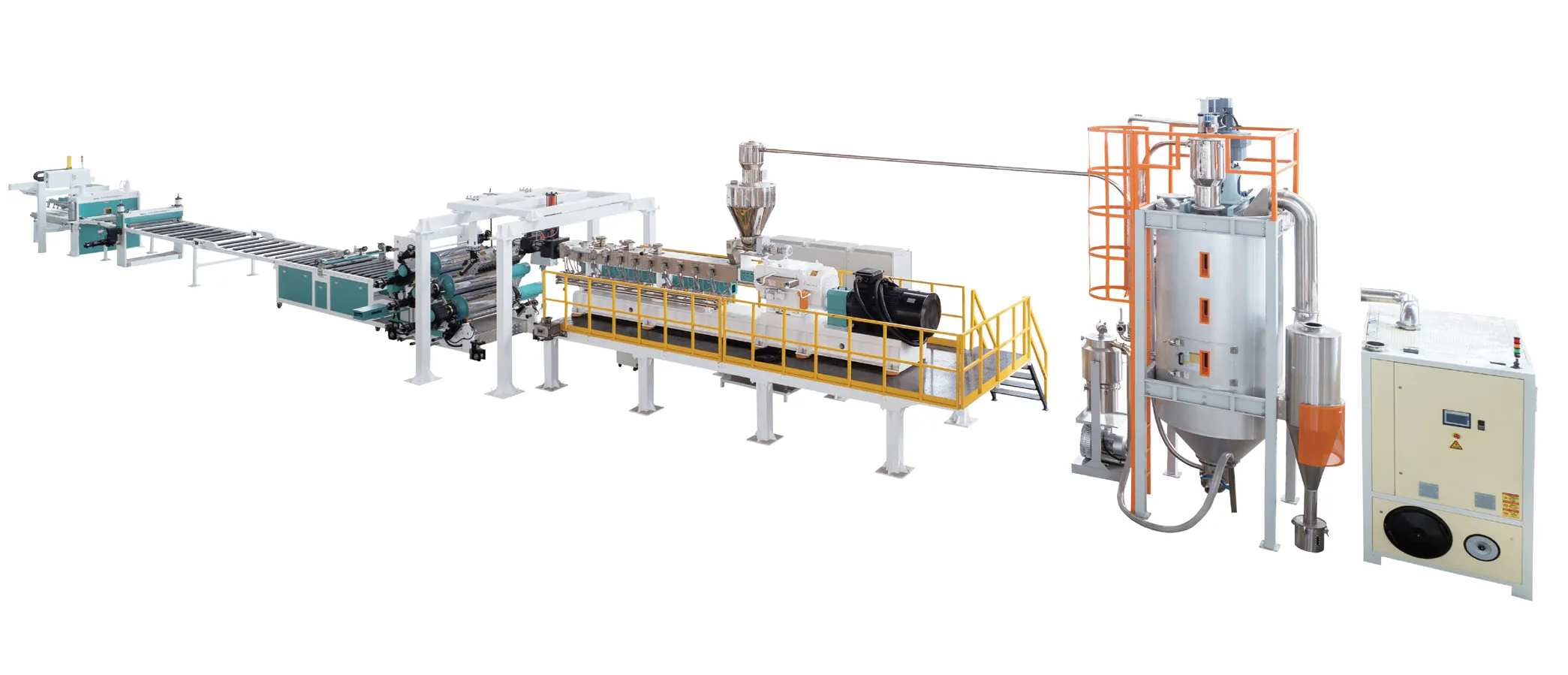
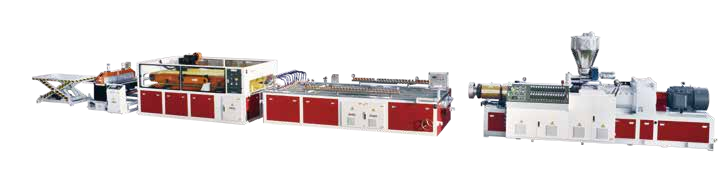
The Jwell TPU shoe material foam thick plate production line is a specialized sheet extrusion system engineered to manufacture thermoplastic polyurethane foam-core thick plates (2-15 mm thickness) at outputs of 100 to 350 kg/h. The product serves the performance footwear industry as the midsole material in athletic shoes, hiking boots, and work footwear — the foam-core TPU plate provides the energy return, cushioning, and durability that ethylene-vinyl acetate (EVA) foam cannot match in high-performance applications.

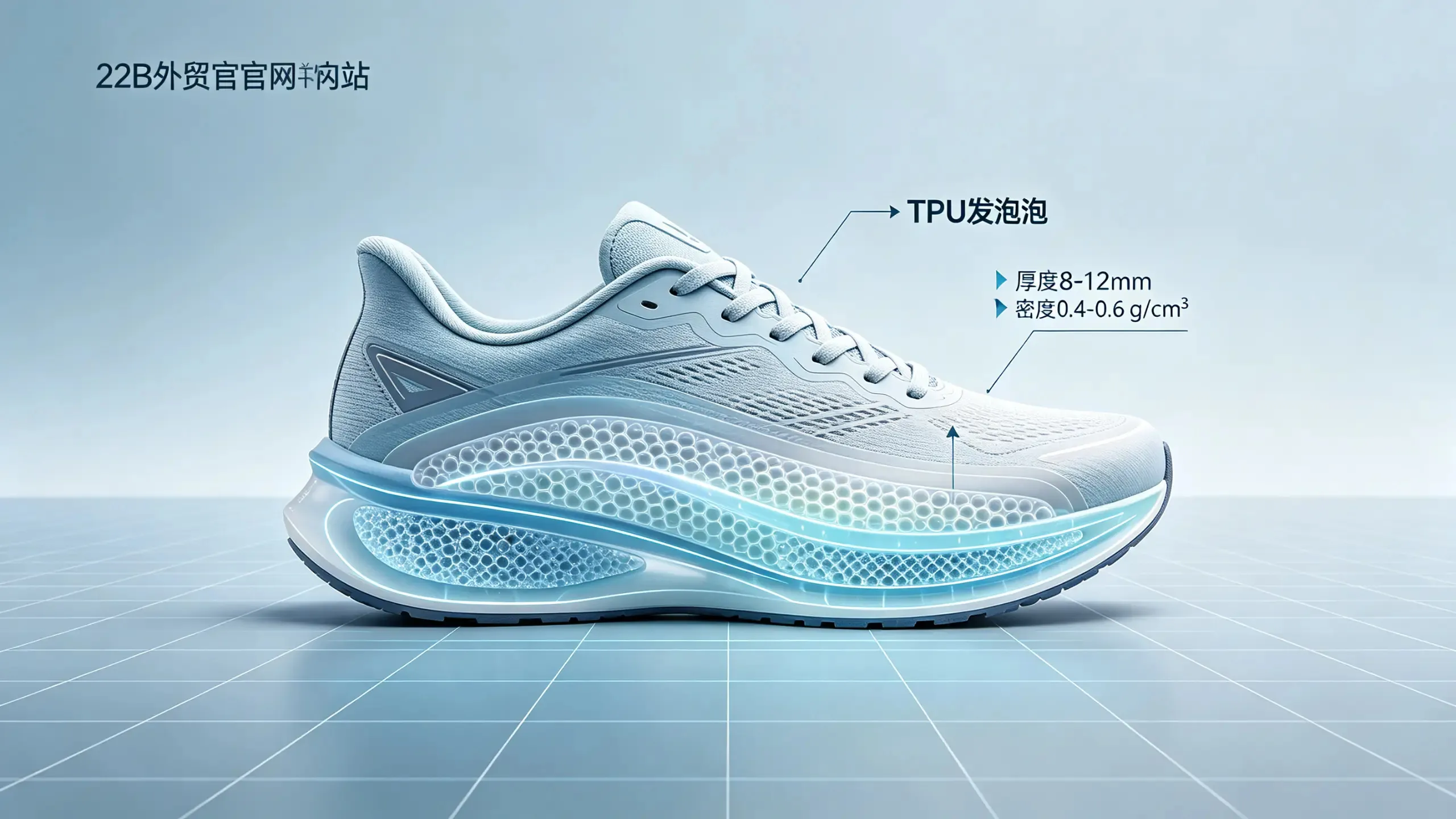
TPU foam plates are produced by incorporating a chemical or physical blowing agent into the TPU melt, creating a closed-cell or partially open-cell foam structure with density ranging from 0.3 to 0.8 g/cm³ (versus 0.2-0.3 g/cm³ for EVA foam). The higher density translates to 3-5× longer service life (measured in midsole compression-set resistance after 500 km of running), better energy return ( rebound resilience 40-55% vs. 30-40% for EVA), and superior resistance to compression set from repeated footstrike loading. The trade-off is higher material cost — TPU foam plate material cost is approximately 2-3× EVA foam — but this is offset by the extended replacement interval that premium athletic footwear consumers value.

Changzhou Jwell Plate & Sheet Equipment Technology Co., Ltd. addresses the TPU foam sheet market with a line that integrates precise blowing-agent dosing, controlled-foaming extrusion, and calibrated cooling/calibration into a continuous process that produces foam plates with uniform cell structure, controlled thickness profile, and surface quality suitable for direct-lasting (cementing the outsole directly to the plate without an intermediate insole board).

TPU Shoe Material Foam Thick Plate Production Line: Related JWELL Extrusion Lines

The TPU Shoe Material Foam Thick Plate Production Line is part of JWELL’s complete extrusion portfolio. Customers evaluating this TPU Shoe Material Foam Thick Plate Production Line also frequently request our TPU/ABS Composite Plate Extrusion Line | 200-600kg/h | Jwell and TPU Film Extrusion Line | Jwell Machinery, which share the same proven screw, die and control platforms. For layout drawings, pricing and lead times, contact JWELL Machinery directly.

# Item Key Point
1 🌀 Precision Blowing Agent Dosing with Loss-in-Weight Feeder Foam density uniformity — the primary quality parameter for shoe midsole performance — depends on blowing agen
2 ⚡ Foam Nucleation and Cell-Size Control with Nucleating Agent Dosing Uniform cell size (50-200 μm) and cell-size distribution (standard deviation
3 🎯 Controlled Cooling with Graduated Temperature Profile TPU foam sheet must be cooled slowly and uniformly to prevent cell collapse (from too-rapid cooling that traps
4 🔄 Surface SkIn Control for Direct Lasting Compatibility Performance footwear manufacturing uses “direct lasting” — cementing the outsole directly to the midsole plate

Precision Blowing Agent Dosing with Loss-in-Weight Feeder

Foam density uniformity — the primary quality parameter for shoe midsole performance — depends on blowing agent concentration uniformity within ±0.2% across the melt stream. Jwell’s line uses a loss-in-weight gravimetric feeder for blowing agent dosing (chemical blowing agent masterbatch or liquid physical blowing agent) at rates of 0.5-3.0% of TPU throughput, with ±0.1% dosing accuracy. The feeder is temperature-controlled (blowing agent masterbatch can soften and bridge in a warm feeder hopper) and electrically grounded (some blowing agents generate static that causes feed-rate fluctuation). For physical blowing agent (liquefied CO₂ or N₂), the line uses a high-pressure injection system with mass-flow control, injecting the blowing agent directly into the extruder barrel at the transition from feed section to compression section.

Foam Nucleation and Cell-Size Control with Nucleating Agent Dosing

Uniform cell size (50-200 μm) and cell-size distribution (standard deviation <30% of mean) determine the foam plate's mechanical properties — compression set, energy return, tear strength. Jwell's line doses a nucleating agent (typically 0.1-0.5% talc, zinc oxide, or specialized nucleating masterbatch) through a separate loss-in-weight feeder, creating nucleation sites in the melt that produce uniform cell sizes. Without nucleating agent, the blowing agent generates large, non-uniform cells (300-800 μm) that create weak points in the foam structure, reducing compression-set resistance by 30-50% compared to nucleated foam.

Controlled Cooling with Graduated Temperature Profile

TPU foam sheet must be cooled slowly and uniformly to prevent cell collapse (from too-rapid cooling that traps gas pressure inside cells) and internal stress (from asymmetric cooling that causes warping). Jwell’s vertical 3-roll calibration stack uses individually temperature-controlled rolls (±1°C accuracy) with a graduated cooling profile: the first roll at 60-80°C (allowing controlled cell expansion and stabilization), the second roll at 40-60°C (slowing the cooling rate), and the third roll at 20-40°C (completing solidification). This graduated profile produces foam plates with cell-structure uniformity of ±5% across the thickness and width, and warp of less than 1.5 mm per meter of plate length.

Surface SkIn Control for Direct Lasting Compatibility

Performance footwear manufacturing uses “direct lasting” — cementing the outsole directly to the midsole plate without an intermediate insole board — which requires the midsole plate to have a dense, non-porous “skin” layer (0.2-0.5 mm thickness) on both surfaces for adhesive bonding reliability. Jwell’s line achieves this through precise temperature control at the die exit and the first calibration-roll contact: the die lip temperature is maintained at 180-200°C (keeping the TPU surface non-porous as it exits the die), and the first calibration roll temperature (60-80°C) cools the surface rapidly enough to form a skin layer while the core continues foaming. The skin-layer thickness is adjustable from 0.1 to 1.0 mm by varying the first-roll temperature and the line speed.

Technical Specifications

Parameter Specification
Extruder Type Single-screw, vented, 33:1 L/D
Screw Diameter 90 mm, 105 mm, 120 mm
Output Capacity 100 – 350 kg/h
Plate Thickness Range 2 – 15 mm
Plate Width 600 – 1,200 mm
Foam Density 0.3 – 0.8 g/cm³
Blowing Agent Chemical (ADC, OBSH) or physical (CO₂, N₂)
Cell Structure Closed-cell, uniform cell size 50-200 μm
Calibration System 3-roll vertical stack, individually driven
Surface Finish Smooth both sides (for direct lasting)
Control System Siemens S7-1500 PLC + 15″ HMI

Performance Athletic Footwear Midsoles

Premium running shoes, basketball shoes, and training shoes use TPU foam plates (8-12 mm thickness, 0.4-0.6 g/cm³ density) as the midsole for energy return, cushioning, and durability. TPU foam’s rebound resilience (45-55%) returns more energy to the runner than EVA foam (30-40%), reducing fatigue over long distances. The material’s compression-set resistance (less than 15% after 50,000 compression cycles at 50% deflection, vs. 25-40% for EVA) means the midsole retains its cushioning properties for 800-1,200 km of running versus 300-500 km for EVA — a 2-3× service-life extension that justifies the premium material cost to performance-oriented consumers.

Hiking Boot and Work Boot Midsoles

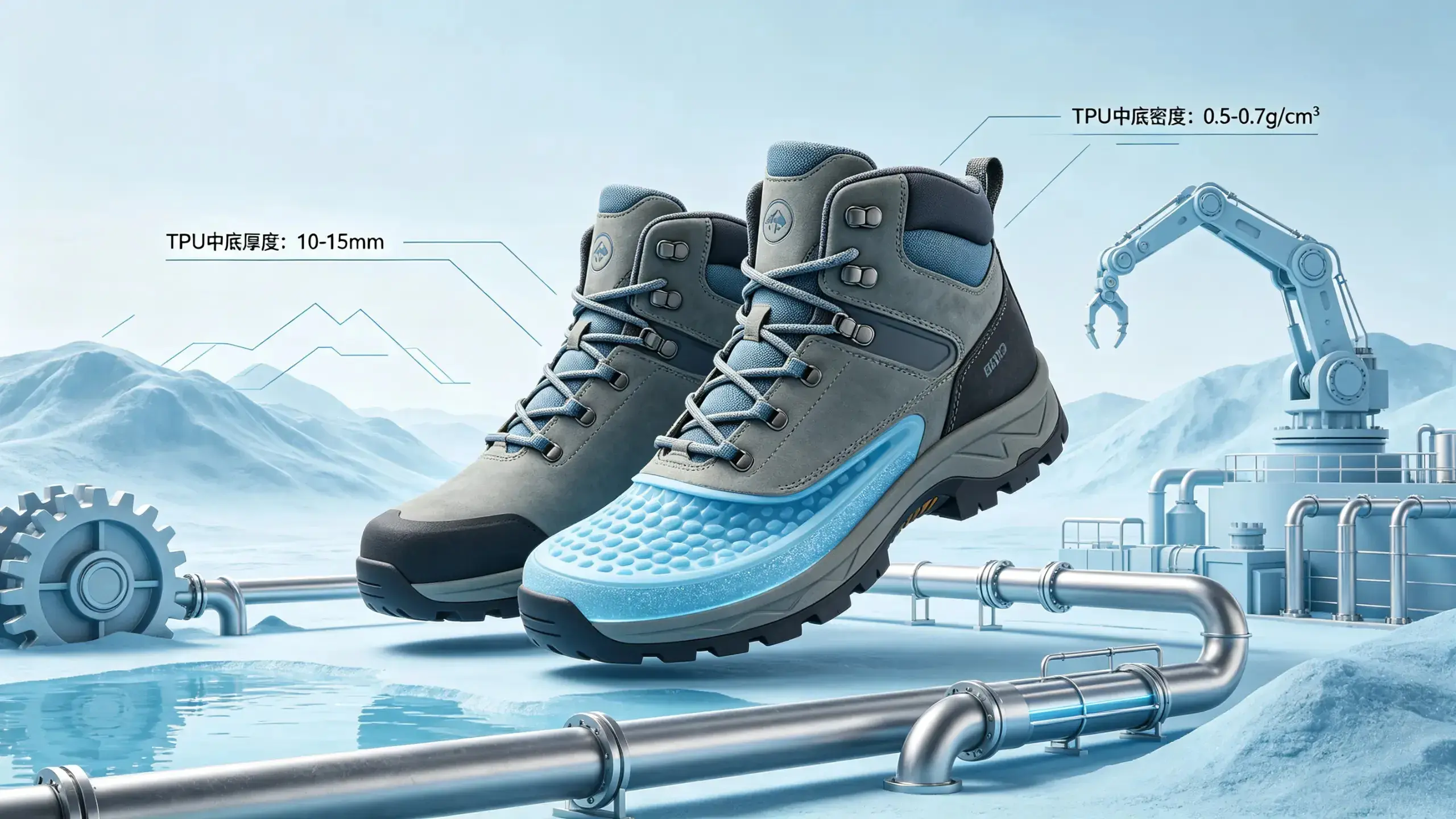
Outdoor and occupational footwear use TPU foam plates (10-15 mm thickness, 0.5-0.7 g/cm³ density) for the combination of cushioning, support, and durability in demanding use conditions. TPU’s resistance to hydrolysis (polyether-based TPU) and low-temperature flexibility (brittle point below -40°C for polyether grades) make it suitable for hiking boots used in wet, muddy, and sub-zero conditions where EVA foam degrades rapidly (hydrolysis in wet conditions, cracking at low temperature). The plate’s higher density also provides better torsional rigidity for ankle support on uneven terrain.

Frequently Asked Questions

What is the difference between TPU foam plates and EVA foam sheets for footwear midsoles? -

TPU foam and EVA foam serve overlapping but distinct market positions in footwear midsoles. TPU foam offers: (1) 3-5× longer service life (compression-set resistance after 500 km of simulated walking); (2) higher energy return (rebound resilience 40-55% vs. 30-40% for EVA), reducing runner fatigue; (3) better low-temperature flexibility (brittle point below -40°C for polyether-TPU vs. -20 to -30°C for EVA); (4) superior resistance to hydrolysis and microbial degradation in wet environments. EVA foam offers: (1) lower density (0.15-0.25 g/cm³ vs. 0.3-0.8 g/cm³ for TPU foam), enabling lighter-weight footwear; (2) lower material cost (EVA resin $1.5-2.5/kg vs. TPU resin $3.5-6.0/kg); (3) established supply chain and processing infrastructure in the footwear industry. Jwell’s position is that TPU foam targets the premium-performance segment (running shoes >$120 retail, hiking boots >$180 retail) where service life and performance justify the material cost premium, while EVA foam remains the cost-performance choice for the mass market.

Can Jwell's TPU foam plate line process recycled TPU foam scrap? +

Yes, the line can process ground TPU foam scrap (from die trim, edge trim, and off-spec plates) at up to 15-20% by weight through a dedicated side feeder or through the main hopper using a twin-screw side feeder that compacts the low-bulk-density foam scrap into the melt stream. The scrap must be ground to 3-6 mm particle size and free of contaminants (dirt, metal, non-TPU materials). The addition of recycled foam scrap increases the foam plate’s density by approximately 0.02-0.04 g/cm³ per 10% recycled content and may increase cell-size non-uniformity if the scrap is not uniformly dispersed — Jwell’s screw design (with intensive mixing section) and nucleating agent dosing minimize this effect, but for premium athletic footwear applications where brand specifications limit recycled content, the line also operates with 100% virgin TPU with the same screw configuration (the side feeder is deactivated).

Related Sheet Extrusion Lines

WPC Flooring Production Line

WPC Flooring Production Line

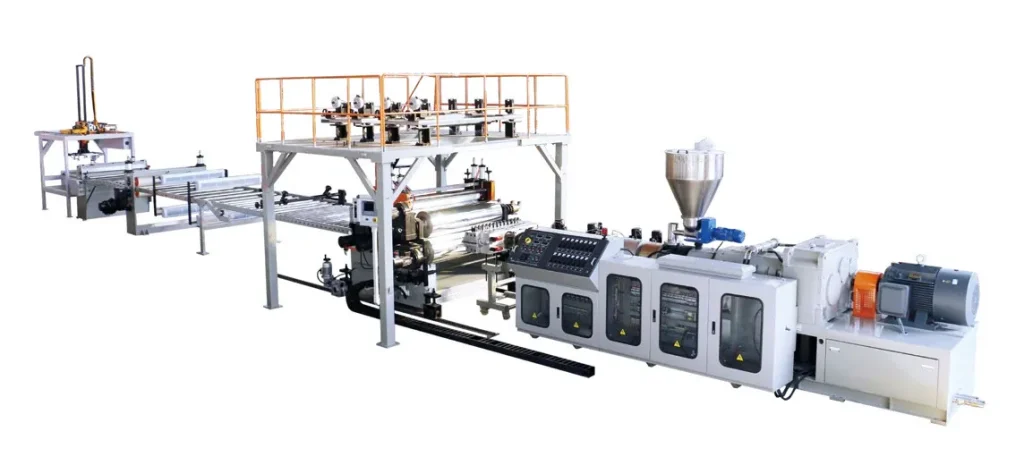
Extruder Type: Conical twin-screw, vented; Screw Material: 38CrMoAlA, nitrided, bimetallic optional; Screw Structure: Conical twin, designed for PVC + wood flour + CaCO₃ + foaming agent; L/D Ratio: Optimized for controlled foaming zone
Learn More ➔
SPC Flooring Production Line

SPC Flooring Production Line

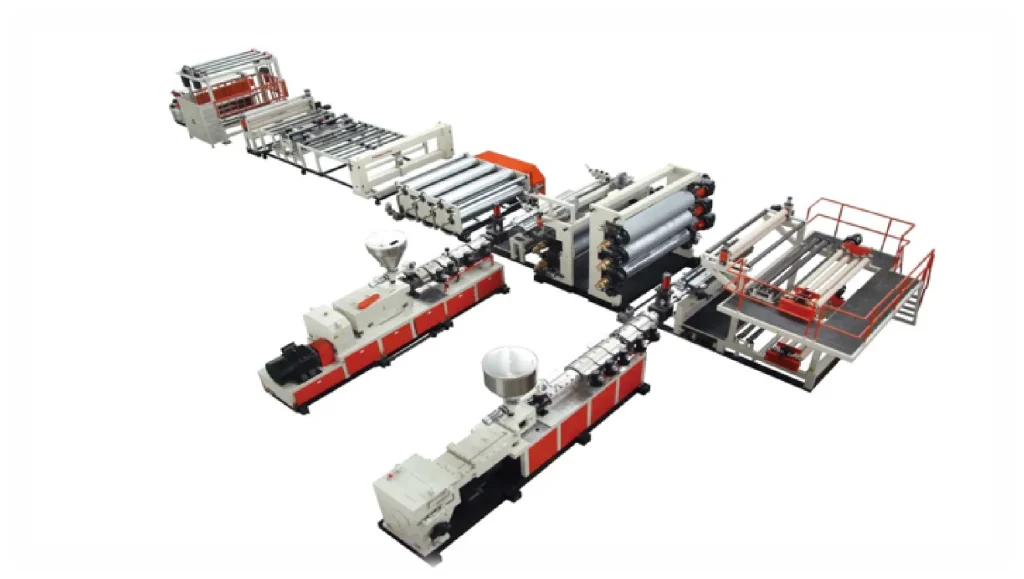
Screw Diameter: Φ 80 mm / Φ 92 mm / Φ 110 mm / Φ 180 mm; Output (24h, SPC): 6-8 T / 12-18 T / 25-32 T / 70-100 T; Line Speed at 4 mm: 0.4-0.6 m/min / 0.8-1.3 m/min / 1.8-2.4 m/min / 5-9 m/min; Screw Material: 38CrMoAlA, nitrided, bimetallic optional / ← Same / ← Same / ← Same

Learn More ➔

Why Choose Jwell for Your PET Sheet Line

🏭

Factory/Experience

Jwell has manufactured PET sheet extrusion equipment since 2005, accumulating field data from over 400 installed PET lines worldwide. Each new machine generation incorporates refinements validated across hundreds of real production environments — not just lab prototypes.

🔬

Test/Validate

Our Changzhou facility operates a full production-scale PET line for customer trials. Bring your raw materials and target specifications — we run your recipe before you commit. The line delivered to your factory is a proven configuration, eliminating startup risk.

🌍

Service/Support

Factory-trained Jwell engineers based in Brazil, Spain, Mexico, and Shanghai travel to customer sites for installation and operator training. Remote diagnostic support via WeChat/WhatsApp responds within 2 hours. Critical spares ship from Shanghai within 48 hours.

Request a Quote or Technical Consultation

Your information will never be shared with third parties.