
PVC Soft Rigid Sheet Extrusion Line

Get Quote & Line Configuration

Talk to an Engineer

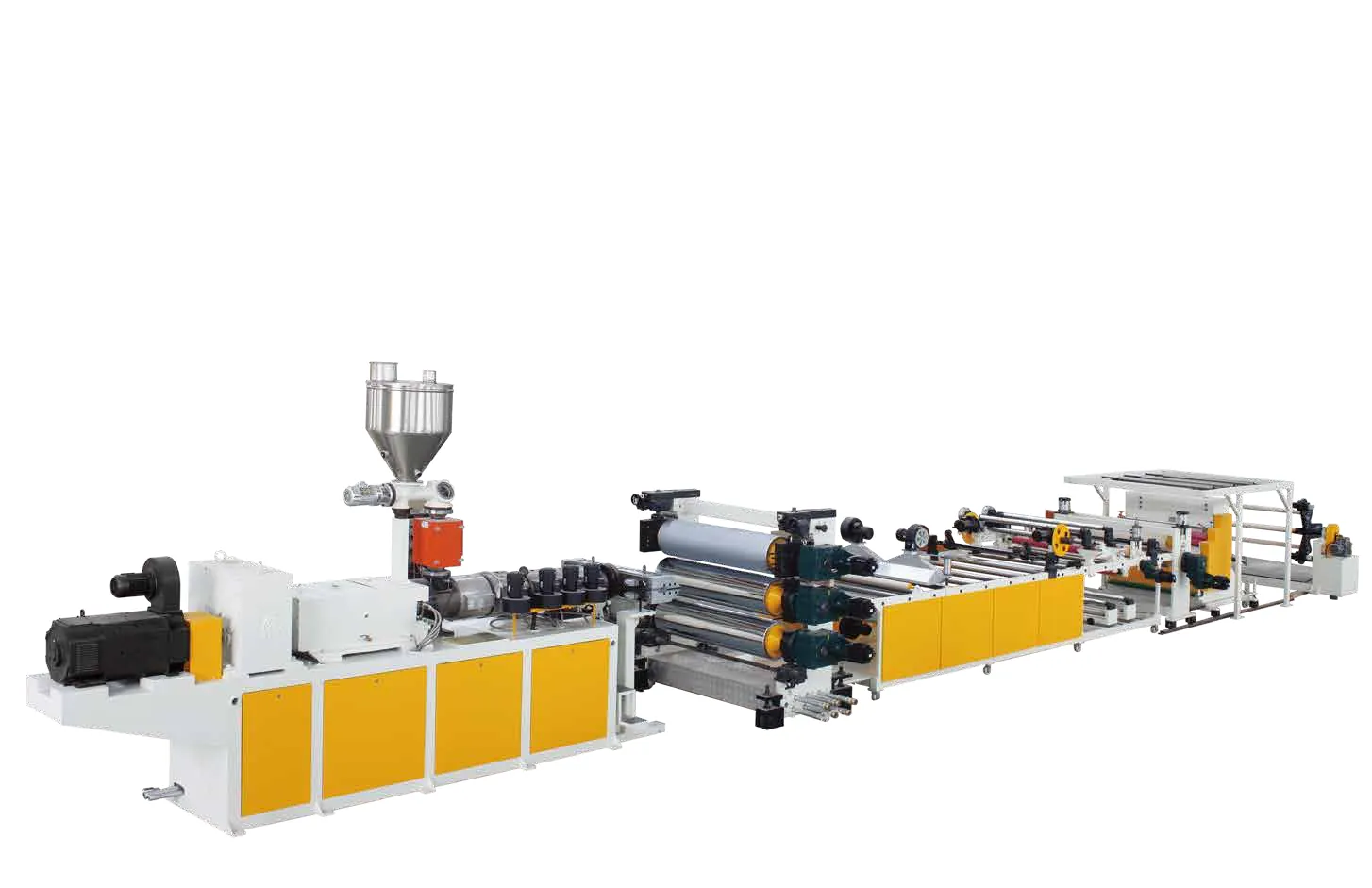
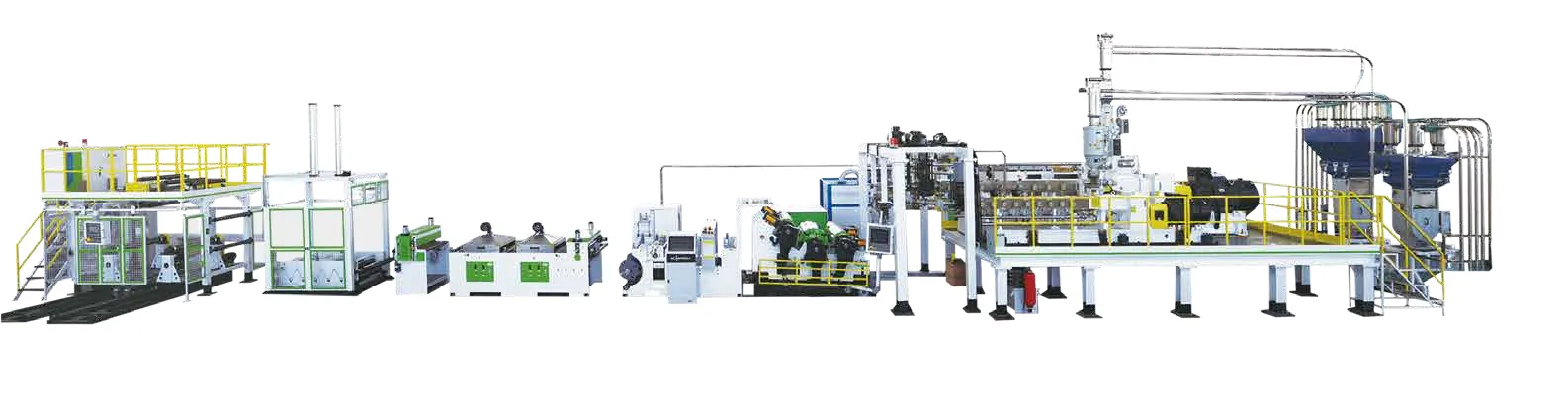
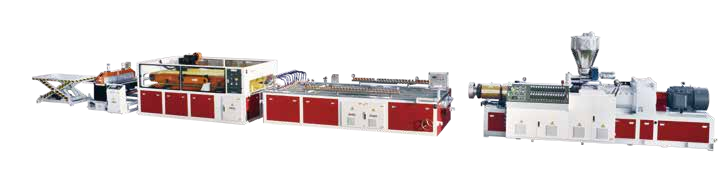
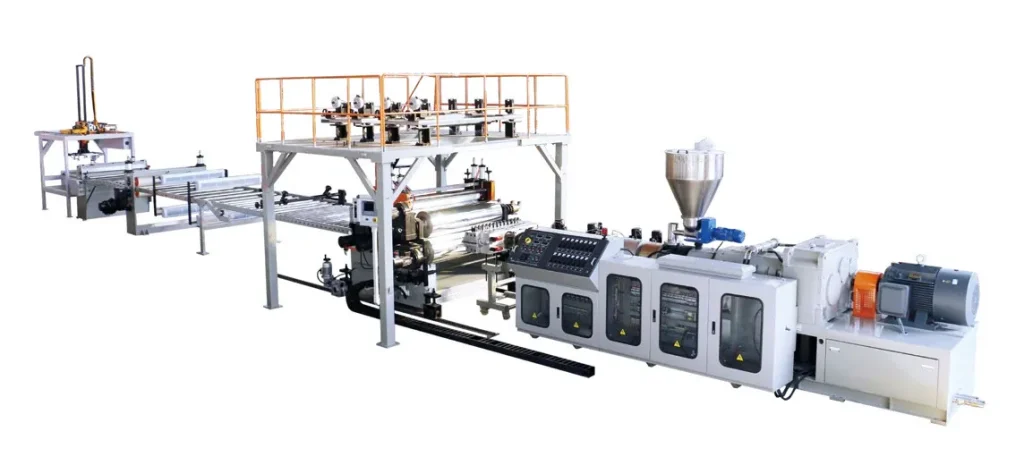
| 主图/pvc-sheet-extrusion-line-hero-01.webp | Jwell PVC soft/rigid sheet extrusion line — complete production line overview |

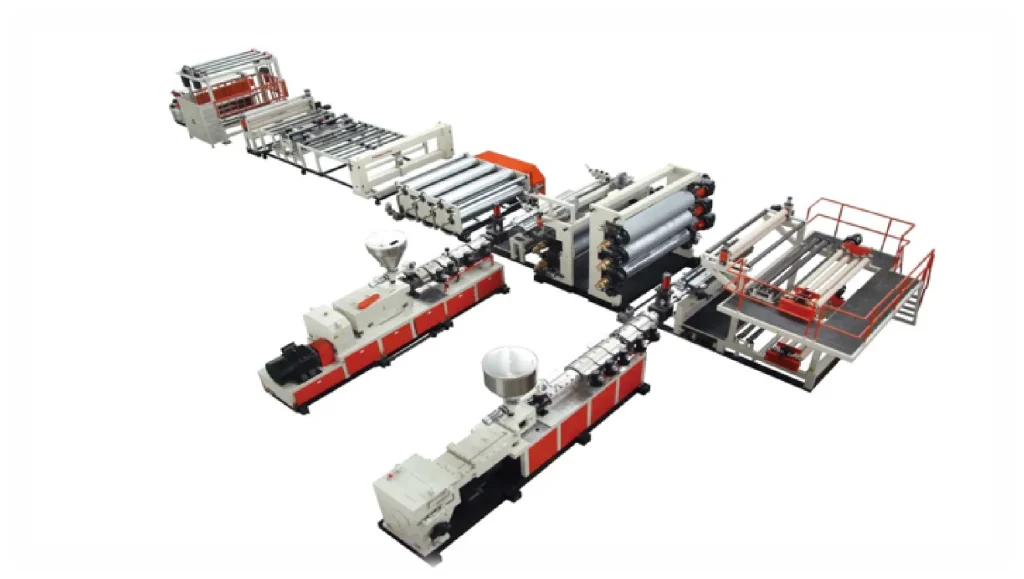
| 主图/pvc-sheet-extrusion-line-hero-02.webp | Jwell PVC sheet extrusion line — conical twin-screw extruder and calendar system |

PVC Soft Rigid Sheet Extrusion Line: Related JWELL Extrusion Lines

The PVC Soft Rigid Sheet Extrusion Line is part of JWELL’s complete extrusion portfolio. Customers evaluating this PVC Soft Rigid Sheet Extrusion Line also frequently request our PVC Marble Sheet Production Line | Stone-Texture Decorative Panels | Jwell and PVC Thick Plate Extrusion Line | Jwell Machinery, which share the same proven screw, die and control platforms. For layout drawings, pricing and lead times, contact JWELL Machinery directly.

# Item Key Point
1 🌀 Dual-Mode Platform Soft PVC (0.3–3 mm, 40–70 Shore A) and rigid PVC (0.5–5 mm) on the same equipment
2 ⚡ Conical Twin-Screw Extruder 80/156 and 92/188 models, counter-rotating, optimized for PVC’s narrow thermal window
3 🎯 200–600 kg/h Output scalable capacity across soft and rigid formulations
4 🔄 Complete Production Chain dosing → extruder → T-die → 3-roller → cooling → haul-off → cutter/stacker or winder
5 🔧 HCl Extraction System 316L stainless steel hood, 98%+ capture, optional wet scrubber
6 ✅ Corrosion-Resistant Metallurgy chrome-plated flow path, nitrided screw, bimetallic barrel
7 ♻️ Siemens PLC Control recipe management for soft/rigid changeover, 50+ parameters logged
8 🌍 CE Certified, ISO 9001 29 years, 8 bases, 3,500 employees, 25,000+ lines worldwide

Conical Twin-Screw Extruder — 80/156 & 92/188 Models, Counter-Rotating for PVC's Narrow Thermal Window

The Jwell PVC soft/rigid sheet extrusion line is built around a conical twin-screw extruder — the gold standard for PVC processing. Unlike single-screw extruders that rely on friction and adhesion for material transport, the counter-rotating intermeshing twin-screw pumps PVC melt through positive displacement, generating dramatically lower shear and providing precise residence time control. This is critical because PVC begins to degrade at temperatures just 15–20°C above its processing window (160–195°C), releasing HCl that attacks equipment and discolors the sheet.

The conical geometry — smaller at the feed end, larger at the discharge end — naturally compresses the PVC powder blend as it travels through the screw, eliminating the need for the deep compression ratio required in single-screw designs. The 80/156 model (small-end 80 mm / large-end 156 mm) delivers 200–400 kg/h; the 92/188 model delivers 400–600 kg/h.

The screws are manufactured from nitrided steel with surface hardness HV≥740 on the flight lands and HV≥940 on the barrel interior, with a bimetallic barrel liner (Xaloy X-800 equivalent, 58–62 HRC). A dosing/feeding system at the extruder inlet provides gravimetric or volumetric feeding of PVC powder blend (dry blend) or pellets, ensuring consistent bulk density into the extruder — a prerequisite for stable output and uniform sheet thickness.

Dual-Mode PVC Platform — Soft PVC 0.3–3 mm (40–70 Shore A) + Rigid PVC 0.5–5 mm on the Same Equipment

The defining advantage of the Jwell PVC sheet extrusion line is its ability to produce both soft (plasticized) and rigid (unplasticized) PVC on the same equipment. Soft PVC — formulated with 30–50 phr plasticizer — produces flexible sheet at 40–70 Shore A for waterproof membranes, pond liners, and inflatable products. Rigid PVC — unplasticized — produces stiff, durable sheet for construction panels, chemical equipment, signage, and credit card substrates.

Processing both materials on the same line requires the conical twin-screw’s inherent versatility. The counter-rotating screw geometry handles the wide viscosity differences between soft and rigid PVC without screw design changes. The 3-roller calendar accommodates both flexible web handling (soft PVC, which requires controlled tension to prevent stretching) and rigid sheet handling (rigid PVC, which requires precise gap control for thickness).

Changeover between soft and rigid PVC typically requires 2–4 hours: the extruder is purged with a transition compound, screw temperature profiles are adjusted, the downstream equipment is reconfigured (winder for soft PVC roll production, cutter/stacker for rigid PVC sheet), and the PLC is loaded with the target product recipe.

This dual-mode capability allows converters to serve diverse markets: waterproof membranes and pond liners (soft PVC) during one production campaign, rigid construction panels and signage sheet during the next, all from a single capital investment.

3-Roller Calendar — Chrome-Plated Rollers with Individual Closed-Loop Temperature Control

The 3-roller vertical calendar is the primary determinant of PVC sheet surface quality, thickness uniformity, and flatness. The Jwell calendar uses forged steel rollers, chrome-plated to 0.05–0.08 mm, with surface roughness Ra≤0.02 μm for glossy sheet or textured for embossed finishes.

Each roller has an independent closed-loop temperature control circuit using pressurized water or oil as the heat transfer medium, maintaining temperature within ±1°C across the full roll face width. The roller gap is servo-adjusted with 0.01 mm precision, and the gap setting is stored in the PLC recipe for each product specification — enabling the operator to recall exact settings when switching between product thicknesses or switching from soft to rigid PVC.

For converters producing embossed or textured PVC sheet — common for decorative wall panels and flooring substrates — the calendar can be equipped with an embossing roller in the third position. The roll surface pattern is transferred to the PVC sheet while the material is still above its glass transition temperature, producing permanent texture that does not wear off during subsequent fabrication.

HCl Extraction System + Corrosion-Resistant Flow Path — 316L Stainless Hood, Chrome-Plated Melt Channel

PVC processing presents a unique challenge among thermoplastics: even under optimal temperature control, the material releases hydrogen chloride (HCl) gas as a thermal degradation byproduct. HCl is highly corrosive to standard carbon steel, attack-etching die surfaces and roller chrome within weeks of operation if not managed.

HCl Extraction System. A die-area extraction hood constructed from 316L stainless steel is positioned over the T-die and roller nip, capturing 98%+ of HCl fumes at the emission source. The extraction system operates at 1,500–2,500 m³/h with an optional wet scrubber for neutralizing HCl before atmospheric discharge, meeting OSHA/ACGIH workplace exposure limits for HCl (5 ppm ceiling).

Corrosion-Resistant Flow Path. Every component contacting molten PVC — the extruder screw, barrel, screen changer, melt pipe, die body, and flow channel — is manufactured from nitrided or chrome-plated corrosion-resistant steel. The die flow channel is chrome-plated to 0.03–0.05 mm depth, providing a barrier against HCl attack that extends die service life from months (with unprotected steel) to years.

Technical Specifications

Extruder

Parameter Specification
Extruder Type Conical twin-screw, counter-rotating, intermeshing
Model Options 80/156 (small-end 80 mm / large-end 156 mm) / 92/188
Screw Material Nitrided steel, HV≥740 (flight), HV≥940 (barrel)
Barrel Liner Bimetallic, Xaloy X-800 equivalent, 58–62 HRC
L/D Ratio (effective) ~26:1 (conical geometry)
Screw Speed 5–35 rpm (PVC-optimized low-speed range)
Drive Motor AC, variable frequency, 55–110 kW (model dependent)
Heating Zones 8–12 zones, independent PID control
Cooling Type Forced air (standard) / water mist (optional)
Feeding System Gravimetric or volumetric dosing

Die & Calendar

Parameter Specification
Die Type Coat-hanger manifold, flexible-lip
Die Material High-quality mold steel, chrome-plated flow channel
Die Lip Surface Roughness Ra 0.05 μm
Calendar Type 3-roller vertical or inclined
Roll Diameter 300–400 mm
Roll Material Forged steel, chrome-plated 0.05–0.08 mm
Roll Surface Roughness Ra≤0.02 μm (glossy) / textured (optional)
Roll Temperature Control Individual closed-loop, ±1°C across face width
Roll Gap Adjustment Servo-driven, 0.01 mm precision

Production Parameters

Parameter Specification
Materials Soft PVC (plasticized, 40–70 Shore A) / Rigid PVC (unplasticized)
Output Capacity 200–600 kg/h (model & material dependent)
Sheet Thickness — Soft PVC 0.3 – 3.0 mm
Sheet Thickness — Rigid PVC 0.5 – 5.0 mm
Sheet Width 900 – 1,600 mm
Thickness Tolerance ±3% (soft PVC) / ±2% (rigid PVC) with optional thickness gauge
Line Speed 2–15 m/min (thickness & material dependent)
Control System Siemens S7-1200 PLC + 10″ HMI
HCl Extraction 316L SS hood, 1,500–2,500 m³/h, optional wet scrubber
Total Installed Power 150 – 280 kW
Certifications CE, ISO 9001

Waterproof Membranes & Pond Liners (Soft PVC)

Soft PVC sheet at 0.5–2.0 mm thickness, formulated with 30–50 phr plasticizer and UV stabilizers, is the industry-standard material for waterproof roofing membranes, pond and canal liners, water storage tank linings, and inflatable products (boats, bounce houses, temporary structures). The material’s combination of flexibility (facilitating installation on irregular surfaces), weldability (hot-air welding for continuous waterproof seams), and UV resistance (10–15 year outdoor service life) makes it the dominant choice for these applications.

The Jwell PVC soft sheet line produces membrane-grade sheet with consistent thickness (±3% with optional thickness gauge) and uniform plasticizer distribution — critical because plasticizer-rich areas create weak spots susceptible to UV degradation and mechanical failure. The double-winder produces rolls at programmable diameter or length, with controlled winding tension that prevents telescoping and ensures the roll unwinds flat at the installation site.

PVC Soft Rigid Sheet Extrusion Line

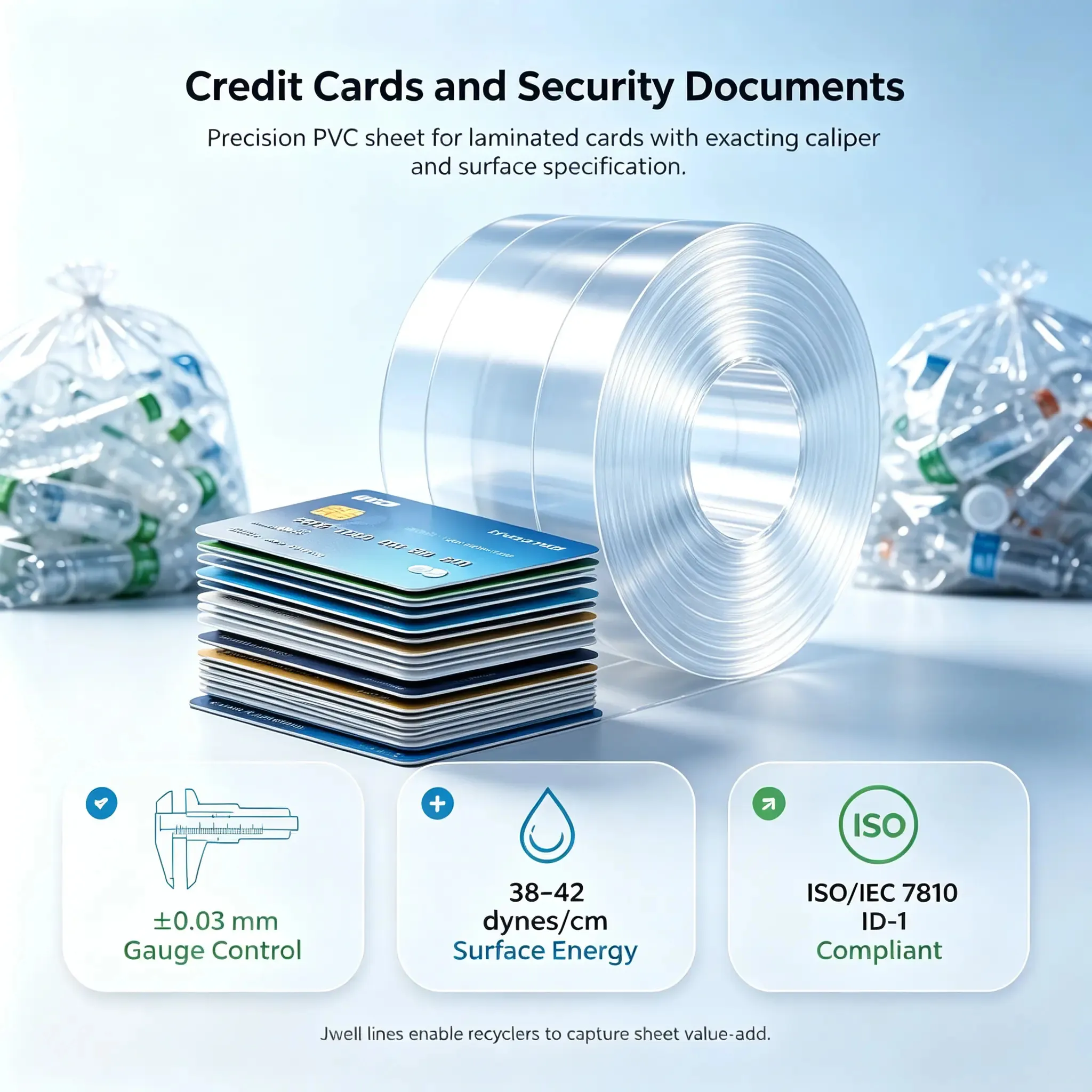
Credit Cards & Security Documents (Rigid PVC)

Rigid PVC sheet at 0.76 mm thickness, laminated with printed core layers and transparent overlay films, forms the billions of credit cards, debit cards, ID cards, and security documents in circulation worldwide. The ISO/IEC 7810 ID-1 card standard specifies 0.76 mm ±0.08 mm thickness — a tolerance band of ±10.5%. Top-tier card manufacturers target ±3%, requiring sheet with thickness uniformity of ±2% or better to avoid lamination defects (voids, delamination, warpage).

Jwell PVC lines serving the card industry achieve this level of gauge control through the combination of conical twin-screw extruder melt stability, servo-driven calendar gap adjustment (0.01 mm precision), and optional inline thickness gauge with closed-loop feedback to the die lip bolts. Rigid PVC’s inherent properties — excellent printability, compatibility with holographic lamination, resistance to bending fatigue, and low cost per card — make it the dominant card substrate material despite competition from PETG and polycarbonate in niche premium card segments.

Frequently Asked Questions

Can the Jwell PVC sheet extrusion line produce both soft and rigid PVC on the same platform? -

Yes. The line is designed as a dual-mode platform using conical twin-screw extruders (80/156 or 92/188). Changeover requires 2–4 hours: the extruder is purged with a transition compound, screw temperature is adjusted, downstream equipment is reconfigured (winder for soft PVC roll, cutter/stacker for rigid PVC sheet), and the PLC is loaded with the target recipe.

What are the conical twin-screw extruder models available, and how do they differ? +

Jwell offers two models: the 80/156 (small-end 80 mm, large-end 156 mm) delivering 200–400 kg/h, and the 92/188 (small-end 92 mm, large-end 188 mm) delivering 400–600 kg/h. Both use counter-rotating intermeshing screw geometry. The 92/188 provides higher throughput for converters running multi-shift operations or targeting high-volume PVC sheet markets.

What thickness and width range can this PVC sheet extrusion line produce? +

Soft PVC: 0.3–3.0 mm, rigid PVC: 0.5–5.0 mm. Sheet width ranges from 900–1,600 mm. The 3-roller calendar’s servo-driven gap adjustment (0.01 mm precision) enables precise thickness control, with PLC recipe storage for quick changeover between product specifications.

How does the Jwell line handle HCl emissions during PVC processing? +

The line integrates a die-area extraction hood in 316L stainless steel, positioned over the T-die and roller nip, capturing 98%+ of HCl fumes at the emission source. The system operates at 1,500–2,500 m³/h with an optional wet scrubber for neutralizing HCl before atmospheric discharge, meeting OSHA/ACGIH workplace exposure limits (5 ppm HCl ceiling).

What is the minimum order quantity and lead time? +

MOQ is 1 complete line. Standard lead time is 60–90 days from order confirmation. Because Jwell manufactures all core components (screw, die, rollers) in-house, lead times are shorter than competitors who source from third-party suppliers. Shipment is FOB Shanghai — the line typically fits in 2–3 × 40′ HQ containers.

Related Sheet Extrusion Lines

WPC Flooring Production Line

WPC Flooring Production Line

Extruder Type: Conical twin-screw, vented; Screw Material: 38CrMoAlA, nitrided, bimetallic optional; Screw Structure: Conical twin, designed for PVC + wood flour + CaCO₃ + foaming agent; L/D Ratio: Optimized for controlled foaming zone
Learn More ➔
SPC Flooring Production Line

SPC Flooring Production Line

Screw Diameter: Φ 80 mm / Φ 92 mm / Φ 110 mm / Φ 180 mm; Output (24h, SPC): 6-8 T / 12-18 T / 25-32 T / 70-100 T; Line Speed at 4 mm: 0.4-0.6 m/min / 0.8-1.3 m/min / 1.8-2.4 m/min / 5-9 m/min; Screw Material: 38CrMoAlA, nitrided, bimetallic optional / ← Same / ← Same / ← Same

Learn More ➔

Why Choose Jwell for Your PET Sheet Line

🏭

Factory/Experience

Jwell has manufactured PET sheet extrusion equipment since 2005, accumulating field data from over 400 installed PET lines worldwide. Each new machine generation incorporates refinements validated across hundreds of real production environments — not just lab prototypes.

🔬

Test/Validate

Our Changzhou facility operates a full production-scale PET line for customer trials. Bring your raw materials and target specifications — we run your recipe before you commit. The line delivered to your factory is a proven configuration, eliminating startup risk.

🌍

Service/Support

Factory-trained Jwell engineers based in Brazil, Spain, Mexico, and Shanghai travel to customer sites for installation and operator training. Remote diagnostic support via WeChat/WhatsApp responds within 2 hours. Critical spares ship from Shanghai within 48 hours.

Request a Quote or Technical Consultation

Your information will never be shared with third parties.